Top Rated Comedy TV Series on Tub Tv - Page 441
All Services
Free Services
 Netflix
 Amazon Prime Video
 Apple iTunes
 Apple TV Plus
 Disney Plus
 Google Play Movies
 Paramount Plus
 Hulu
Hulu
 HBO Max
 YouTube
 fuboTV
 Peacock
 Peacock Premium
 Amazon Video
 The Roku Channel
 AMC+
AMC on Demand
AMC+
AMC on Demand
 Kocowa
 Hoopla
 The CW
 Vudu
Vudu
 Starz
Starz
 Showtime
 PBS
PBS
 Pantaflix
 FXNow
FXNow
 Tubi TV
 Kanopy
 Comedy Central
 Crunchyroll
 Microsoft Store
 Redbox
 Sun Nxt
 ABC
ABC
 DIRECTV
 Crackle
 Fandor
 Plex
Plex
Netflix
Amazon Prime Video
Apple iTunes
Apple TV Plus
Disney Plus
Google Play Movies
Paramount Plus
Hulu
HBO Max
YouTube
fuboTV
Peacock
Peacock Premium
Amazon Video
The Roku Channel
AMC+
AMC on Demand
Kocowa
Hoopla
The CW
Vudu
Starz
Showtime
PBS
Pantaflix
FXNow
Tubi TV
Kanopy
Comedy Central
Crunchyroll
Microsoft Store
Redbox
Sun Nxt
ABC
DIRECTV
Crackle
Fandor
Plex

The Single Guy
1995
America 2-Night
1978
America 2-Night
1978
star 8.3America 2-Night is the continuation of the talk-show parody series Fernwood 2 Night. It ran from April to July 1978. As in Fernwood, Barth Gimble was the host and Jerry Hubbard was his co-host. Happy Kyne and the Mirth-Makers was the band.Emily's Reasons Why Not
2006
star 5.8Emily Sanders is a successful publisher of self-help books who has terrific instincts in every arena of her life but one—relationships. Determined now to make better choices, Emily employs a "Reasons Why Not" list-making system designed to serve as an internal warning on when it's time to cut bait and move on. Navigating a thriving career, a string of would-be boyfriends and an office rival means that Emily's plate is always pretty full.2DTV
2001
2DTV
2001
star 7.22DTV is a British satirical animated television show that was broadcast on ITV in the United Kingdom from March 2001 to December 2004. Lasting a total of five series and thirty-three episodes, 2DTV became the successor of popular 80's TV series Spitting Image, and the predecessor of 2008 ITV satirical animation Headcases.The Chaser's War on Everything
2006
star 8.2The Chaser's War on Everything was an Australian television satirical comedy series. It has won an Australian Film Institute Award for Best Television Comedy Series. The cast perform sketches mocking social and political issues, and often feature comedic publicity stunts. The series is produced by the Australian satirical group, The Chaser, consisting of Chris Taylor, Julian Morrow, Craig Reucassel, Andrew Hansen, and Chas Licciardello. Fellow Chaser members Dominic Knight and Charles Firth are not part of the regular on-screen cast. However, Knight is a writer, and Firth compiled roving reports for the show from the United States, until he left the group to start a satirical newspaper in mid-2007.Rock Me Baby
2003
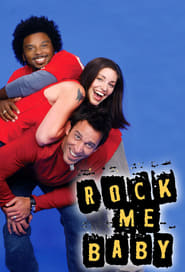
Rock Me Baby
2003
star 9.8Rock Me Baby is an American television series set in Denver, Colorado. It is a comedy / drama that debuted on September 15, 2003 on UPN. Rock Me Baby stars actor and comedian Dan Cortese as Jimmy Cox, co-host of a popular Denver radio show with his best friend, Carl, played by Carl Anthony Payne II. Bianca Kajlich plays Beth Cox, Jimmy's wife, and the two have a baby named Otis. Tammy Townsend plays Beth's best friend, Pamela, who is obsessed with the glamorous life.C.P.O. Sharkey
1976
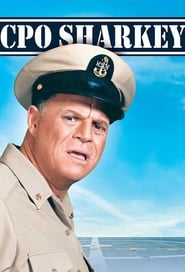
C.P.O. Sharkey
1976
star 6.8C.P.O. Sharkey is an American sitcom which aired from 1976 to 1978 on NBC.Crumbs
2006
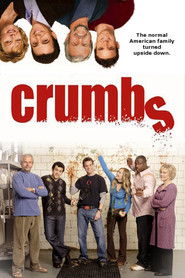
Crumbs
2006
star 6.5Two estranged brothers reunite in their small hometown to deal with their mother who has just been released from a psychiatric facility and has yet to discover her ex-husband is about to have a baby with his new girlfriend.The Newsroom
1996
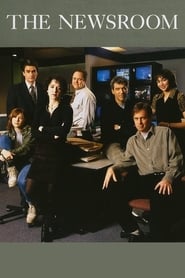
The Newsroom
1996
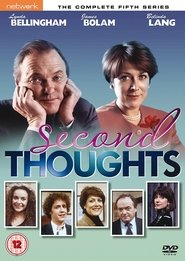
star 8The tumultuous TV newsroom world of overbearing regional news director George Findlay, who is solely motivated by casualty statistics which will improve his ratings.Second Thoughts
1991
Second Thoughts
1991
star 6.7Second thoughts is a British sitcom that ran from 3 May 1991 to 14 October 1994. It was broadcast on ITV and made by LWT. It was followed by a sequel, Faith in the future. Second thoughts followed the lives of two middle-aged divorcees, Bill MacGregor and Faith Greyshott, from very different backgrounds trying to develop a relationship, despite the pressures pulling it apart. Second thoughts was based upon the real-life relationship of the writers, husband and wife Jan Etherington and Gavin Petrie. It originally aired as a radio series on BBC Radio 4 broadcast between 1 November 1988 and 23 July 1992. The radio series consisted of four series and a Christmas special broadcast in 1992 with a total of 31 episodes. The radio scripts were used for the television series on ITV. The fifth series was considered weaker than the first four series; it was the only series not to be based on the original radio scripts. Second thoughts ended on 14 October 1994, but has since been repeated on ITV3. The original radio series iKiss Me Kate
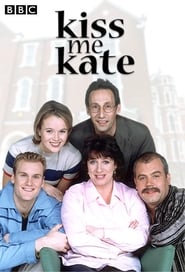
1998
Kiss Me Kate
1998
star 7.8A look into the everyday life of a counsellor, Kate, who must not only manage her clients' problems, but must also help her neighbours and unsuccessful business partner, Douglas.Computerman
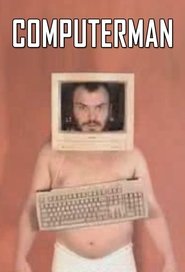
2003
Computerman
2003
star 6.2Eugene Murzowski unknowingly creates Computerman, a powerful but naive cyborg, when a drop of his blood hits his computer keyboard.The Flintstone Comedy Hour
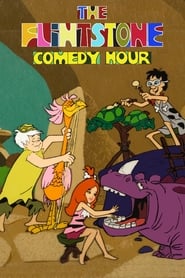
1972
star 8.2The Flintstone Comedy Hour is a one-hour Saturday morning cartoon anthology series produced by Hanna-Barbera Productions. The program originally aired on CBS as an hour-long show from September 9, 1972 to September 1, 1973 on CBS. The show's first half-hour included new segments featuring Fred & Barney, short gags, vignettes by the cast of Pebbles and Bamm-Bamm and songs performed by the new Pebbles and Bamm-Bamm band called "The Bedrock Rockers" followed by four new episodes and reruns of The Pebbles and Bamm-Bamm Show in the second half-hour. The show also featured bad-luck Schleprock, Moonrock, Penny, Wiggy and the Bronto Bunch from The Pebbles and Bamm Bamm Show. Mickey Stevens replaced Sally Struthers as the voice of Pebbles in four new episodes of The Pebbles and Bamm-Bamm Show and in brief in-between segments, Struthers at the time being fully committed to her role as Gloria Stivic on All in the Family. And this was the final spin-off to feature Alan Reed as the voice of Fred Flintstone because he died in 1The New Fred and Barney Show
1979
star 7.5The New Fred and Barney Show is a 30-minute Saturday morning cartoon produced by Hanna-Barbera as a 1979 series revival of The Flintstones from February 3 to October 20, 1979 on NBC. The series marked the first time Henry Corden performed the voice of Fred Flintstone for a regular series. These new episodes were composed of the traditional Flintstones cast of characters such as Fred and Barney's children Pebbles and Bamm-Bamm as toddlers, after having been depicted as teenagers on The Pebbles and Bamm-Bamm Show on CBS in 1972; they returned to the form of teenagers on The Flintstone Comedy Show in 1980 on NBC. Some plots were familiar Flintstones stories while others consisted of new misadventures with witches and werewolves, as well as spoofs of late 1970s fads. Seven new episodes combined with reruns of The New Fred and Barney Show were broadcast on the package program Fred and Barney Meet the Thing and later on Fred and Barney Meet the Shmoo.The Jackie Gleason Show
1952
star 8.5The prodigiously talented Gleason became a TV icon after he joined CBS from DuMont, where his work on `Calvalcade of Stars' had established many of his trademark characters, including Reginald Van Gleason III, the Poor Soul and Ralph Kramden, featured here, along with Art Carney, in `Honeymooners' sketches. The Emmy-winning mix also featured guest stars, musical comedy, the glitzy June Taylor Dancers and Frank Fontaine's Crazy Guggenheim character.This Morning with Richard Not Judy
1998
star 7This Morning With Richard Not Judy or TMWRNJ is a BBC comedy television programme, written by and starring Lee and Herring. Two series were broadcast in 1998 and 1999 on BBC2. The name was a satirical reference to ITV's This Morning which was at the time popularly referred to as This Morning with Richard and Judy. The show was a reworking of old material from their previous work together along with new characters. The show was hosted in a daytime chat show format in front of a live studio audience, although it featured a small proportion of pre-recorded location inserts. It was structured by the often strange obsessions of Richard Herring; examples include his rating of the milk of all creatures and attempting to popularise the acronym of the show. The show featured repetition, with regular and vigilant viewers being rewarded by jokes that would make no sense to casual viewers. The show seemed to oscillate between the intellectual and puerile. However, irony was often used, even though the citing of irony as an exBaddiel and Skinner Unplanned
2000
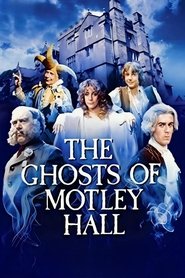
star 7.3Baddiel and Skinner unplanned was a free-form talk show hosted by British comedians/personalities David Baddiel and Frank Skinner and produced by Avalon Television. Its concept was developed at the Edinburgh Festival Fringe, and had a run in the West End at the Shaftesbury Theatre in 2001. The show features the two hosts sitting on a couch on-stage and responding to questions from the audience — at times rather seriously, but usually with bizarre digressions into satirical comedy. An audience member is chosen as "Secretary" and has the job of keeping a note of the topics covered on a white board. In practice, the personality of the secretary will also prompt many jokes — usually at his or her expense. At the end of the show, Skinner asks either the secretary or the audience to choose between two song books, and to pick a page number between 1 and 20. This process determines which song is performed by the duo, sung by Skinner with Baddiel accompanying him on piano. Topics of discussion are wholly mandaThe Ghosts of Motley Hall
1976
star 7.5The Ghosts of Motley Hall is a British children's television series written by Richard Carpenter and produced and directed by Quentin Lawrence for Granada Television, and broadcast between 1976 and 1978 on ITV. Five ghosts occupy the titular Motley Hall. Each hails from a different era and all—with the exception of newly deceased Matt—are unable to leave the confines of the building.Texaco Star Theater
1948
Texaco Star Theater
1948
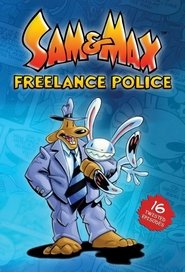
star 7.5Texaco Star Theater is an American comedy-variety show, broadcast on radio from 1938 to 1949 and telecast from 1948 to 1956. It was one of the first successful examples of American television broadcasting, remembered as the show that gave Milton Berle the nickname "Mr. Television". The classic 1940–44 version of the program, hosted by radio's Fred Allen, was followed by a radio series on ABC in the spring of 1948. When Texaco first took it to television on NBC on June 8, 1948, the show had a huge cultural impact.The Adventures of Sam & Max: Freelance Police
1997
star 8.3Sam & Max are freelance police and view the world as their own personal theme park.