Top Rated Comedy TV Series on Tub Tv - Page 474
All Services
Free Services
 Netflix
 Amazon Prime Video
 Apple iTunes
 Apple TV Plus
 Disney Plus
 Google Play Movies
 Paramount Plus
 Hulu
Hulu
 HBO Max
 YouTube
 fuboTV
 Peacock
 Peacock Premium
 Amazon Video
 The Roku Channel
 AMC+
AMC on Demand
AMC+
AMC on Demand
 Kocowa
 Hoopla
 The CW
 Vudu
Vudu
 Starz
Starz
 Showtime
 PBS
PBS
 Pantaflix
 FXNow
FXNow
 Tubi TV
 Kanopy
 Comedy Central
 Crunchyroll
 Microsoft Store
 Redbox
 Sun Nxt
 ABC
ABC
 DIRECTV
 Crackle
 Fandor
 Plex
Plex
Netflix
Amazon Prime Video
Apple iTunes
Apple TV Plus
Disney Plus
Google Play Movies
Paramount Plus
Hulu
HBO Max
YouTube
fuboTV
Peacock
Peacock Premium
Amazon Video
The Roku Channel
AMC+
AMC on Demand
Kocowa
Hoopla
The CW
Vudu
Starz
Showtime
PBS
Pantaflix
FXNow
Tubi TV
Kanopy
Comedy Central
Crunchyroll
Microsoft Store
Redbox
Sun Nxt
ABC
DIRECTV
Crackle
Fandor
Plex

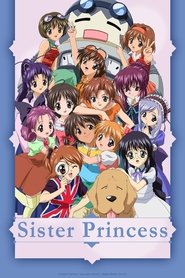
Sister Princess
2001
Sister Princess
2001
star 5.4Wataru Minakami was at the top of his class in middle school and had a pretty comfy life. But, when he unexpectedly fails his only high school entrance exam because of a computer glitch, his life is suddenly thrown into utter chaos! Jeeves, Wataru's trusted butler, sends him off to attend school on a mysterious island. Upon his arrival, Wataru. encounters many friendly, cute girls. This isn't a problem until he finds out they are all his sisters! For most kids, adjusting to life at a new school in a different town is tough enough. But for Wataru Minakami, high school will be the easy part!Freshers
2010
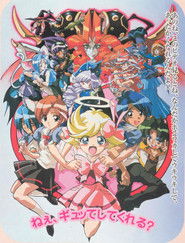
I'm Gonna Be An Angel!
1999
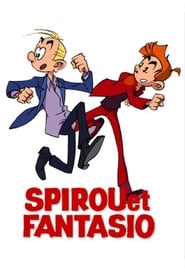
star 7.2Yuusuke was just a normal kid going to high school. Then one day, the cute and behaloed Noelle fell, quite literally, into his life, naked as a baby and every bit as innocent. Before he can even fathom what's just happened, Yuusuke is inducted into a rather odd family of otherworldly beings. Papa is a Frankenstein monster with a taste for calisthenics. Mama is a gorgeous lady with a penchant for "round objects" -- really! The eldest sister, Sara, is literally invisible; the brother, Gabriel, is a teenage vampire with an attitude problem; and the youngest sister, Ruka, loves inventing things. There's a disapproving Grandma, who's a witch to the nth degree, and her vulture familiar. All Yuusuke wanted was for the beautiful Natsumi to even notice his attention, but now he has an angel-in-training to follow him wherever he goes. And Noelle, too, has a guide on her path to being an angel, the mysterious Michael.Les Nouvelles Aventures de Spirou & Fantasio
2006
star 4.8The adventures of the intrepid Spirou, accompanied by his reporter friend Fantasio and his squirrel Spip.Policajti z předměstí
1999
star 3.4Policajti z předměstí is a Czech television comedy series which premiered on TV Nova. In 1999, 21 episodes were aired.Grand Prix
1995
Grand Prix
1995
star 6.8El Grand Prix del verano is a Spanish TV program created by Francesco Bosserman and produced by Europroducciones. It had broadcast by TVE 1 in 1995-2005, but since 2007 is broadcast by some channels of the FORTA group. Is the longest running game show in Spain with 15 years on air.Kees & Co
1997
Kees & Co
1997
star 8This is the life of Kees Heistee. Kees is married to the charming, good-natured Ben, and together they have two children: their daughter Anne, a nightmare for any mother, and their son Rudie, who has a taste for the morbid. Her best friend and next-door neighbor, Sonja, also plays a major role in her life. Kees tries to teach her family morals and values, but so far, that seems impossible...Ross Noble's Australian Trip
2009
star 6.8Comic Ross Noble travels more than 26,000 kilometres, criss-crossing Australia to perform 85 standup shows. Along the way he shares some of his travel adventures, mishaps, and run-ins with emus.Nurse Witch Komugi-chan Magikarte
2002
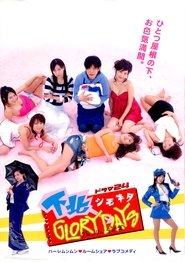
star 3.8Ungrar, the King of Viruses, has escaped from his prison cell in Vaccine World. Maya, the Goddess of Vaccine World sends Mugimaru down to Earth to find a human to accept the powers of Vaccine World and become the Magical Nurse. He finds the best (and the only willing) person for the job when he meets Komugi Nakahara.Shimokita GLORY DAYS
2006
Shimokita GLORY DAYS
2006
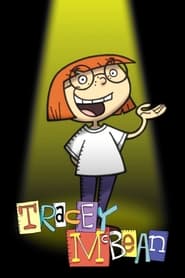
star 6Yuta Ono flees from the responsibilities of his family run business and attempts to get into college to get a girl. By a twist a fate, Yuta Ono then finds himself living with five beautiful young ladies. all of whom Yuta finds exciting.Tracey McBean
2002
Tracey McBean
2002
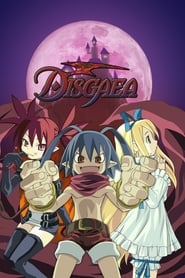
star 8.2Ever wanted to build a space rocket, invent a homework-doing machine or make your school vanish? Well, join Tracey McBean and best friend Shamus Wong, on journeys full of mystery, drama, bizarre twists and funny bits!Disgaea
2006
Disgaea
2006
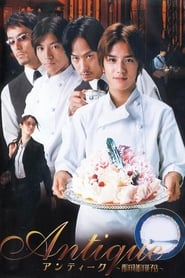
star 6.6Laharl, the demon prince of the Netherworld and son of the late Lord Krichevskoy, is awakened by Flonne, the sugary-sweet angel-in-training sent to assassinate the overlord. Etna, the Prinnies, and Flonne, join the selfish, disgruntled, and perpetually hungry Laharl as he treks the deepest, darkest realms to become king of the cursed land.Antique: Western Antique Cake Shop
2001
star 7.4This story is about four men who work in a confectionary. Tachibana Keiichiro (Shiina Kippei) is the owner; Ono Yusuke (Fujiki Naohito) is the superb baker that has a mysterious and mesmerizing aura; Kobayakawa Chikage (Abe Hiroshi) is the waiter and close bodyguard of Tachibana; and last but not least is Kanda Eiji (Takizawa Hideaki), the ex-boxer who loves cake so much that he becomes a waiter at 'Antique'. This is a refreshing, yet heartfelt comedy about the 4 very unique personalities that work until the wee hours of the night at the small confectionary. The series follows the romance, family life, and most importantly friendship that these 4 men from different generations experience. This is a confectionary with a "flavor" not like most. Located in the middle of an ordinary residential area, "Antique" stays open until 2 a.m. Every single thing in the shop is antique, in fact even the sherry glasses that water comes in look like they would cost 50,000 yen. On top of this, all the sweets that are sold are unbelPersia, the Magic Fairy
1984
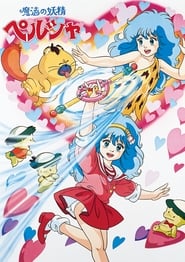
star 6.511-year old Persia is an energetic, loyal and happy young girl who has grown up alongside the animals on the Serengeti plains of Africa. Twins Riki and Gaku Muroi and their grandfather, Gōken, bring Persia to Japan with them in Minato-machi, where she lives with a couple who own a grocery store. During an incident during the return flight to Japan, Persia finds herself in the "Lovely Dream", the land where dreams are born and grow. The Fairy Queen appears before Persia in the form of a butterfly, and explains that the Lovely Dream is in danger, requesting Persia's help. She gives Persia a magical golden headband with a star which reacts to the word "Papurikko". With it, Persia can conjure a magic baton which bridges her world and Lovely Dream, as well as transform into an older self by saying "Perukko Raburin Kurukuru Rinkuru". She is sent with three kappa back into the regular world with the mission of collecting love energy to thaw the frozen Lovely Dream.Lunch Monkeys
2009
Lunch Monkeys
2009
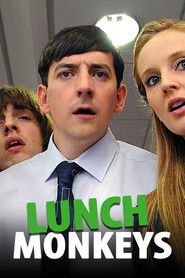
star 4.8Sitcom in which admin workers at a law firm spend their time flirting, fighting and dodging work.Neo Angelique Abyss
2008
Neo Angelique Abyss
2008
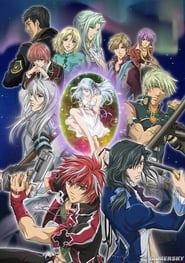
star 3.6Arcadia is plagued with evil, life-draining demons called Thanatos and a vast lack of Purifiers to exterminate them all. While attending school, Angelique attracts the eye of a man who intends to turn the tides to the people's favor. What lies within her is the key to Arcadia's survival.The Dave Gorman Collection
2001
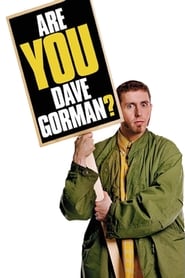
star 8Dave Gorman, a British Comedian, undertakes a challenge set by his flat mate Danny Wallace, to find 54 of his namesakes (1 for every card in the deck, including jokers). The show is presented over a series of six episodes by Dave Gorman himself in what can only be described as a lecture format. The series charts the trials and tribulations that greet Dave as he attempts to complete his task.Åpen Post
1998
Åpen Post
1998
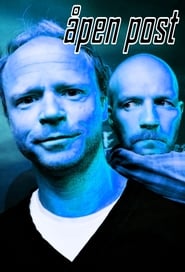
star 8.2Åpen Post was a Norwegian sketch comedy television program that ran on the Norwegian state channel NRK from 1998 till 2002. It was created and hosted by Harald Eia and Bård Tufte Johansen. The show started in a talk show format with interviews and guests but later leaned more towards being a pure sketch show. The show became one of Norway's most popular TV productions though it was the center of criticism due to controversial episodes such as Bård Tuft Johansens "Chicken stunt", involving the then Norwegian Labour Party leader Thorbjørn Jagland. After the show was taken of the air Harald Eia and Bård Tufte Johansen continued to created new successful NRK shows such as Uti vår hage, Team Antonsen, Tre brødre som ikke er brødre, Ut i vår hage 2 and Storbynatt.Little Crackers
2010
Little Crackers
2010
star 6.8Little Crackers is a series of Christmas short films featuring stars of British and Irish comedy.Tokimeki Tonight
1982
Tokimeki Tonight
1982
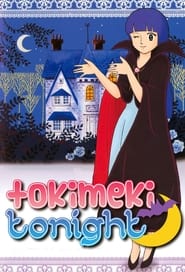
star 8.4The main character, Ranze, is a junior high girl with troubles: her father is a vampire and her mother is a werewolf. Ranze has yet to manifest her supernatural powers, and her parents are beginning to get worried she might be normal. So begins the fantasy romantic comedy story.