Kids TV Series - Page 111

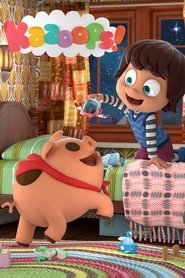
Kazoops!
2016
Kazoops!
2016
star 5Animated preschool series encouraging children, through imaginary adventures, to challenge the workings of the world. Who says the world works the way grown-ups think it should?Clever Raccoon Dog
1987
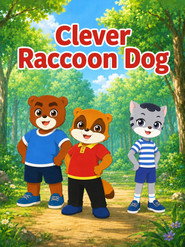
Clever Raccoon Dog
1987
A clever raccoon dog and his friends, a strong but impulsive bear and a mischievous blue cat, embark on adventures filled with competitions, accidents and unexpected challenges. Using observation, logical thinking and their knowledge of science and mathematics, they devise ingenious solutions to the problems they encounter and learn valuable lessons along the way.Waffles + Mochi
2021
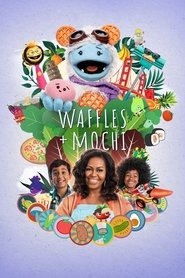
Waffles + Mochi
2021
star 6.9Curious puppet pals Waffles and Mochi travel the world exploring the wonders of food and culture while learning how to cook with fresh ingredients.Aikatsu Planet!
2021
Aikatsu Planet!
2021
star 4.5Its story is set in Aikatsu Planet, a world where everyone can become cute idols using an avatar. While spending school life, the main characters are aiming to become top idols. Everyday parts such as the main character's school life will be filmed in live-action, and the Aikatsu Planet! world will be drawn in anime and 3DCG (like the previous series). The live-action part's cast members will form a unit "STARRY PLANET*" and perform as idols at events and on YouTube. A new Data Carddass game linked to the TV series, "Data Carddass Aikatsu Planet!" is also scheduled to begin its service this winter.Xiao long ren
1992
Pokémon Chronicles
2002
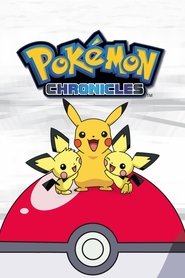
Pokémon Chronicles
2002
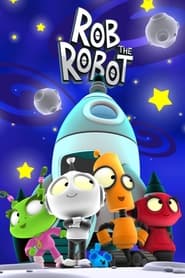
star 7.9Pokémon Chronicles, partly known in Japan as Pocket Monsters Side Stories, is a spin-off series of the Pokémon anime, revolving around characters other than Ash Ketchum.Rob the Robot
2010
Rob the Robot
2010
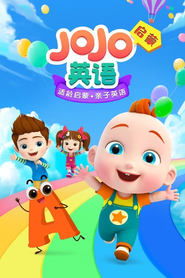
star 3.5Rob the curious robot goes on adventures to different planets with the help of his friends Ema, TK and Orbit.超级宝贝赳赳英语启蒙
2021
超级宝贝赳赳英语启蒙
2021
GameKeepers
2021
The Koala Brothers
2003
The Koala Brothers
2003
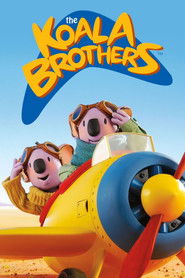
star 6.8The Koala Brothers, Frank and Buster, live in the Australian Outback, where their mission in life is to help their friends.Chinese Young Master
2005
Chinese Young Master
2005
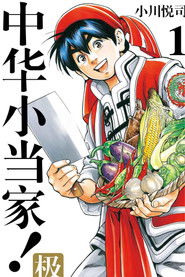
star 2Liu Angxing, the son of Liu Feng, a famous chef in the Bright World, lives in Juxialou in Shushan. His dream is to participate in the Empire's Dragon Chef Competition. At this time, the world's culinary world is divided into two factions, the Bright World and the Dark World. After Kai You, the leader of the Dark World, used a trick to obtain the position of Dragon Chef, he began to encroach on the territory of the Bright World, and Juxialou was not spared. The Dark World bribed Shaoan, the apprentice of Fairy Bei, and poisoned Fairy Bei in a despicable way, causing her to be injured, and expelled her and her son from Juxialou. In order to take back Juxialou, Liu Angxing went to Nanxian Restaurant in Nanling to learn cooking from the famous chef Ding You. At the same time, Admiral Li, the leader of the Bright World, also selected Liu Angxing as a rookie of the Bright World for key training, hoping that he can eventually represent the Bright World in the Dragon Chef Competition.Florrie's Dragons
2010
Florrie's Dragons
2010
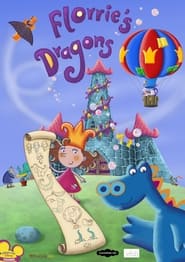
The story of Princess Florrie, and her five dragons, help to solve a problem, and have ideas for and enchantment and modern creativity.Vroomiz
2012
Vroomiz
2012
star 4Zippy City is a little village where Vroomies, lovable talking vehicles shaped like animals live. Our delightful characters roll through the streets of Zippy City on high-speed adventures in which they find little matters to solve, like finding little piglets back to their mom, saving a snowplow from an avalanche, etc. The series will teach deductive reasoning and problem solving, along with social and moral lessons.沃福一家
2023
沃福一家
2023
Flowering Heart
2016
Flowering Heart
2016
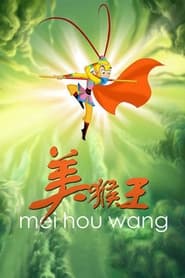
star 7An ordinary student forms an advice club with her friends to help others. Then she gains special powers after a mysterious encounter.Monkey King
2010
Monkey King
2010
Mot
1995
Mot
1995
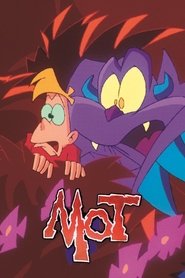
star 8If fun, adventure, action and surprise aren’t your cup of tea, you better watch out: Mot is on his way over and he is not the kind of guy who knocks before he enters. But if you like mischievous monsters, and if you too once had a dragon under your bed, then ... you better stick around.Kamen Rider Black RX
1988
Kamen Rider Black RX
1988
star 9.1Following the fall of Gorgom, Kotaro Minami tries to live a normal life with the Sahara family. However, this brief moment of peace is soon shattered by the arrival of the Crisis Empire, an evil alien menace that aims to eradicate humanity and claim dominion over Earth. After refusing to aid them in their nefarious goals, Kotaro is thrown hurtling back towards the planet with his transformation belt shattered. However, when he awakens, Kotaro discovers that the sun’s rays have blessed him with new power, the power of Kamen Rider Black RX!超能威威快车
2024
超能威威快车
2024
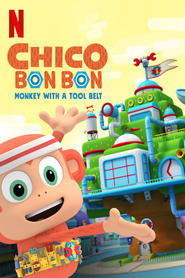
Chico Bon Bon: Monkey with a Tool Belt
2020
star 7.6Armed with tools and engineering smarts, monkey mechanic Chico Bon Bon and his Fix-It Force help the people of Blunderburg solve all of their problems.