War Politics TV Series - Page 110

Au bon beurre
1981
Au bon beurre
1981
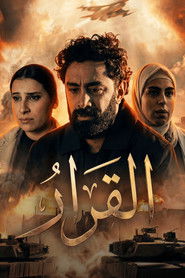
The Decision 2026
2026
The Decision 2026
2026
In the harsh alleys of Benghazi and the sound of unending gunfire, the series explores the “War of Dignity” as a powerful shock that shattered Libyan consciousness, depicting what happens behind closed doors. It shows the sting of loss, the weight of waiting, and how fear became determination that changed thousands of families' lives بين أزقة بنغازي الصامدة وصدى الرصاص الذي لم يهدأ، يغوص مسلسل "القرار" في أدق تفاصيل "حرب الكرامة"، لا كوقائع عسكرية جافة، بل كزلزالٍ الوعي الجمعي الليبي. راصدا ما يحدث خلف الأبواب المغلقة؛ حيث مرارة الخسارة، وثقل الانتظار، وكيف تحول الخوف إلى إرادة غيرت ملامح الحياة اليومية لآلاف العائلات. .I zoi en tafo
2019
Mahkota Majapahit
1994
Trial of the Century
2016
Trial of the Century
2016
star 9A fictional courtroom drama which shows how the trial of Pádraig Pearse, one of the leaders of the 1916 Easter Rising, might have gone.Inside Hitler's Killing Machine
2016
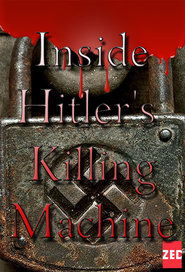
star 5.6May 1945: With the end of the war and the surrender of the Third Reich, the world discovered the full horror of a genocidal system on a scale never before seen in the history of humanity. The elimination of millions of individuals had been meticulously planned by a regime whose organization and methods were just beginning to be understood.苍狼之决战野狐岭
2012
苍狼之决战野狐岭
2012
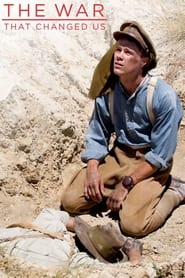
The War That Changed Us
2014
star 6The epic story of Australia and the First World War is revealed through the lives of five Australians and their transformative journeys through conflict on the battlefront and on the home front.World War 2 From Above
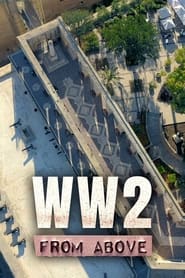
2021
In this six-part series, battlefield historians and military experts utilise cutting edge, drone mounted technology to re-examine some of the second world war’s most iconic sites. Aerial footage of different theatres and battle scenes from World War Two.Cafe In The Void
2026
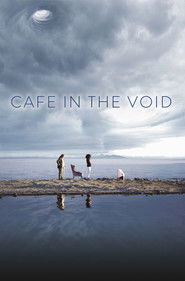
Cafe In The Void
2026
In the midst of the 2020 pandemic, immigration and racial strife and World Wide economic collapse, a young activist woman of color falls in love with a Conservative Caucasian. Not without the help of three wise Homeless Men and their odd Friends who inform the young lady of the worlds biggest conspiracies and the ominous Committee of 10 who are hellbent on taking over the world. They also awaken her to "The Frequency" - a vibration that, if achieved, opens up a vortex to a mysterious Café in the Void where there exists no time - no space. Once there she meets Bob Marley, Gandhi, Thomas Paine and John Lennon who are at a crossroads in their lives before they went out and changed the world. With the advice of a mystical café barista and the historical figures, Vivi discovers the secret to make the world a better place to live. But is she too late? And can her new love help her go out and change the world?Ersatz
2026
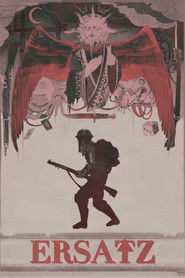
Ersatz
2026
star 10When a nameless amnesiac wakes up in a bunker, they're immediately thrust into the trenches of an endless war. The Crown Army demands service from every soldier, regardless if you can remember your own name... or even how you got here at all.Tired Warrior
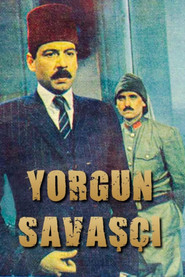
1993
Tired Warrior
1993
star 7The role played by the regular army in the Turkish War of Independence. This film's footage was burned by the military junta in 1983.Platoon 24/7
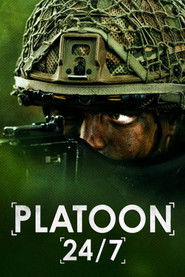
2026
Platoon 24/7
2026
We follow six gruelling months as a platoon prepares for possible frontline deployment.No Pains, No Gains
2011
No Pains, No Gains
2011
star 7After reading a notebook from his father, Asad tries to find a treasure which is hided in the mountains, he meets Emad & Manouchehr during the story and they make a competition to find the treasureThe Challenge: ETA
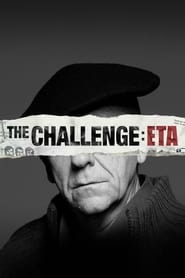
2020
The Challenge: ETA
2020
star 6.1The story of how the Guardia Civil, a militarized police force, fought for nearly half a century against ETA, a ruthless terrorist gang dedicated to murder, kidnapping, extortion and arms and drug smuggling while cynically demanding independence for the Basque Country in northern Spain.Italy at War: 1940-1942 Battles
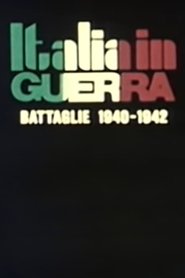
1983
A 1983 six-episodes series, made by Massimo Sani, which recounts the WW2 battles involving Italy between 1940 and 1942: from the attacks to France and Greece to the clashes in Africa and the disastrous expedition to Russia.Erziehung vor Verdun
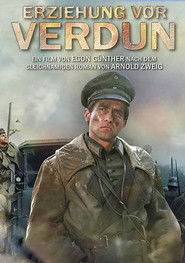
1973
Erziehung vor Verdun
1973
The armouring soldier and writer Werner Bertin is ordered to the Western Front to France during the First World War. The use before Verdun - with all the horrors of war in the period 1916/1917 - brings a fundamental change of consciousness for the academic from Berlin. The intellectual devoted to bravery by fate develops into a disappointed but rebellious being. He sees more and more the injustices of warlike conflicts and their social causes.The Trial of Paul Touvier
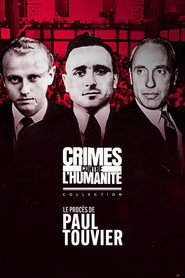
2025
star 7Paul Touvier, a former member of the Vichy Militia, was sentenced to death in 1947 for war crimes but evaded justice thanks to the support of the Church and the statute of limitations, which expired in 1967. In 1973, he received a presidential pardon from Pompidou, but an investigation led to the reopening of proceedings for crimes against humanity, for which there is no statute of limitations. Hunted down, he was arrested in 1989 at the Saint-Joseph Priory in Nice. His trial began in March 1994, shedding light on the role of the Milice, the armed wing of the collaboration, and of Vichy. Touvier was charged with complicity in crimes against humanity for the execution of seven Jews in retaliation for the assassination of a propagandist. His personal notebooks reveal his anti-Semitism. On April 20, 1994, he was sentenced to life imprisonment and died in 1997. This trial sparked a debate on the responsibility of the French state during the Occupation.