War Politics TV Series - Page 107

Urix
0000
Urix
0000
star 7Urix is a foreign affairs television newsmagazine aired Monday to Thursday night on the Norwegian television channel NRK2, a subsidiary channel of the Norwegian Broadcasting Corporation. The first show aired on 2 September 2002, and is produced by the same crew as Dagsrevyen. The title is a play on the word Utenriks, meaning "foreign". The current presenters are Christian Borch and Annette Groth. Former presenters include Bjørn Hansen, Sigrun Slapgard and Gunnar Myklebust.Nyi Roro Kidul
2003
The Killing Season
2015
The Killing Season
2015
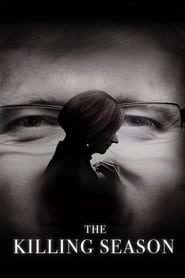
A comprehensive cast of the main players provides an enthralling account of one of the most turbulent periods of Australian political history. For the first time, Kevin Rudd gives his full account of the period and relives in vivid detail the events of losing the Prime Ministership. Julia Gillard is forthright with her recollections and analysis and doesn't spare her colleagues.A Deadly Number
2021
A Deadly Number
2021
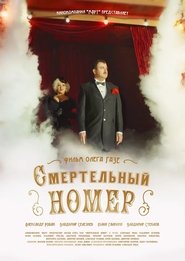
On June 21, 1941, the artists of the traveling circus tent under the direction of the famous hypnotist Andrei Belov, who performs under the pseudonym the Great Armando, give their first performance in a small Latvian town. During the performance of the number under the dome, Belov's wife, the aerial equilibrist Elsa, sees a little girl among the audience, meets her eyes, loses her balance and falls into the arena. This girl is a copy of Masha, the daughter of Elsa and Belov, who died five years ago.钢铁是怎样炼成的
2000
钢铁是怎样炼成的
2000
The Pope and the Führer - The Secret Vatican Files of World War II
2025
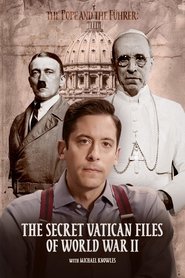
Pope Pius XII, the man who led the Church through WWII, has been maligned by history as the Pope that could have stood against Hitler, but remained silent. Recent archival revelations, however, tell a different story. What is the truth? How did he respond to the Nazi threat? And who told his story?The Sniper. Officer SMERSH
2020
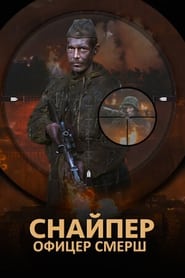
The story of the irreconcilable confrontation between two professional snipers, senior lieutenant of the special department Egorov and Lieutenant Lother Von Dibitz, which began in 1943 in the siege of Stalingrad and continued in 1944 in the forests of Belarus.Hostage
2026
Hostage
2026
Moscow, 2014. Maxim Pozharsky, a successful financial analyst, helps already well-off people get rich. Without asking unnecessary questions, he just takes his course. But everything in his world changes when the only person close to him, Nina's sister, disappears in the Middle East and ends up in captivity.Giorgia Meloni: The Power of the Clans
2026
star 6.5She is Italy’s most powerful woman and the first right-wing populist to lead a European democracy. Tough at home, moderate abroad, she has been firmly in government for three years, a long time in Italian politics. Who is Giorgia Meloni, and how has she been so successful? The answer lies in the tight clan she has been part of since her youth…For Whom the Bell Tolls
1965
star 9For Whom the Bell Tolls is a British television series first aired by BBC in 1965, based on the novel by Ernest Hemingway. It stars John Ronane, Ann Bell, Julian Curry, Glynn Edwards and Joan Miller. The film was adapted for television by Giles Cooper and was directed by Rex Tucker. It consisted of four 45-minute episodes, the first of which aired on 2 October 1965. According to the BBC archives none of the episodes of the film still exist.Dr. Schlüter
1965
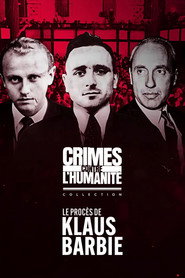
The Trial of Klaus Barbie
2025
star 10On May 11, 1987, the trial of Klaus Barbie, former head of the Gestapo and the first Nazi officer to be tried in France for crimes against humanity, began in Lyon. Tracked down and identified by Beate and Serge Klarsfeld, he was extradited from Bolivia through intergovernmental agreements. The charges centered on three major crimes: the roundups on Rue Sainte-Catherine, the roundup of the children of Izieu, and the final deportation convoy of August 11, 1944. During 37 hearings, filmed in their entirety, the survivors’ testimonies reveal a relentless and cruel torturer. Barbie, absent on the advice of his lawyer Jacques Vergès, was sentenced on July 4, 1987, to life imprisonment. This verdict marked a key milestone in the fight against impunity for Nazi criminals. Barbie died in 1991.WW2 Treasure Hunters
2017
WW2 Treasure Hunters
2017
star 7.5WW2 Treasure Hunters pairs Britain's foremost amateur WW2 detectorist with Madness frontman Suggs, as they uncover historical finds from across the UK. Using state-of-the-art technology, original WW2 archives and maps, the pair work together to identify the best places to dig at forgotten sites, including former military bases, airfields, POW camps and barracks. Once located, they then go on to perform extensive digs to excavate the relics. As the artefacts are unearthed, the presenters turn detective, revealing the stories and people behind the finds. They meet with survivors, experts and historians to understand what happened at each of the locations.