War Politics TV Series - Page 97

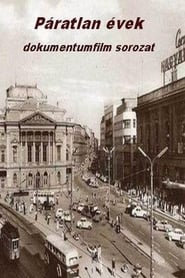
Odd years
2008
Odd years
2008
Hungarian documentary series, which presents the history of the country after World War II until the time of the regime.Eerste keus
2024
Eerste keus
2024
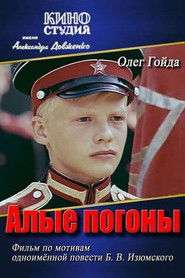
Scarlet Straps
1980
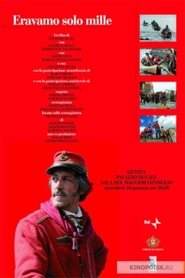
Eravamo solo mille
2006
Eravamo solo mille
2006
The Heart in the Well
2005
star 10April 1945. The German army is losing the war and Tito's Yugoslav partisans are rapidly gaining ground.Kateb-e-Azam
2022
Kateb-e-Azam
2022
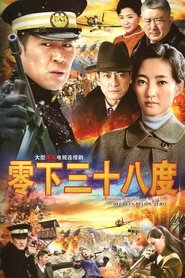
A shepherd who is the son of a fugitive and killed scribe of the court of Mu'awiya, came to see and write about the encounter between Shimr and Umar ibn Sa'd's forces with the army of Imam Husayn on the afternoon of Ashura.零下三十八度
2013
零下三十八度
2013
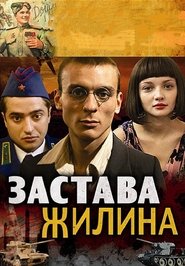
Zastava Zhilin
2009
Zastava Zhilin
2009
1941. Trying to escape from unhappy love, Pavel Zhilin, a first-year student, gets into the border guard shortly before the Nazi invasion. However, love overtakes him there: having survived the German offensive, Zhilin does everything possible to save his beloved and her newly-made husband.Betrayal of a Nation
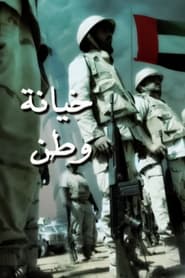
2016
Betrayal of a Nation
2016
star 10It is an Emirati drama that was shown in Ramadan 2016 taken from the novel "Ritaj" by the novelist Hamad Al Hammadi and produced by Abu Dhabi Media Company. The series talks about the organization of the Muslim Brotherhood and how it worked secretly within the joints of the state for many years. It also touches on the history of the organization and dives deep into the social life of its members, indicating the ideas they hold and the principles on which they are based.Border Warfare
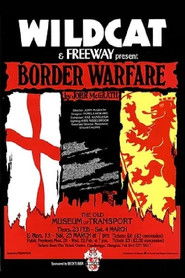
1990
Border Warfare
1990
star 10A three-episode mini-series chronicling the history of Scotland from ancient times through the union with England and culminating with the rise of Thatcherism and the introduction of the Poll Tax.A Deadly Number
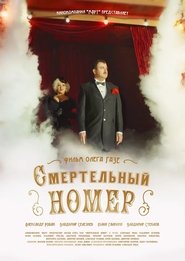
2021
A Deadly Number
2021
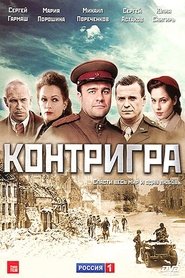
On June 21, 1941, the artists of the traveling circus tent under the direction of the famous hypnotist Andrei Belov, who performs under the pseudonym the Great Armando, give their first performance in a small Latvian town. During the performance of the number under the dome, Belov's wife, the aerial equilibrist Elsa, sees a little girl among the audience, meets her eyes, loses her balance and falls into the arena. This girl is a copy of Masha, the daughter of Elsa and Belov, who died five years ago.Контригра
0000
The Translator
2014
The Translator
2014
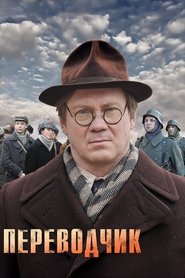
Chemistry teacher Andrei Petrovich Starikov, nicknamed "Charlie Chaplin", lives with his wife and mother in an old house, which, like an ark, is home to a motley international crowd: Ukrainians, Russians, Jews, Tatars, and Armenians. But the arrival of the Germans drastically changes their lives. To save his loved ones, Charlie is forced to serve as a translator at the Nazi headquarters.The Outlaw
2020
The Outlaw
2020
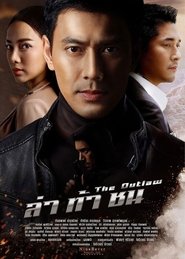
Because of the brutal killing of his family, making the young engineer take revenge without waiting for the justice system. But due to carelessness, he is arrested for murdering the father of a woman he secretly loves and is sent to train as an assassin of a secret organization that eliminates evil people illegally. There was a turn of event when he realized he was being used so he decided to withdraw and expose the organization’s evil plans. With his own life and his loved one at stake.Urda: The Third Reich
2002
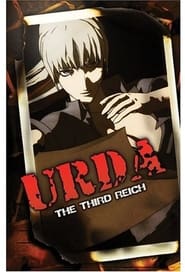
star 3Urda: The Third Reich is an original net animation written and directed by Romanov Higa. The story takes place circa 1943, during World War II. Facing a losing war, the Nazi Party discovers a marooned spaceship capable of time travel, thus enabling them to alter the outcome of their fate. Enter Erna Kurtz, a newly hired spy who stumbles upon the Nazis' plot. With the help of her fearless friend Janet, Erna must face her past in order to secure her future.The Holy land
2016
The Holy land
2016
star 7.5The history of the Land of Israel from prehistoric times to the Ottoman period.Décolonisations : du sang et des larmes
2020
star 8After World War II, the French colonial empire, which dominated the lives of over 110 million people on five continents, collapsed in just under a quarter century of blood and tears.Anzac Battlefields
2015
Anzac Battlefields
2015
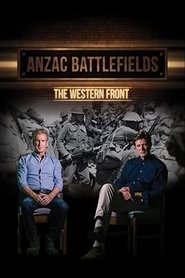
Through graphics, archive, oral history and travels across the scenes of past battles, Neil Pigot and Dr Peter Pedersen explain where, why and how the ANZACs fought in France and Belgium almost 100 years ago.