New War TV Series on Amazon Prime Video - Page 222
All Services
Free Services
 Netflix
 Amazon Prime Video
 Apple iTunes
 Apple TV Plus
 Disney Plus
 Google Play Movies
 Paramount Plus
 Hulu
Hulu
 HBO Max
 YouTube
 fuboTV
 Peacock
 Peacock Premium
 Amazon Video
 The Roku Channel
 AMC+
AMC on Demand
AMC+
AMC on Demand
 Kocowa
 Hoopla
 The CW
 Vudu
Vudu
 Starz
Starz
 Showtime
 PBS
PBS
 Pantaflix
 FXNow
FXNow
 Tubi TV
 Kanopy
 Comedy Central
 Crunchyroll
 Microsoft Store
 Redbox
 Sun Nxt
 ABC
ABC
 DIRECTV
 Crackle
 Fandor
 Plex
Plex
Netflix
Amazon Prime Video
Apple iTunes
Apple TV Plus
Disney Plus
Google Play Movies
Paramount Plus
Hulu
HBO Max
YouTube
fuboTV
Peacock
Peacock Premium
Amazon Video
The Roku Channel
AMC+
AMC on Demand
Kocowa
Hoopla
The CW
Vudu
Starz
Showtime
PBS
Pantaflix
FXNow
Tubi TV
Kanopy
Comedy Central
Crunchyroll
Microsoft Store
Redbox
Sun Nxt
ABC
DIRECTV
Crackle
Fandor
Plex

Heaven's Coin
1995
Heaven's Coin
1995
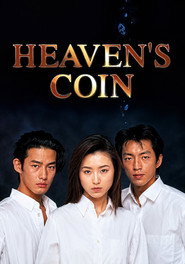
star 7.4Aya Kuramoto, a deaf and mute girl from Hokkaido, falls in in love with a doctor named Shūichi Nagai. After Shūichi leaves for Tokyo, he has an accident and loses his memory. Aya travels to Tokyo and encounters Takumi Nagai, Shūichi's brother.The Outer Limits
1995
The Outer Limits
1995
star 7.7Anthology series composed of distinct story episodes, sometimes with a plot twist at the end, with occasional recurring story elements that were often tied together during season-finale clip shows.Hamish Macbeth
1995
Hamish Macbeth
1995
star 7.7Hamish Macbeth is a comedy-drama series made by BBC Scotland and first aired in 1995. It is loosely based on a series of mystery novels by M. C. Beaton. The series concerns a local police officer, Constable Hamish Macbeth in the fictitious town of Lochdubh on the west coast of Scotland. The titular character was played by Robert Carlyle. It ran for three series from 1995 to 1997, with the first two series having six episodes and the third having eight.NewsRadio
1995
NewsRadio
1995
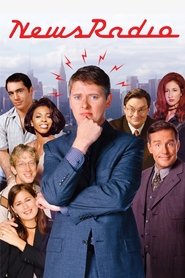
star 7.4The office politics and interpersonal relationships among the staff of WNYX NewsRadio, New York's #2 news radio station.Band of Gold
1995
Band of Gold
1995
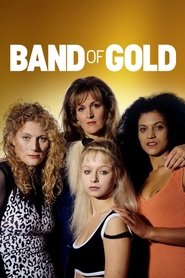
star 5.5Band of Gold is a British drama series written by Kay Mellor and produced by Granada Television. It was initially broadcast on ITV between 1995 and 1997. Starring Geraldine James, Cathy Tyson, Barbara Dickson and Samantha Morton, the series revolves around the lives of a group of women who live and work in Bradford's red-light district. Three seasons were produced (the third under the moniker of Gold, with only a small number of characters from the first two series).Chiller
1995
Chiller
1995
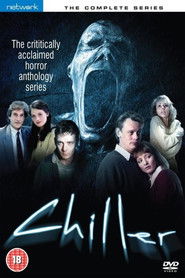
star 6.2Chiller is a five-part British horror anthology television series, produced by Yorkshire Television, broadcast on ITV from 9 March to 27 April 1995. Described by The Guardian as ITV's 'answer to The X Files', the series is inspired by, but unconnected to, the 1991 Channel 4 thriller Gray Cray Dolls, which broadcast under the Chiller banner. The series featured writing contributions from renowned playwrights Stephen Gallagher, Glenn Chandler and Anthony Horowitz.The Gambling Man
1995
The Gambling Man
1995
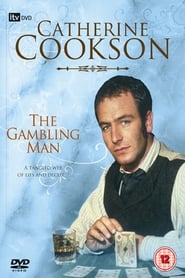
star 6.3The Gambling Man is a three-part British television drama based on Catherine Cookson's 1975 novel of the same name. Produced by Tyne Tees Television for ITV, the serial stars Robson Green, Stephanie Putson, Ian Cullen, and David Nellist. Dissatisfied with his life, Tyneside rent collector Rory Connor decides to use his talents as a card player to improve his situation. He's soon able to purchase a boatyard and marry his childhood sweetheart Janie Waggett, but his success is built on a tangle of lies and deceit. Never one to shy away from high stakes, Rory is in the game of his life when he's asked to make the ultimate sacrifice for his brother.A Woman of Independent Means
1995
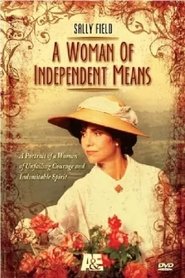
star 10Bess Steed marries her childhood sweetheart in the early part of the 20th century and begins a life in the high society of Dallas, Texas. As time goes by, things do not work out as she expects. Her husband dies of influenza, and she finds that she must pick up and carry along with her life. She proves to be a strong, committed, and loving individual who attracts new loves into her life and finds that she can take good care of the old ones. Despite further tragedy in losing her oldest son, and a second marriage that is not all that she expects it to be she continues to survive as independently as she has discovered the courage to do so.Once Upon a Hamster
1995
Once Upon a Hamster
1995
This beloved family series follows the exciting adventures of Hammy the Hamster and his woodland friends.Women of the House
1995
Women of the House
1995
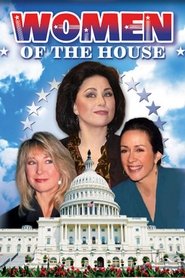
star 6.7Women of the House is an American situation comedy television series. It is a spin-off of Designing Women and stars Delta Burke, who had reconciled with producers after a bitter, highly publicized, off-screen battle.Kavanagh Q.C.
1995
Kavanagh Q.C.
1995
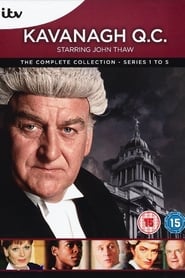
star 7.3John Thaw dons the silks as barrister James Kavanagh Q.C., one of the most highly respected criminal advocates in London, commanding admiration from colleagues and opponents alike. However, all this has come at a price as his dedication to work has taken its toll on his private life… Going beyond traditional courtroom dramas, “Kavanagh Q.C.” uncovers the pressures of legal battles and the problems of defining the truth, providing a compelling representation of the euphoric ups and costly downs of success and failure in the legal world.The Big Garage
1995
The Big Garage
1995
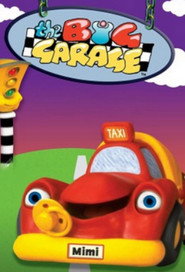
The Big Garage is a children's television program that aired on TLC. It was produced by Prisma Productions in association with Winchester Entertainment. It debuted on TLC September 29, 1997. Aimed at pre-school children, the show follows the adventures of several anthropomorphic taxicabs. At the end of each episode, there are two short scenes. The first is about a stop sign, and the second is about a group of tools. The show came to an end on July 17, 2001 and no longer broadcasts on TLC. Repeats can be seen on Smile of a Child, a Christian-based children's channel.Martin Chuzzlewit
1994
Martin Chuzzlewit
1994
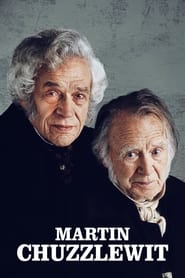
star 8.4Old Martin Chuzzlewit is nearing his death. Who will inherit his riches? With such a prize to play for, the Chuzzlewit family bring forth all of their cunning, greed and selfishness.Mysteries, Magic and Miracles
1994
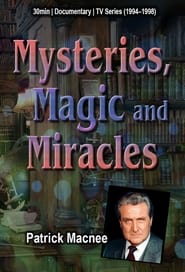
star 6.7Join Patrick MacNee as he travels the globe in search of the world’s most baffling stories and events. Infamous myths are put on trial as we try to answer those questions of the unsolved and unexplained.Halifax f.p.
1994
Halifax f.p.
1994
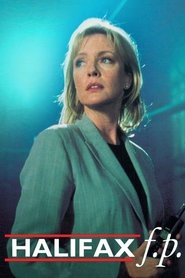
star 6.2Halifax f.p. is an Australian television crime series produced by Nine Network from 1994 to 2002. The series stars Rebecca Gibney as Doctor Jane Halifax, a forensic psychiatrist investigating cases involving the mental state of suspects or victims. The series is set in Melbourne. The producers of the film were Beyond Simpson Le Mesurier; Australian Film Finance Corporation and aired on the Nine Network Australia Pty Ltd 21 Episodes of 90 and 102 minutes each were produced, and the series has screened in more than 60 countries. The budget for each episode was an average of $1.3 million. Funding came in part from the Australian Film Finance Corporation and Film Victoria.The Man from Snowy River
1994
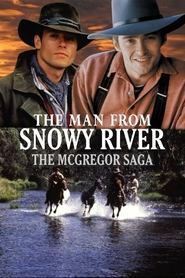
star 7.1The Man from Snowy River is an Australian television series based on Banjo Paterson's poem "The Man from Snowy River". Released in Australia as Banjo Paterson's The Man from Snowy River, the series was subsequently released in both the United States and the United Kingdom as Snowy River: The McGregor Saga. The television series has no relationship to the 1982 film The Man from Snowy River or the 1988 sequel The Man from Snowy River II. Instead, the series follows the adventures of Matt McGregor, a successful squatter, and his family. Matt is the hero immortalized in Banjo Paterson's poem "The Man from Snowy River", and the series is set 25 years after his famous ride.Highlander: The Animated Series
1994
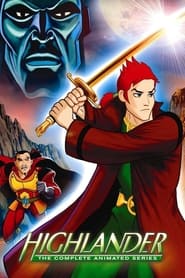
star 7.2Seven centuries have passed since the Earth plunged into darkness, seven centuries since the Jettator swore to regain from man his lost knowledge and freedom, all the Immortals took the oath, all except one. Who dominates the world, but soon an Immortal will come to confront him, his name is Quentin MacLeod, he is the Highlander. This animated series followed the adventures of Quentin MacLeod, the Last of the MacLeods. Set in a post apocalyptic world almost barren of technology and civilization. The Jettator's or Immmortals oath was to lay down their swords and when Kortan decided not to swear the oath so began the wait for the Highlander.Hawkeye (The First Frontier)
1994
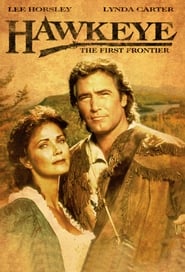
star 6.8Hawkeye is a television series, airing in syndication for one season during 1994-1995, and produced by Stephen J. Cannell. The series was filmed in North Vancouver and Vancouver, British Columbia, Canada. Based on characters from the Leatherstocking Tales, a set of novels written by James Fenimore Cooper, the series takes place in 1755 Hudson Valley, New York during the French and Indian War. It follows the main character, Natty Bumppo, his Native American companion Chingachgook, trading post owner Elizabeth Shields and other people stationed at or living in the vicinity of Fort Bennington.Phantom 2040
1994
Phantom 2040
1994
star 6.1Phantom 2040 is a French-American animated science fiction television series loosely based on the comic strip hero The Phantom, created by Lee Falk. The central character of the series is said to be the 24th Phantom. The unusual character designs are the work of Peter Chung, creator of Æon Flux. The show debuted in 1994 to rave reviews, though it survived only 35 episodes before it was relegated to weekend repeats in 1996. Along with action sequences, stories focused on intelligent plotting and character development, winning the series praise for its subtle teaching of such values as individuality, freedom, and the volatility of humanity. It also spawned comic books tie-ins and other merchandise. Featured voice actors included Scott Valentine, Margot Kidder, Ron Perlman, and Jeff Bennett, while Mark Hamill, Debbie Harry, Rob Paulsen, and Paul Williams had recurring roles.The Magic School Bus
1994
The Magic School Bus
1994
star 7.7An eccentric schoolteacher takes her class on wondrous educational field trips with the help of a magical school bus.