New Mystery TV Series on Pantaflix - Page 375
All Services
Free Services
 Netflix
 Amazon Prime Video
 Apple iTunes
 Apple TV Plus
 Disney Plus
 Google Play Movies
 Paramount Plus
 Hulu
Hulu
 HBO Max
 YouTube
 fuboTV
 Peacock
 Peacock Premium
 Amazon Video
 The Roku Channel
 AMC+
AMC on Demand
AMC+
AMC on Demand
 Kocowa
 Hoopla
 The CW
 Vudu
Vudu
 Starz
Starz
 Showtime
 PBS
PBS
 Pantaflix
 FXNow
FXNow
 Tubi TV
 Kanopy
 Comedy Central
 Crunchyroll
 Microsoft Store
 Redbox
 Sun Nxt
 ABC
ABC
 DIRECTV
 Crackle
 Fandor
 Plex
Plex
Netflix
Amazon Prime Video
Apple iTunes
Apple TV Plus
Disney Plus
Google Play Movies
Paramount Plus
Hulu
HBO Max
YouTube
fuboTV
Peacock
Peacock Premium
Amazon Video
The Roku Channel
AMC+
AMC on Demand
Kocowa
Hoopla
The CW
Vudu
Starz
Showtime
PBS
Pantaflix
FXNow
Tubi TV
Kanopy
Comedy Central
Crunchyroll
Microsoft Store
Redbox
Sun Nxt
ABC
DIRECTV
Crackle
Fandor
Plex

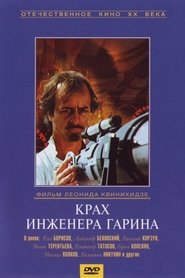
Failure of Engineer Garin
1973
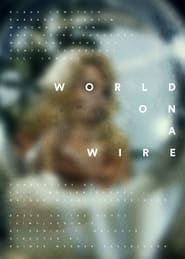
star 8At the end of the 1920s, in Petrograd, on Krestovsky Island, the corpse of a man similar to the engineer Garin was found. Garin himself managed to take advantage of the brilliant discovery of the scientist Mantsev and designed an apparatus with destructive power. A dangerous hunt begins for this invention. Having faked the death, he emigrated from Russia and, under the guise of a French businessman, tries to establish contacts with the head of one of the European financial concerns, Rolling. Garin's ultimate goal is power over the world...World on a Wire
1973
World on a Wire
1973
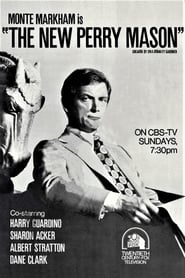
star 7.3In the future, Simulacron, a computer project simulating reality, encounters strange occurrences after its leader's death. Dr. Stiller questions the sudden disappearance of a friend and wonders if Simulacron holds the answers.The New Perry Mason
1973
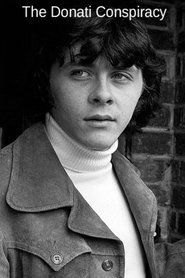
The Donati Conspiracy
1973
star 8Contemporary thriller series set in a parallel Britain where the country is ruled by a fascist dictatorship.Butch Cassidy
1973
Butch Cassidy
1973
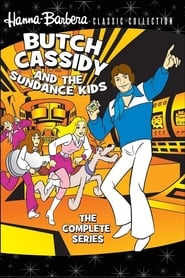
star 8Butch Cassidy was a Saturday morning cartoon produced by Hanna-Barbera Productions in 1973 for NBC. The series title is a play on the name of the unrelated 1969 film Butch Cassidy and the Sundance Kid. The character's music group is called the Sundance Kids.Door Into Darkness
1973
Door Into Darkness
1973
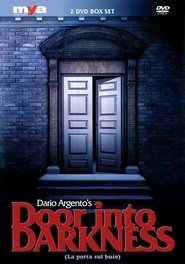
star 6.8"The Door to Darkness" is an anthology miniseries of four hour-long thrillers. The series' curator and producer is Dario Argento, the undisputed master of suspense cinema, who directs one of the four films under the pseudonym Sirio Bernadotte.Orson Welles' Great Mysteries
1973
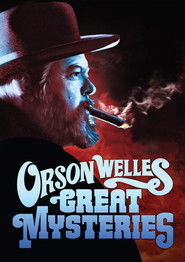
star 6.8Orson Welles’ Great Mysteries is a British television anthology series produced by Anglia Television for the ITV network and broadcast between 1973 and 1974. The series presents standalone adaptations of classic mystery, crime, and supernatural stories drawn from literary sources including Dickens, Conan Doyle, Wilkie Collins, Balzac, Maugham, O. Henry, and others. Each episode is framed by original introductory and closing sequences performed by Orson Welles, who serves as the series’ host and sole recurring on-screen presence. These segments, written and directed by Welles (uncredited), function as stylized narrative framing devices rather than dramatic participation in the stories themselves. The dramatic content of each episode is performed by separate casts and directors, with no continuing characters or serialized narrative, establishing the series as a unified television anthology rather than a collection of standalone films.Qui squadra mobile
1973
アイフル大作戦
1973
アイフル大作戦
1973
A story about the principal of the "Aiful" Detective School, Ryoko Kishi (Mayumi Ogawa), and her students, who attend various crime scenes every time they attend classes about detectives and actually solve the cases. Compared to the previous work "Key Hunter", the content was developed with a slightly stronger comedy color.Thriller
1973
Thriller
1973
star 7Thriller is a British television series, originally broadcast in the UK from 1973 to 1976. It is an anthology series: each episode has a self-contained story and its own cast. As the title suggests, each story is a thriller of some variety, from tales of the supernatural to down-to-earth whodunits.Un monsieur bien rangé
1973
star 9Paul Mallard, this perfectly ordered but transparent laboratory assistant, asks himself a question: must he make himself known in order to exonerate Jean Joseph Jenk and thus avoid him the death penalty ? He seeks advice from his brother Basile, a brilliant man, who has been successful in life and who presents the television news.Le Premier Juré
1973
Le Premier Juré
1973
Hawkins
1973
Hawkins
1973
star 7.8The cases of slow-talking but high-powered West Virginia attorney Billy Jim Hawkins.The Jensen Code
1973
The Jensen Code
1973
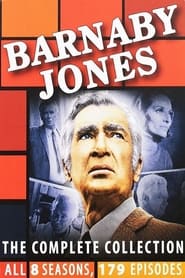
star 616-year-old Terry Connor uncovers a secret government plot involving mind control and espionage at a Ministry of Defence facility near his Outward Bound camp.Barnaby Jones
1973
Barnaby Jones
1973
star 7Barnaby Jones is a television detective series starring Buddy Ebsen and Lee Meriwether as father- and daughter-in-law who run a private detective firm in Los Angeles. The show ran on CBS from January 28, 1973 to April 3, 1980, beginning as a midseason replacement. William Conrad guest starred as Frank Cannon of Cannon on the first episode of Barnaby Jones, "Requiem for a Son" and the two series had a two-part crossover episode in 1975, "The Deadly Conspiracy".The Wide World of Mystery
1973
star 6.7A 90 minute late-night mystery and suspense anthology series.Horror Theater Unbalance
1973
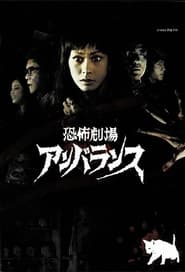
Horror Theater Unbalance is a 1973 Japanese Anthology television series created by Tsuburaya and Fuji TV to air on the Fuji TV network on Monday Nights for 13 episodes. Originally started in production in 1969, it was shelved and took years for its airing debut to begin its broadcast, before production was eventually completed at the end of 1972. It was then aired on Fuji TV in 1973.Dead of Night
1972
Dead of Night
1972
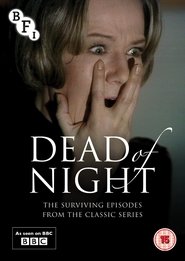
star 8Dead of Night is a British television anthology of supernatural fiction, produced by the BBC and broadcast on BBC2 in 1972. It ran for a single series; of its seven 50-minute episodes, only three—'The Exorcism', 'Return Flight', and 'A Woman Sobbing'—are known to survive in the Archives. Another programme made by the same production team under Innes Lloyd, 'The Stone Tape', intended to be the eighth episode, does survive in the Archives but was not broadcast under the Dead of Night banner.The Long Chase
1972
The Long Chase
1972
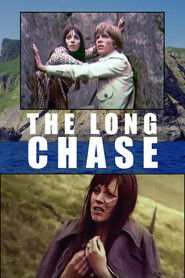
star 10A father-son birdwatching outing becomes a widespread mystery when teenage John Corby—after coming to the aid of neighbour Susan Fraser—finds that his father Tom has vanished.Ghost Story
1972
Ghost Story
1972
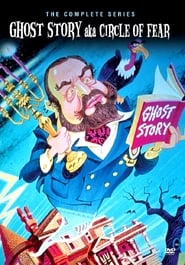
star 7.4Ghost Story is an American television anthology series that aired for one season on NBC from 1972 to 1973. Executive-produced by William Castle, it initially featured supernatural entities such as ghosts, vampires, and witches. By mid-season, low ratings led to a shift -- for the most part -- away from paranormal themes and a title change to Circle of Fear.