Popular TV Series - Page 461
All Services
Free Services
 Netflix
 Amazon Prime Video
 Apple iTunes
 Apple TV Plus
 Disney Plus
 Google Play Movies
 Paramount Plus
 Hulu
Hulu
 HBO Max
 YouTube
 fuboTV
 Peacock
 Peacock Premium
 Amazon Video
 The Roku Channel
 AMC+
AMC+
 AMC on Demand
 Kocowa
 Hoopla
 The CW
 Vudu
Vudu
 Starz
Starz
 Showtime
 PBS
PBS
 Pantaflix
 FXNow
FXNow
 Tubi TV
 Kanopy
 Comedy Central
 Crunchyroll
 Microsoft Store
 Redbox
 Sun Nxt
 ABC
ABC
 DIRECTV
 Crackle
 Fandor
 Plex
Plex
Netflix
Amazon Prime Video
Apple iTunes
Apple TV Plus
Disney Plus
Google Play Movies
Paramount Plus
Hulu
HBO Max
YouTube
fuboTV
Peacock
Peacock Premium
Amazon Video
The Roku Channel
AMC+
AMC on Demand
Kocowa
Hoopla
The CW
Vudu
Starz
Showtime
PBS
Pantaflix
FXNow
Tubi TV
Kanopy
Comedy Central
Crunchyroll
Microsoft Store
Redbox
Sun Nxt
ABC
DIRECTV
Crackle
Fandor
Plex

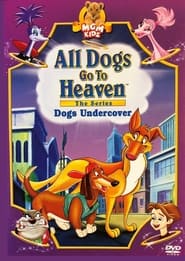
All Dogs Go To Heaven: The Series
1996
star 6.1All Dogs Go to Heaven: The Series is an animated television series which aired from 1996 to 1998 in syndication and on the Fox Family Channel from 1998 to 1999, with 41 half-hour episodes produced in total. It aired on Cartoon Network in 1999 to 2000. It was produced by MGM Animation and was distributed by Claster Television. Don Bluth’s 1989 animated feature All Dogs Go to Heaven featured a roguish German Shepherd named Charlie who died, went to heaven, conned his way back to Earth for vengeance on his killer Carface and then found redemption through a little orphaned girl named Ann-Marie. The film was popular with audiences, spawning a sequel, All Dogs Go to Heaven 2 and this animated series. The theme song for the series is "A Little Heaven", written by Lorraine Feather and Mark Watters. The singers were Gene Miller of Nashville, Clydene Jackson-Edwards and Carmen Twillie. Most of the voice actors from the feature films reprised their roles in the series, including Dom DeLuise, Ernest Borgnine, Charles NeLa divina comida
2016
La divina comida
2016
star 4Four celebrities invite each other to their homes and compete to be the best host, where night after night they must cook for the other guests, who in turn will be both the judges and their rivals.Magic × Warrior MagiMajo Pures!
2018
star 7.7In an attempt to conquer the world, the Nuisance World has stolen the Majoka Jewels and have corrupted each into an Akiramestone, which interferes with people's dreams and turns them into an Akiramest. Momoka, an ordinary middle school student, is summoned by Mokonyan, a fairy from the Magic World, to join Magic Warriors Rin and Mitsuki and stop the Nuisance World. Together, as MagiMajo Pures, they purelize the Akiramests back into Majoka Jewels with magic.7SEEDS
2019
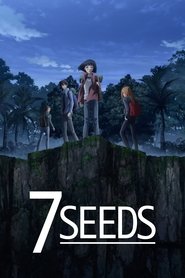
7SEEDS
2019
star 7.7Shy Natsu awakens as part of a group chosen to ensure the survival of humanity. Together, they have to survive on a changed Earth.The Miracles
2025
The Miracles
2025
star 8In Shenzhen, a jobless Lu Da rekindles hope in a 24-hour bookstore; opera star Fan becomes a tech sales whiz in Huaqiangbei; delivery rider Tan earns dignity; drone engineers Zhang Yi and Nuan build love with code; teen Xiao Peng creates a wildlife overpass; planner Wang Pengqian and daughter protect mangroves, with spoonbill Y075 marking eco-change. These stories weave entrepreneurship, innovation, and sustainability, showcasing Shenzhen’s 45-year transformation and future promise.The Ryuo's Work is Never Done!
2018
star 6.5The story is about a teenage boy who happens to be a shougi master. One day, a nine-year-old girl turns up at his house, requesting to be taken as his disciple. From there, all kinds of wacky hijinks ensue.If You Love
2023
If You Love
2023
star 7.5Leyla is a resilient orphan with an intense spirit who joins a team of con men to fund the search for her long-lost parents. When she first meets Ateş, the brooding and cynical scion of a wealthy family, things don’t go well. Leyla is turned off by Ateş’s playboy charms, seeing him as just another privileged snob. But when fate reunites them, Leyla's radiant personality gradually breaks through his defenses, and Ateş discovers a new, more mature side of himself. Amidst a backdrop of mystery and emotional turmoil, the two opposites find themselves drawn together.Kämpfer
2009
Kämpfer
2009
star 6.7Natsuru is selected to be a Kampfer, a mystical fighter who has to fight other Kampfers. The catch is that all Kampfers are female, and Natsuru is male... at least he was! Worse, Natusru's best friend turns out to have a crush on his new body.Annika
2021
Annika
2021
star 6.9The sharp, witty and enigmatic DI Annika Strandhed, as she heads up a new specialist Marine Homicide Unit (MHU) that is tasked with investigating the unexplained, brutal, and seemingly unfathomable murders.Rock & Roast
2017
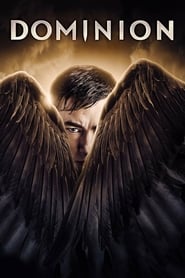
Dominion
2014
Dominion
2014
star 6.5Based on characters from the hit theatrical film ‘Legion’ (2010), ‘Dominion’ is an epic supernatural drama set in the year 25 A.E. In this transformed post–apocalyptic future an army of lower angels, assembled by the archangel Gabriel, has waged a war of possession against mankind. The archangel Michael, turning against his own kind, has chosen to side with humanity against Gabriel. Rising out of the ashes of the 25-year-long battle are newly fortified cities which protect the human survivors. In Vega (formerly Las Vegas), the largest of these cities, two houses vie for control and the stage is set for political upheaval and a dangerous power shift. Meanwhile, a rebellious young soldier begins a perilous journey as the war between the human race and the fallen angels hellbent on their domination escalates.Borgia
2011
Borgia
2011
star 7.3The name Borgia stands for betrayal, intrigue and corruption in the Vatican, which was the center of the world during the Renaissance.Koek
2024
Koek
2024
star 7.2When Cape Town housewife discovers evidence her husband is having an affair with a stripper, her investigation takes her to a world poles apart from the suburban utopia she knows.The Sisters Grimm
2025
The Sisters Grimm
2025
star 8.1One year after their parents' mysterious disappearance, sisters Sabrina and Daphne move to a magical town where fairytales are real and secrets lurk behind every corner.Magic Mobile Phone
2008
Magic Mobile Phone
2008
star 7.8What happens when a time blip brings an all-purpose, ultra-tech mobile phone from 2060 and Journey to the West characters from ancient China to 2006? Loopy adventures abound in the new Mainland drama Magic Mobile Phone starring swordsman regular Vincent Jiao Enjun (The Tearful Sword) in his first modern drama. Trading in his sword for a superhero cape, Jiao has to save earth from being destroyed by the Bull Demon in this CGI-laden roly-poly mix of fantasy, adventure, sci-fi, and comedy. Joining in the good-natured silliness is Shu Chang (Lotus Lantern) and Li Bin (Shanghai Dream)House of Guinness
2025
House of Guinness
2025
star 7.5Dublin, 1868. The Guinness family patriarch is dead, and his four children — each with dark secrets to hide — hold the brewery's fate in their hands.Sai de Baixo
1996
Sai de Baixo
1996
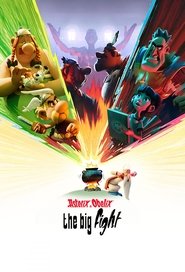
star 8.3It follows the lives of the members of a dysfunctional family, their maid and the doorman of the apartment building in which they lived.Asterix & Obelix: The Big Fight
2025
star 7.8When their druid forgets how to prepare the magic potion, Asterix and Obelix must defend the village as Caesar plots to use a Gallic law against them.Love Song in Winter
2024
Love Song in Winter
2024
star 8.2Since the anesthesiologist Lu Yan “runs into” her dead college friend Deng Man during a night shift, strange things around her occur successively. As the investigation proceeds, the detective Jiang Chengyi, Lu Yan’s ex-boyfriend from many years ago, is embroiled in it, and the long-hidden truth of eight years is gradually revealed.The Newlywed Game
1966
The Newlywed Game
1966
star 4.7The Newlywed Game is an American television dating game show that pits newly married couples against each other in a series of revealing question rounds to determine how well the spouses know or do not know each other. The program, originally created by Robert "Nick" Nicholson and E. Roger Muir and produced by Chuck Barris, has appeared in many different versions since its 1966 debut. The show became famous for some of the arguments that couples had over incorrect answers in the form of mistaken predictions, and it even led to some divorces. Many of The Newlywed Game's questions dealt with "making whoopee", the euphemism that producers used for sexual intercourse to circumvent network censorship. However, it became such a catchphrase of the show that its founding host, Bob Eubanks, continued to use the word throughout the show's many runs, even in the 1980s and 1990s episodes and beyond, when he could easily have said "make love" or "have sex" without censorship. GSN's version of The Newlywed Game airs reruns thr