Popular Soap TV Series - Page 32
All Services
Free Services
 Netflix
 Amazon Prime Video
 Apple iTunes
 Apple TV Plus
 Disney Plus
 Google Play Movies
 Paramount Plus
 Hulu
Hulu
 HBO Max
 YouTube
 fuboTV
 Peacock
 Peacock Premium
 Amazon Video
 The Roku Channel
 AMC+
AMC on Demand
AMC+
AMC on Demand
 Kocowa
 Hoopla
 The CW
 Vudu
Vudu
 Starz
Starz
 Showtime
 PBS
PBS
 Pantaflix
 FXNow
FXNow
 Tubi TV
 Kanopy
 Comedy Central
 Crunchyroll
 Microsoft Store
 Redbox
 Sun Nxt
 ABC
ABC
 DIRECTV
 Crackle
 Fandor
 Plex
Plex
Netflix
Amazon Prime Video
Apple iTunes
Apple TV Plus
Disney Plus
Google Play Movies
Paramount Plus
Hulu
HBO Max
YouTube
fuboTV
Peacock
Peacock Premium
Amazon Video
The Roku Channel
AMC+
AMC on Demand
Kocowa
Hoopla
The CW
Vudu
Starz
Showtime
PBS
Pantaflix
FXNow
Tubi TV
Kanopy
Comedy Central
Crunchyroll
Microsoft Store
Redbox
Sun Nxt
ABC
DIRECTV
Crackle
Fandor
Plex

Kuma - The Other Wife
2025
star 8.5Kuma: The Other Wife is a 2025 Turkish drama set in the rugged landscapes of eastern Turkey. When Ceylan — a young woman dreaming of independence — is wrongfully framed for murder, she is forced into a devastating fate: becoming the second wife, or "kuma," of Karan, the brother of the man she is accused of killing, and the man she loves. Trapped in a hostile household and fighting to prove her innocence, the series weaves together love, betrayal, tribal tradition, and emotional survival. Starring Aybüke Yılmaz and Emre Özmen.Elas por Elas
2023
Elas por Elas
2023
star 5.6"Crossed Paths" tells a history about seven friends who met in their youth at an English course meet again 25 years later; Lara, Taís, Helena, Adriana, Renée, Natália and Carol, each of them has a different personality and origin, but they share a deep affection.Apocalipse
2017
Apocalipse
2017
star 7.7A mysterious and spiritual portrayal of one of the most intense and controversial stories in the Holy Bible: the end of the world.Los Plateados
2005
Los Plateados
2005
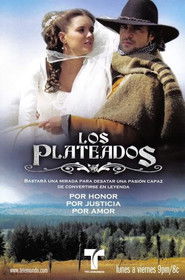
star 6.7This is a historical novel with its Roots in the beginning of XIX century. "Silverplated" were bandits who stole from the routes which transported silver to the states of Guanajuato and Taxco in Mexico. For that reason the bandits were called "the silver plated ones", which means "the silver-plated". It was the social time of the bandits, They would steal from the rich and give to the poor. This soap opera bring that era to us with plenty of excitement and romance.A Indomada
1997
A Indomada
1997
star 7.2In Greenville, some families never lose their composure. This is the case with the Mendonça and Albuquerque families, who would never allow a "noble" member of their family to become involved with a sugarcane cutter.Old River
2016
Old River
2016
star 7.9A great love story, a family rivalry that spans generations: the telenovela narrates the love for the São Francisco River, which is revealed in the feelings between Maria Tereza and Santo.The Slave Isaura
2004
The Slave Isaura
2004
star 7.5Isaura was born in 1835, in the farm of Commender Almeida. She is the daughter of the slave Juliana and the tenant of the farm, Miguel. Juliana dies right after the birth, because she denied going to bed with the Commender. He whips her to death in revenge. So, Isaura is raised and educated by Gertrudes, wife of the Commender, who always wanted to have a daughter. In spite of her excellent education and the white skin, Isaura, as a daughter of a slave,will always be treated as a slave.Amor Eterno Amor
2012
Amor Eterno Amor
2012
star 5.8Amor Eterno Amor is a Brazilian telenovela produced by Rede Globo and exhibited in the schedule of 18 hours. Written by Elizabeth Jhin and directed by Roberta Richards, Fábio Strazzer, Luciana Oliveira Paulo Ghelli, Pedro Vasconcelos and Rogério Gomes, it was released on March 5, 2012, ending on September, 7 of the same year, replacing A Vida da Gente.O Machão
1974
O Semideus
1973
Envy
2025
Envy
2025
star 2Deprived of her mother's attention and love throughout her life, Seniha grows up with a deep sense of jealousy towards her older brother, Halit. For her beauty-obsessed mother, Seniha is the ugly duckling, completely unfit for her noble and wealthy family. Her older brother, Halit, is the opposite. He is her mother's pride in every sense. Halit attends the best schools and takes advantage of the family's resources. He becomes both the country's most successful lawyer and its most promiscuous bachelor. Seniha, however, sinks deeper and deeper into the depths of her sense of worthlessness. She never finished school, never married, and has practically become a servant in her own home. She has become, as her older brother calls her, "Miss Nobody.Second Avenue
2007
Second Avenue
2007
star 4.8Andra Avenyn was a Swedish drama series and soap opera, produced by SVT and broadcast from 2007 to 2010.My Heroic Husband
2021
My Heroic Husband
2021
star 7.1Ning Yi, a determined woman from a cold background, grows through poetry, business, and martial arts, taking on increasing responsibilities and, with the help of her friends and family, using courage and wisdom to protect Lin An.Sol de Tentación
1996
Sol de Tentación
1996
Sol de Tentacion is a Venezuelan telenovela that was produced by and seen on Venevisión. This telenovela lasted 168 episodes and was distributed internationally by Venevisión International.118
2014
118
2014
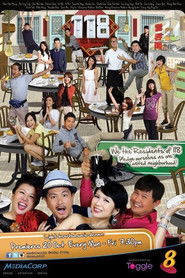
star 5Hong Daming is a positive and generous man. As his coffee shop and house number are both "118", the people around him gave him the nickname of "118" (or 要要发), much to his delight. Together with his wife, Liu Meimei, he makes a living by running the coffee-shop, and are well known in Tiong Bahru. Whenever someone is in need, they would always seek Daming for help. His family lives in a 3-room flat, which was built in pre-war years, above the coffee shop. He has 4 children. The children are named Hong Shunfeng, Hong Shunshui, Hong Jinzhi and Hong Yuye. Having 6 people living in a 3-room flat is cramped-up enough, yet he also rents out a room to "Ah Niang", a middle-aged man whose original name is Li Weiliang. Weiliang studied fashion design in France, but circumstances led him to simply run a stall in 118's coffee-shop, selling dumplings with the recipe that his mother left for him.Seven Sins
2007
Seven Sins
2007
star 6Beatriz, a spoiled young woman who, after consulting with the fortune teller Custodia, discovers that she needs to change to find happiness and love Dante, an honest man married to Clarice.Pepper Chocolate
2003
Pepper Chocolate
2003
star 8Ana Francisca is a poor and ugly girl who, after being humiliated by the entire town, becomes a beautiful, stylish and rich woman who wants revenge. During this trajectory, this romantic comedy also shows the true love of Ana Francisca and Danilo that survives throughout the years, the distance and the traps of destiny. They will be part of a love triangle with Olga, a snobbish girl who is going to do anything to steal Danilo from Ana Francisca.Amor e Revolução
2011
Amor e Revolução
2011
star 6Amor e Revolução is a Brazilian telenovela produced by SBT and originally broadcast from April 5, 2011, to January 13, 2012. Created by Tiago Santiago, with collaboration from Renata Dias Gomes, Miguel Paiva, and Eliana Garcia, and directed by Reynaldo Boury, the telenovela stars Graziella Schmitt, Cláudio Lins, and Lúcia Veríssimo. The production was the first Brazilian telenovela to portray the period of the military dictatorship as its main theme. Set between the 1960s and 1970s, the story follows Maria Paixão, a young woman involved in the armed resistance against the military regime, and José Guerra, a military officer who secretly opposes the government's actions. Despite being on opposite sides of the political conflict, they fall in love and face persecution, violence, ideological disagreements, and personal tragedies while fighting for their ideals and their relationship during one of the most turbulent periods in Brazilian history.