Popular War Politics TV Series - Page 57
All Services
Free Services
 Netflix
 Amazon Prime Video
 Apple iTunes
 Apple TV Plus
 Disney Plus
 Google Play Movies
 Paramount Plus
 Hulu
Hulu
 HBO Max
 YouTube
 fuboTV
 Peacock
 Peacock Premium
 Amazon Video
 The Roku Channel
 AMC+
AMC on Demand
AMC+
AMC on Demand
 Kocowa
 Hoopla
 The CW
 Vudu
Vudu
 Starz
Starz
 Showtime
 PBS
PBS
 Pantaflix
 FXNow
FXNow
 Tubi TV
 Kanopy
 Comedy Central
 Crunchyroll
 Microsoft Store
 Redbox
 Sun Nxt
 ABC
ABC
 DIRECTV
 Crackle
 Fandor
 Plex
Plex
Netflix
Amazon Prime Video
Apple iTunes
Apple TV Plus
Disney Plus
Google Play Movies
Paramount Plus
Hulu
HBO Max
YouTube
fuboTV
Peacock
Peacock Premium
Amazon Video
The Roku Channel
AMC+
AMC on Demand
Kocowa
Hoopla
The CW
Vudu
Starz
Showtime
PBS
Pantaflix
FXNow
Tubi TV
Kanopy
Comedy Central
Crunchyroll
Microsoft Store
Redbox
Sun Nxt
ABC
DIRECTV
Crackle
Fandor
Plex

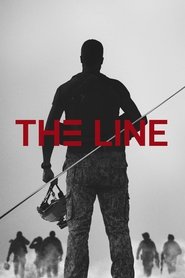
The Line
2021
The Line
2021
star 6.9In covert modern warfare, the line between right and wrong has blurred. This docuseries examines the moral ambiguities of war as embodied by the 2018 case in which a U.S. Navy SEAL platoon accused its chief, Eddie Gallagher, of war crimes.Resistance
2014
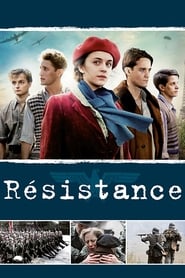
Resistance
2014
star 8In occupied France, 17-year-old Lili encounters war before love, and joins the Resistance. Through the interconnecting destinies of its teenage heroes, Resistance tells the story of young people going to any lengths to defend their country.王立群读史记之汉武帝
2007
王立群读史记之汉武帝
2007
The Comey Rule
2020
The Comey Rule
2020
star 6.9An immersive, behind-the-headlines account of the historically turbulent events surrounding the 2016 presidential election and its aftermath, which divided a nation. This two-part biopic tells the story of two powerful figures, Comey and Trump, whose strikingly different personalities, ethics and loyalties put them on a collision course.Trespasses
2025
Trespasses
2025
star 6.5When young Catholic teacher Cushla falls for a married Protestant man, their secret passion ignites a dangerous love that defies the Troubles divide.The 50 Years War: Israel and the Arabs
1998
star 7.5Decision-makers from Israel, the Arab states, Russia, and the U.S. tell the inside story of the Arab-Israel conflict. Charts the evolution of tensions, violence, and peace efforts from 1948 to 1998.生死十日
2006
生死十日
2006
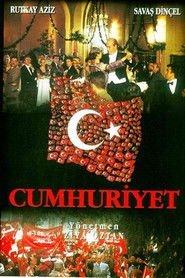
The Republic
1998
The Republic
1998
star 7.1This origin of the republic of Turkey. As İzmir celebrates victory, Latife Hanım’s admiration for Mustafa Kemal deepens while she hosts his mother, Zübeyde Hanım, in her home. Meanwhile, at Çankaya Mansion, the ailing Fikriye Hanım hides her worsening condition from Mustafa Kemal, only to be sent to a sanatorium as the War of Independence rages on.Morozov
2020
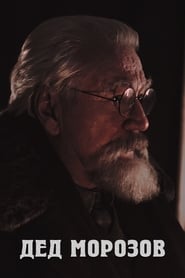
Morozov
2020
star 7.5Nikolay Morozov has been both a revolutionary and a terrorist in his long life. Sentenced to a lifetime of hard labour, he spent 30 years in a tsarist prison. His hair had long turned grey by the time the Second World War broke out, but when he realised his country needed him he volunteered for the army. Nikolay was 87 at the time.Zero-sen Hayato
1964
One Day in October
2024
One Day in October
2024
An anthology series exploring the aftermath of the October 7 attacks in Israel, where Hamas militants killed and took hostages. It portrays stories of love, bravery, endurance, and grief arising from the senseless violence.最后的较量
2009
最后的较量
2009
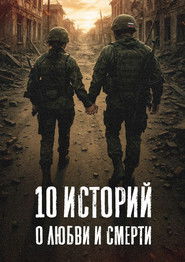
10 Stories About Love and Death
2025
Memoirs of military commander Semyon Pegov, who witnessed the tragic and heroic events in Donbas.猎狼刀
2019
猎狼刀
2019
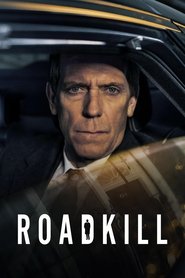
Roadkill
2020
Roadkill
2020
star 6.4Politician Peter Laurence's private life is falling apart. Shamelessly untroubled by guilt or remorse, he seeks to further his own agenda whilst others plot to bring him down. Can he out-run his own secrets to win the ultimate prize?The Trial of Klaus Barbie
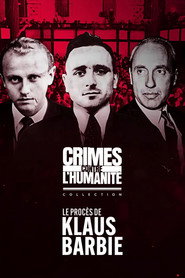
2025
star 10On May 11, 1987, the trial of Klaus Barbie, former head of the Gestapo and the first Nazi officer to be tried in France for crimes against humanity, began in Lyon. Tracked down and identified by Beate and Serge Klarsfeld, he was extradited from Bolivia through intergovernmental agreements. The charges centered on three major crimes: the roundups on Rue Sainte-Catherine, the roundup of the children of Izieu, and the final deportation convoy of August 11, 1944. During 37 hearings, filmed in their entirety, the survivors’ testimonies reveal a relentless and cruel torturer. Barbie, absent on the advice of his lawyer Jacques Vergès, was sentenced on July 4, 1987, to life imprisonment. This verdict marked a key milestone in the fight against impunity for Nazi criminals. Barbie died in 1991.Archrivals
2009
Archrivals
2009
天地奇英花木兰
1996
天地奇英花木兰
1996
Wish Me Luck
1988
Wish Me Luck
1988
star 6.5A secret organisation called The Outfit recruits and trains civilians, sending them undercover to aid in the war effort, or placing them in administrative tasks to aid the group. Each person arrives at The Outfit by a different route: Mathilde ('Matty') escaped to London from France and wants desperately to contribute to the war effort; Liz, whose husband is serving overseas and whose brother has just died in the war, stumbles into the group almost by accident. Former actor Colin Beale also trains for undercover work. Vivien's husband was executed when his work with The Outfit was uncovered. But they all come together against the common enemy.