Popular Western TV Series - Page 9
All Services
Free Services
 Netflix
 Amazon Prime Video
 Apple iTunes
 Apple TV Plus
 Disney Plus
 Google Play Movies
 Paramount Plus
 Hulu
Hulu
 HBO Max
 YouTube
 fuboTV
 Peacock
 Peacock Premium
 Amazon Video
 The Roku Channel
 AMC+
AMC on Demand
AMC+
AMC on Demand
 Kocowa
 Hoopla
 The CW
 Vudu
Vudu
 Starz
Starz
 Showtime
 PBS
PBS
 Pantaflix
 FXNow
FXNow
 Tubi TV
 Kanopy
 Comedy Central
 Crunchyroll
 Microsoft Store
 Redbox
 Sun Nxt
 ABC
ABC
 DIRECTV
 Crackle
 Fandor
 Plex
Plex
Netflix
Amazon Prime Video
Apple iTunes
Apple TV Plus
Disney Plus
Google Play Movies
Paramount Plus
Hulu
HBO Max
YouTube
fuboTV
Peacock
Peacock Premium
Amazon Video
The Roku Channel
AMC+
AMC on Demand
Kocowa
Hoopla
The CW
Vudu
Starz
Showtime
PBS
Pantaflix
FXNow
Tubi TV
Kanopy
Comedy Central
Crunchyroll
Microsoft Store
Redbox
Sun Nxt
ABC
DIRECTV
Crackle
Fandor
Plex

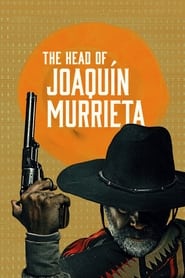
The Head of Joaquín Murrieta
2023
star 6.4Greed took over California because of the gold rush. It made people thirsty for wealth and land. There, in the newly drawn border between Mexico and the US, a lawless war for control, fueled by the anger and xenophobia of the past war, is led by a group of immigrants who join forces to create the myth of the Latin Robin Hood: Joaquín Murrieta.Hero
1966
Hero
1966
star 6.7The Hero is an American television sitcom that aired on NBC on Thursday Night at 9:30pm from September 8, 1966 to January 5, 1967.The Legend of Calamity Jane
1997
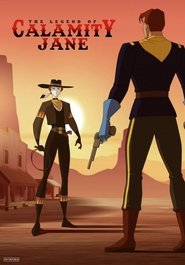
star 6.7Slow drawls, quick draws, heroes and outlaws all have one thing in common -- "The Legend of Calamity Jane." Fast with the whip, and even faster with a smile, Jane rides the trails and backwoods in search of truth and justice, showing what real heroes are made of in this animated western adventure series.Paradise
1988
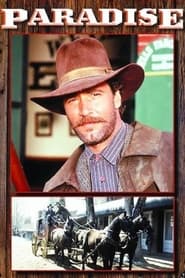
Paradise
1988
star 6The adventures of fictitious gunfighter Ethan Allen Cord, whose sister left her four children in his custody when she died.The Rounders
1966
The Rounders
1966
star 5.3The Rounders was a 17-episode western-style situation comedy about two cowboys on the fictitious J.L. Ranch in Texas. It starred Ron Hayes as Ben Jones and Patrick Wayne, a son of John Wayne, as Howdy Lewis. The M-G-M television series aired on ABC from September 6, 1966, to January 3, 1967. The program was loosely based on a 1965 film of the same name, The Rounders, starring Glenn Ford and Henry Fonda, set near Sedona, Arizona, rather than Texas. Chill Wills, a native Texan and formerly of CBS's Frontier Circus, appeared as the shady ranch owner, Jim Ed Love. Janis Hansen co-starred as Ben's girlfriend, Sally, and Bobbi Jordan played Howdy's girlfriend, Ada. Jason Wingreen appeared as Shorty Dawes, and Walker Edmiston as Regan. Character actors Strother Martin and J. Pat O'Malley appeared as "Cousin Fletch" and "Vince", respectively. James Brown, formerly the lieutenant on The Adventures of Rin Tin Tin, played "Luke". Selected episodes with notable guest stars include: "A Horse on Jim Ed Love", series premiere wFive Mile Creek
1983
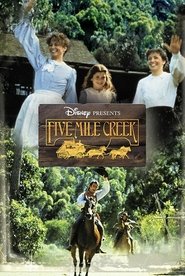
Five Mile Creek
1983
star 7.3Five Mile Creek is a western television drama series produced in Australia; starred Liz Burch, Louise Caire Clark, Rod Mullinar, Jay Kerr, Michael Caton, Peter Carroll, Gus Mercurio, Martin Lewis, Priscilla Weems and a young Nicole Kidman. Jonathan Frakes was a guest star as Maggie's estranged husband, Adam Scott. The series aired on the Disney Channel in the US in the 1980s.Further Adventures of Spin and Marty
1956
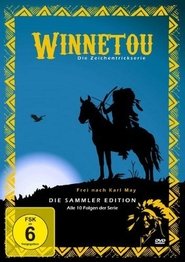
star 8.5About a freckle-faced Spin and wealthy city kid Marty at the Triple R Ranch summer camp. Adding to the fun are exclusive interviews with the original cast members and a special tour of the original filming site.Winnetou
1996
Ponderosa
2001
Ponderosa
2001
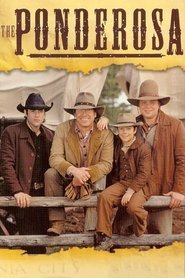
star 7Ponderosa is a television series developed by Bonanza creator David Dortort for PAX-TV that ran for the 2001–2002 television season. Envisioned as a prequel to the long-running NBC series Bonanza, it had less gunfire, brawling and other traditional western elements than the original. Bonanza creator David Dortort approved PAX TV's decision to hire Beth Sullivan, creator and executive producer of Dr. Quinn: Medicine Woman to oversee scripts and executive produce, which some believe gave the series a softer edge. Ponderosa was canceled after one season, in part because of disappointing ratings and high production costs. Although Sullivan had hoped to film the series in and around Los Angeles, PAX decided to film in Australia to reduce costs. Series "show runner" Sullivan sustained severe injuries in a car crash only twelve days after the airing of the first season's last episode. The show should not be confused with Ponderosa, the title used for Bonanza reruns aired on NBC during the summer of 1972.The Legend of Jesse James
1965
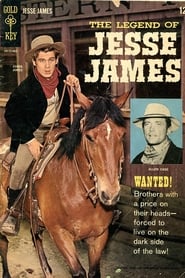
star 5.8The Legend of Jesse James is an American western series starring Christopher Jones in the tile role of notorious outlaw Jesse James. The series aired on ABC from September 13, 1965, to May 9, 1966. Allen Case joined Jones as Jesse's brother, Frank James.Tate
1960
Tate
1960
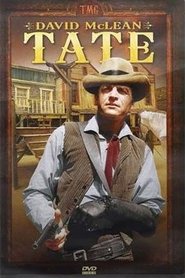
star 5.4Tate is an American Western television series that aired on NBC from June 8 until September 14, 1960. It was created by Harry Julian Fink, who wrote most of the scripts, and produced by Perry Como's Roncom Video Films, Inc., as a summer replacement for The Perry Como Show. Richard Whorf guest starred once on the series and directed the majority of the episodes. Ida Lupino directed one segment.Frontier
1955
Frontier
1955
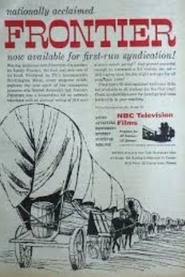
star 7.5Frontier is an American Western anthology series that aired on NBC from September 1955, to September 1956. The series de-emphasizes gunplay and focuses on the hazards of the settlement of the American West. It was only the second anthology Western series in television history, having been preceded by Death Valley Days. Frontier aired premiered on September 25, 1955, and ran sporadically in its last five months. Walter Coy narrated the series and starred in occasional episodes, which are dramatizations based on actual events. The program was produced by Worthington Miner.Valley of the Wild Roses
2006
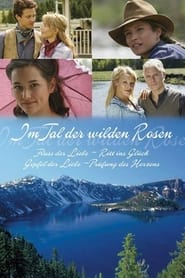
star 5.7The vast, unspoiled Valley of the Wild Roses, in the Canadian Rocky Mountains, is the scenery for separate stories of Western life, family drama and romance. People arrive, leave, return in search of love(rs), riches, redemption, revenge...Kaiketsu Zubat
1977
Kaiketsu Zubat
1977
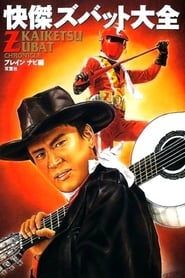
star 7.4Kaiketsu Zubat, translated as Extraordinary Zubat or Magnificent Zubat, was a tokusatsu superhero series that aired in 1977. Created by Shotaro Ishinomori, this 32-episode series, harkens back to tokusatsu superhero shows of the 1950s, but with a late-1970s twist.The Sacketts
1979
The Sacketts
1979
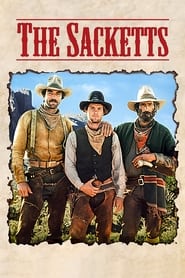
star 7.6A traditional sagebrush saga based on two novels ("Sackett" and "The Daybreakers") by Louis L'Amour. It focuses on the three Sackett brothers in New Mexico after the Civil War, seeking their fortunes, avenging a family killing, driving cattle, and fighting for law and order.Ricochet Rabbit & Droop-a-Long
1964
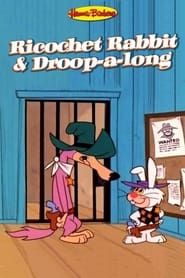
star 7.1Taking place in a Wild West setting, Ricochet Rabbit works as a sheriff in the town of Hoop 'n' Holler. Ricochet bounces off stationary objects yelling "Bing-bing-bing!" His deputy and foil Droop-a-Long Coyote is not as fast and is very clumsy.Sergeant Preston of the Yukon
1955
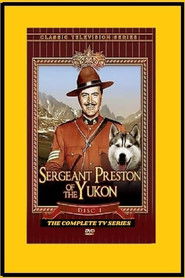
star 6.8Sergeant Preston of the Yukon is an American action adventure northwestern television series based on the radio drama Challenge of the Yukon. It was initially broadcast in color on CBS across three seasons from September 29, 1955 to September 25, 1958. Richard Simmons stars as Sergeant William Preston, who patrols the Yukon Territory in search of renegades and outlaws, during the time of the Klondike Gold Rush of the 1890s.Frontier Doctor
1958
Frontier Doctor
1958
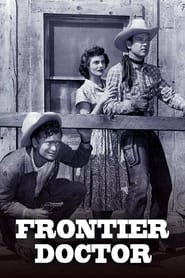
star 6.3Frontier Doctor is an American Western television series starring Rex Allen that aired in syndication from September 26, 1958, until June 20, 1959.Django
2023
Django
2023
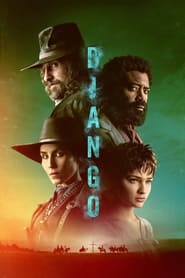
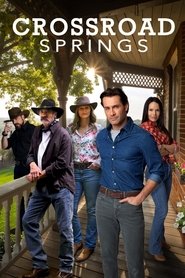
star 5.5In the Wild West in the 1860s and 1870s, Sarah and John have founded New Babylon, a city of outcasts of all backgrounds. Haunted by the murder of his family eight years earlier, Django is still looking for his daughter, believing she may have survived the killing. When Django shockingly finds her in Babylon, about to marry John, Sarah - now a grown woman - wants Django to leave fearing he'll put Babylon in jeopardy. But Django, believing the city is in danger, is adamant that he will not lose his daughter twice.Crossroad Springs
2025
Crossroad Springs
2025
star 8.8The Hamilton family faces financial struggles and staffing shortages on Hamilton Ranch. Pastor James and Janet return to help the family, encountering a generational feud between the family owners. James starts a cowboy church on the farm, where faith, family, and ranch life are intertwined, despite the lack of worship spaces on the vast farmland.