Popular Animation TV Series on Pantaflix - Page 236
All Services
Free Services
 Netflix
 Amazon Prime Video
 Apple iTunes
 Apple TV Plus
 Disney Plus
 Google Play Movies
 Paramount Plus
 Hulu
Hulu
 HBO Max
 YouTube
 fuboTV
 Peacock
 Peacock Premium
 Amazon Video
 The Roku Channel
 AMC+
AMC on Demand
AMC+
AMC on Demand
 Kocowa
 Hoopla
 The CW
 Vudu
Vudu
 Starz
Starz
 Showtime
 PBS
PBS
 Pantaflix
 FXNow
FXNow
 Tubi TV
 Kanopy
 Comedy Central
 Crunchyroll
 Microsoft Store
 Redbox
 Sun Nxt
 ABC
ABC
 DIRECTV
 Crackle
 Fandor
 Plex
Plex
Netflix
Amazon Prime Video
Apple iTunes
Apple TV Plus
Disney Plus
Google Play Movies
Paramount Plus
Hulu
HBO Max
YouTube
fuboTV
Peacock
Peacock Premium
Amazon Video
The Roku Channel
AMC+
AMC on Demand
Kocowa
Hoopla
The CW
Vudu
Starz
Showtime
PBS
Pantaflix
FXNow
Tubi TV
Kanopy
Comedy Central
Crunchyroll
Microsoft Store
Redbox
Sun Nxt
ABC
DIRECTV
Crackle
Fandor
Plex

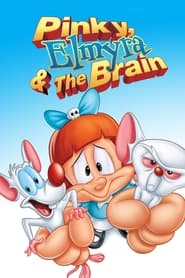
Pinky, Elmyra & The Brain
1998
star 6.6The popular animated characters Pinky and the Brain continue to concoct schemes to rule the world while hiding out in the suburbs where they live with Elmyra, a hyperactive tot of Tiny Toon Adventures fame.Zombie-Loan
2007
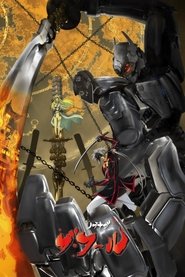
Zombie-Loan
2007
star 5.8Based on the manga by PEACH-PIT, serialised in G-Fantasy. When a human is marked to die, a faint gray line that is invisible to most appears around their neck. As time passes, that ring becomes darker and darker, until it is eventually black, and that person dies. Kita Michiru has an unusual gift - she posses "Shinigami eyes," which allow her to see these rings. When Michiru notices that two of the boys in her Class, Akatsuki Chika and Tachibana Shito not only have rings, but that they`re jet black, they reveal to her that the were supposed to die in a tragic accident six months ago. With the help of the Zombie Loan loan office, they were given a second chance at life, should they be able to pay for their debt by doing the work of Shinigami and killing malicious zombies. They petition Michiru to assist them in their efforts, and she finds her everyday life changing dramatically.I'm Giving the Disgraced Noble Lady I Rescued a Crash Course in Naughtiness
2023
star 6.8What does a young noblewoman freshly betrayed by her betrothed need most? A crash course in everything naughty! And who better to teach her than the feared hermit sorcerer who for some reason can’t help but pamper her to no end?Nobunaga the Fool
2014
Nobunaga the Fool
2014
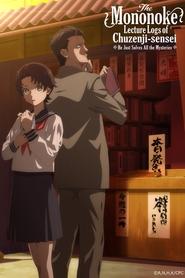
star 5.9Many years ago the world was divided into two stars, the Eastern and the Western, that were connected by a bond known as the Dragon Pulse. On the Western Star, Jeanne D’Arc is shunned as a heretic for her visions of a champion who will save the planets that have become embroiled in war. Now the fate of two worlds hangs in the balance as, at the order of King Arthur, Jeanne travels from the West to the East with Leonardo Da’Vinci at her side, in search of their long awaited savior- Nobunaga!The Mononoke Lecture Logs of Chuzenji-sensei: He Just Solves All the Mysteries
2025
star 7.5In 1948 Tokyo, just right after the war, Kanna Kusakabe had just become a second-year at a high school when she meets the new language teacher, Akihiko Chuzenji. Mysterious supernatural things keep happening around Kanna. Once again today, Kanna is going to open the doors to the library prep room to seek help from the surly Chuzenji-sensei who is waiting inside.Brave Command Dagwon
1996
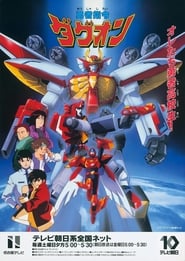
Brave Command Dagwon
1996
star 9Brave Command Dagwon is a Japanese anime series begun in 1996, created by Takara and Sunrise under the direction of Tomomi Mochizuki (who also did screenplay for the show) and was the seventh and penultimate entry in the Brave (Yūsha) franchise.Be-Be-Bears
2015
Be-Be-Bears
2015
star 5.8Bear buddies Bucky and Bjorn play games, go on far-out adventures and learn about wondrous new things together.Sherlock Holmes in the 22nd Century
1999
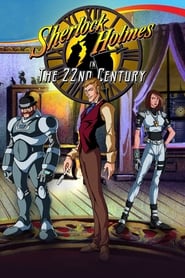
star 7.9Sherlock Holmes fights crime in the 22nd Century with help from his loyal friend, Dr. Watson, who is programmed into the brain of an android.Kiddy Grade
2002
Kiddy Grade
2002
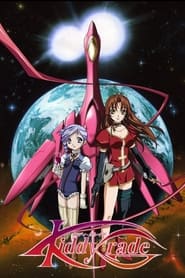
star 6.3In Star century Zero-One-Sixty-Five, the Global Union was born. The G.O.T.T. was simultaneously formed to settle disputes amongst the member planets. Existing in the shadows, the ES Force serves as the primary law enforcement organization, seeing that the Galactic Organization’s orders are enforced. ES Force members Éclair and Lumiere are on the front line, pursuing all manner of criminals and bringing them to justice. This is their story.Gakuen Basara: Samurai High School
2018
star 7.8The suspension of student council president, Toyotomi Hideyoshi, has created a power vacuum at Basara Academy. Now, Date Masamune and Sanada Yukimura find themselves vying for the top spot. But they aren’t the only ones with their eyes on the prize.Loving Angel Angelique
2006
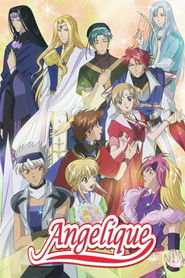
A young girl named Ange is summoned to a Sacred Land and is chosen as the Legendary Etoile, whose mission is to save the newly-born Cosmos of the Holy Beast, which has recently fallen under a crisis. With the support of nine Guardians (who have the power of nine elements), she embarks on a journey to save the dying land of the Holy Beast and to discover her true self.Legend of Himiko
1999
Legend of Himiko
1999
star 7.2In a world where the dead walk, where good and evil exist as palpable forces, a darkness is stirring. The undead march against the cities of light, to capture the sacred fire that is the source of their power. But one hope remains. Called into this world by the magical flame, a young girl named Himiko is thrust into the maelstrom of danger, betrayal, and war. For she is heir to the sacred fire, and holds a power that could save its Guardians... if she survives!Homerun Kanta
1977
Homerun Kanta
1977
star 1Ippatsu Kanta-kun is an anime created by Tatsunoko Production. Along with Temple the Balloonist, it was one of the last works for which Tatsunoko co-founder Tatsuo Yoshida was credited as a creator; Yoshida died before the series began airing. The series was released in two DVD box sets in January 2010.The Marshmallow Times
2004
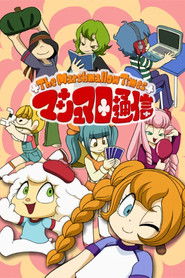
star 6Sandy, a girl whose pet is a sheep-like creature named Cloud, and 6 other children — Jasmine, Lime, Basil, Clove, Nuts and Cinnamon — become friends and form a journalism team and adventure their world together.Nobunaga Concerto
2014
Nobunaga Concerto
2014
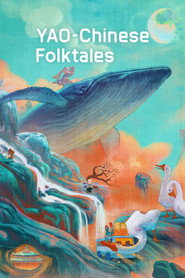
star 6.7Saburo is a high school student good in sports, but not very good with his studies. One day, Saburo travels back in time and arrives in the Sengoku period of 1549. There, Saburo meets Nobunaga Oda who looks and sounds just like Saburo. Nobunaga Oda is the son of a warlord and magistrate of the lower Owari Province. Nobunaga Oda, though, is physically weak, and he asks Saburo to take his place. Then, Saburo as Nobunaga Oda attempts to unify the country of Japan.Yao-Chinese Folktales
2023
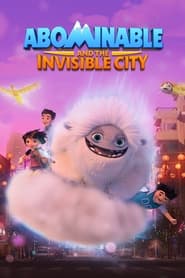
star 7.5Yao-Chinese Folktales has eight independent story rooted in traditional Chinese cultureAbominable and the Invisible City
2022
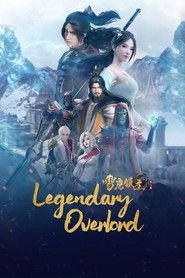
star 7.6Through Everest, the yeti, Yi, Jin, and Peng know that there’s a whole magical world out there, and now it’s even closer than they think! When they discover that their surroundings are teeming with magical creatures in need of their help, the kids will set out on extraordinary and heartfelt adventures throughout their city and beyond.Legendary Overlord
2018
Legendary Overlord
2018
star 6.7It tells the legendary story of Dongbo Xueying, his wife Yu Jingqiu and others who have overcome difficulties, experienced extraordinary things and constantly achieved supreme achievements in the alien continent.ViVid Strike!
2016
ViVid Strike!
2016
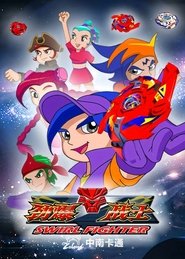
star 8Raised up in the same orphanage, Fuuka and Rinne were once close friends but parted company after a quarrel ended up with Rinne overwhelmed Fuuka with her martial art skills. Fuuka has a life in poverty after leaving the orphanage. An accidental encounter with renowned martial arts champion Einhard Stratos discovered Fuuka's hidden talent in fighting; Einhard offered Fuuka a job and coaching, encouraging her to meet up with Rinne again — in a ring.劲爆战士
2008