Popular Animation TV Series on Pantaflix - Page 472
All Services
Free Services
 Netflix
 Amazon Prime Video
 Apple iTunes
 Apple TV Plus
 Disney Plus
 Google Play Movies
 Paramount Plus
 Hulu
Hulu
 HBO Max
 YouTube
 fuboTV
 Peacock
 Peacock Premium
 Amazon Video
 The Roku Channel
 AMC+
AMC on Demand
AMC+
AMC on Demand
 Kocowa
 Hoopla
 The CW
 Vudu
Vudu
 Starz
Starz
 Showtime
 PBS
PBS
 Pantaflix
 FXNow
FXNow
 Tubi TV
 Kanopy
 Comedy Central
 Crunchyroll
 Microsoft Store
 Redbox
 Sun Nxt
 ABC
ABC
 DIRECTV
 Crackle
 Fandor
 Plex
Plex
Netflix
Amazon Prime Video
Apple iTunes
Apple TV Plus
Disney Plus
Google Play Movies
Paramount Plus
Hulu
HBO Max
YouTube
fuboTV
Peacock
Peacock Premium
Amazon Video
The Roku Channel
AMC+
AMC on Demand
Kocowa
Hoopla
The CW
Vudu
Starz
Showtime
PBS
Pantaflix
FXNow
Tubi TV
Kanopy
Comedy Central
Crunchyroll
Microsoft Store
Redbox
Sun Nxt
ABC
DIRECTV
Crackle
Fandor
Plex

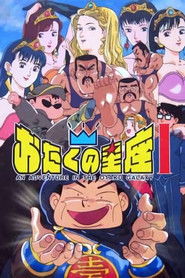
An Adventure in the Otaku Galaxy
1994
star 4Based on a RPG game for the PC Engine and Famicom. It is a world overrun by a new kind of disease. Men all over are being turned into otaku by a mysterious idol group, with an evil demon Indra pulling the strings behind the curtains. All hope seems lost... It is up to one man with the help of his idiot sidekick and a tranny to take down the opposing idols and stop Indra's evil plot. The man being Man - man that has no name, man that needs no name. He knows his way around in battle, ocean, space, shower scene, and even nudist colony fashion shows. He's the man that knows what Momotaro felt like. But can he save the Universe in the scope of two episodes that are fraught with gratuitous fanservice fillers?峡谷重案组
2017
峡谷重案组
2017
Generation O!
2000
Generation O!
2000
star 8.5Animated adventures of a preteen rock star and her band, who have a kangaroo drummer.MuMuHug
2006
MuMuHug
2006
迷你特工队之超级战警力量
2024
迷你特工队之超级战警力量
2024
Iketeru Futari
1999
Iketeru Futari
1999
star 5Keisuke Saji is a rather energetic young man who is quite smitten with the mysterious Koizumi Akira who appears to hate men. And then there is also Saji's well-endowed childhood friend Yuki who sees Akira as a rival. So what will become of this love-triangle?Genius Party
2007
Genius Party
2007
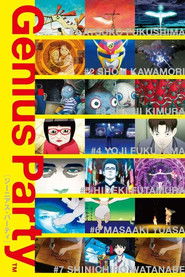
star 7.5The seven short films making up GENIUS PARTY couldn’t be more diverse, linked only by a high standard of quality and inspiration. Atsuko Fukushima’s intro piece is a fantastic abstraction to soak up with the eyes. Masaaki Yuasa, of MIND GAME and CAT SOUP fame, brings his distinctive and deceptively simple graphic style and dream-state logic to the table with “Happy Machine,” his spin on a child’s earliest year. Shinji Kimura’s spookier “Deathtic 4,” meanwhile, seems to tap into the creepier corners of a child’s imagination and open up a toybox full of dark delights. Hideki Futamura’s “Limit Cycle” conjures up a vision of virtual reality, while Yuji Fukuyama’s "Doorbell" and "Baby Blue" by Shinichiro Watanabe use understated realism for very surreal purposes. And Shoji Kawamori, with “Shanghai Dragon,” takes the tropes and conventions of traditional anime out for very fun joyride.Spheres
0000
Spheres
0000
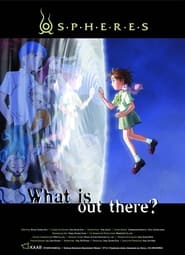
Spheres is a Korean animated television series. It is a product of the major broadcaster Munhwa Broadcasting Corporation, and the animation was done by Studio Kaab, which would later animate the series Nalong. Unbeknownst to human history, the Kingdom of Spheres existed upon Earth long ago. The people of this kingdom would be regarded today as people with psychic powers. Unfortunately, like most other civilizations, as the gap widened more and more between the social classes, the Kingdom of Spheres was troubled by those greedy for power; and in the end it collapsed. Na Yeon is a mysterious girl who was found in the Antarctic after the destruction of Spheres. One day Asten, the chairman of Sphere Union, who has a burning ambition to control the world, sent his followers to keep watch on Na Yeon. Na Yeon and her friends try to keep three artifacts, the keys to conquer the world, from the hands of Sphere Union.Bogy and Tamtam
1983
Bogy and Tamtam
1983
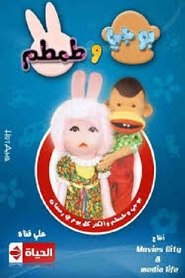
star 10It is an Egyptian puppet series written and directed by the late Rahmi, which had a great impact on the culture of the Egyptian and Arab children. The original Egyptian environment, which had the greatest impact on confronting Western cultures. Pictures of the Buji and Tamtam series in the eighties of the twentieth century, where his first production was a series on behaviors, and that was in 1983 and parts came after that超变兽车侠
2024
超变兽车侠
2024
Malá čarodějnice
1984
Bamse och tjuvstaden
2020
Mézga Aladár különös kalandjai
1972
star 6.9Every night Aladár visits a different inhabited planet using an inflatable interstellar cosmic ship with his talking dog Blöki.My Little Planet
1997
Manga of Great Personalities
1977
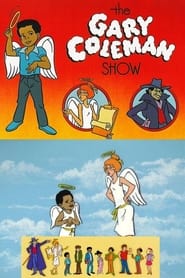
From Genghis Khan to Thomas Edison, each episode in this series focuses on the life and achievement of two of history's greatest and most important persons.The Gary Coleman Show
1982
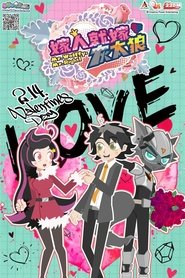
star 5.5The Gary Coleman Show is an animated television series produced by Hanna-Barbera that originally aired on NBC during the 1982-1983 season.喜羊羊与灰太狼之嫁人就嫁灰太狼
2017
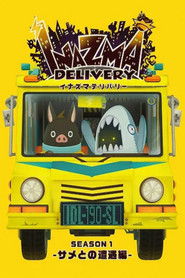
Inazma Delivery
2016
Inazma Delivery
2016
star 9.5Inazma Delivery is set in the town of Babiden City, where everything runs on electricity. Hemingway is an earnest young man who works at the delivery company Inazma, which promises to deliver any package to its proper destination. One day, an extraterrestrial lost child in a shark costume named Bytheway appears and asks to be delivered to its home planet, and soon Hemingway and Bytheway are embroiled in all sorts of adventures.Little Shop
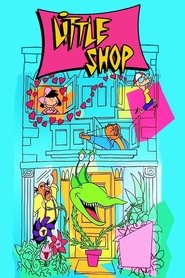
1991
Little Shop
1991
star 7.4Little Shop was a 1991 animated television series that aired on Saturday morning about a teenager and a giant talking plant that eats everything in sight. Little Shop was based on the off-broadway musical Little Shop of Horrors, which was based on the 1960 Roger Corman film The Little Shop of Horrors. The concept of the adaptation is credited to Ellen Levy and Mark Edward Edens, and the series was produced by Tom Tataranowicz. The horror elements in previous versions of the story, in which characters are eaten by the plant, are toned down for children in this series.