Popular Sci Fi Fantasy TV Series on Pantaflix - Page 309
All Services
Free Services
 Netflix
 Amazon Prime Video
 Apple iTunes
 Apple TV Plus
 Disney Plus
 Google Play Movies
 Paramount Plus
 Hulu
Hulu
 HBO Max
 YouTube
 fuboTV
 Peacock
 Peacock Premium
 Amazon Video
 The Roku Channel
 AMC+
AMC on Demand
AMC+
AMC on Demand
 Kocowa
 Hoopla
 The CW
 Vudu
Vudu
 Starz
Starz
 Showtime
 PBS
PBS
 Pantaflix
 FXNow
FXNow
 Tubi TV
 Kanopy
 Comedy Central
 Crunchyroll
 Microsoft Store
 Redbox
 Sun Nxt
 ABC
ABC
 DIRECTV
 Crackle
 Fandor
 Plex
Plex
Netflix
Amazon Prime Video
Apple iTunes
Apple TV Plus
Disney Plus
Google Play Movies
Paramount Plus
Hulu
HBO Max
YouTube
fuboTV
Peacock
Peacock Premium
Amazon Video
The Roku Channel
AMC+
AMC on Demand
Kocowa
Hoopla
The CW
Vudu
Starz
Showtime
PBS
Pantaflix
FXNow
Tubi TV
Kanopy
Comedy Central
Crunchyroll
Microsoft Store
Redbox
Sun Nxt
ABC
DIRECTV
Crackle
Fandor
Plex

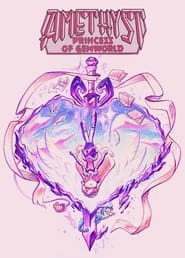
Amethyst: Princess of Gemworld
2013
star 7.6An ordinary girl is pulled into the fantasy realm of Gemworld to save it from a monstrous villain.Le Bidule
1999
Le Bidule
1999
star 7The widget is a little object related to radioactivity, produced by the Widget Corporation.Useless object of consumption, without any particular function, the widget is essential to the well-being of the inhabitants and their integration into society.Kyoudai Ken Byclosser
1985
star 8.3Kyoudai Ken Byclosser was a serial Tokusatsu created by Shotaro Ishinomori (Ishinomori Productions) and Toei Company, in co-production with Nippon Television. The series consisted of 34 episodes, and aired in Japan starting January 10th, 1985 until August 29th of the same year.Super Robot Galatt
1984
Super Robot Galatt
1984
The story takes place in a future version of Earth where war has been outlawed and owning weapons is forbidden. A galactic real estate syndicate arrives to carve the planet up into subdivisions. To combat the invasion, a genius inventor, Dr. Kiwi, recruits young Michael Marsh, his girlfriend Patti Pumpkin, and rich classmate Camille Cashmere Jr. as fighters by upgrading the kids' robot helpers (known as Janbu, Patigu and Kamigu respectively) into powerful robot fighters. Michael's robot sidekick Janbu becomes the titular Galatt.Vampires
2020
Vampires
2020
star 7.4A Paris teen who's half human, half vampire grapples with her emerging powers and family turmoil as she's pursued by a secret vampire community.Genius Party
2007
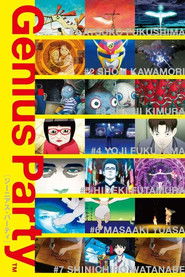
Genius Party
2007
star 7.5The seven short films making up GENIUS PARTY couldn’t be more diverse, linked only by a high standard of quality and inspiration. Atsuko Fukushima’s intro piece is a fantastic abstraction to soak up with the eyes. Masaaki Yuasa, of MIND GAME and CAT SOUP fame, brings his distinctive and deceptively simple graphic style and dream-state logic to the table with “Happy Machine,” his spin on a child’s earliest year. Shinji Kimura’s spookier “Deathtic 4,” meanwhile, seems to tap into the creepier corners of a child’s imagination and open up a toybox full of dark delights. Hideki Futamura’s “Limit Cycle” conjures up a vision of virtual reality, while Yuji Fukuyama’s "Doorbell" and "Baby Blue" by Shinichiro Watanabe use understated realism for very surreal purposes. And Shoji Kawamori, with “Shanghai Dragon,” takes the tropes and conventions of traditional anime out for very fun joyride.The Queen of Attack
2021
The Queen of Attack
2021
star 3Liang Weiwei, a track and field student with superhuman strength and an idolater, accidentally entered a historical drama starring the idol Jing Qing. She becomes the disgraced empress who is set to die in the third episode. In order to get rid of this "setup", Liang Weiwei uses her knowledge as a drama fan and skilfully uses the plot mechanism to escape fate and start a fantasy bitter-sweet love story with the emperor played by Jing Qing.Rolling with the Ronks!
2017
The alien Flash is sent to Earth to help the Ronks evolve. But are they ready for (r)evolution?Galaxy Racers
2006
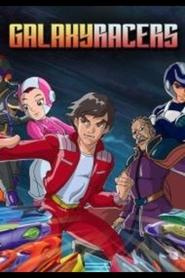
Galaxy Racers
2006
star 10Galaxy Racers (星际飙车王, Xingji Biaoche Wang) is a 2006 Chinese animated series that aired for 52 episodes from February 1 to June, 2006.Girl2K
2021
Girl2K
2021
star 4.7Momay is two thousand years old. For centuries she has never aged, never gotten sick, never died. Having tried hundreds of methods to kill herself over and over again and always failing, Momay finally sees a ray of light at the end of the tunnel when her friend Krating, a fortuneteller, tells her that she will be able to age and pass on if she finds the love of her life within the year. The problem is, there are four candidates. Thawin—her hardworking and generous boss, Khun Prom—their company's biggest client, Kampan—a sweet young man—and Moo Tod—the dashing new guy. Four candidates and one year to find the love of her life. But who's the right one?NarcoLeap
2018
NarcoLeap
2018
star 8When college student Kelsey Atkins unexpectedly leaps into the bodies of other people during her bouts of narcolepsy, she becomes a target in the deadly world of military espionage.Searching For The Immortals
2024
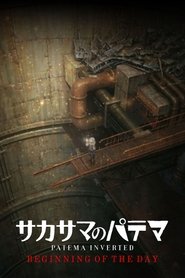
star 8Forced to temporarily reside in the Lin family's old mansion in the suburbs, Lin Chu was surprised to find mysterious voices emanating from a bonsai tree in the courtyard. He unexpectedly entered the bonsai and discovered a sacred mountain and an immortal—Xuanqing Patriarch—sealed within. Xuanqing Patriarch realized Lin Chu possessed the ability to break the seal and decided to take him as a disciple, teaching him cultivation methods so he can break the seal. At the same time, to repay Lin Chu, Xuanqing Patriarch also agreed to teach him some skills to help him investigate the truth behind his parents' disappearance. Lin Chu agreed to Xuanqing Patriarch's request and thus embarked on the path of cultivation!Patema Inverted: Beginning of the Day
2012
star 7.4Despite leading a peaceful life as the princess of a subterraneous colony, teenage Patema longs to escape her cramped industrial confines and experience someplace different. While satiating her curiosity by exploring a region known as the "danger zone," she is startled by a cloaked figure and falls into the darkness of an abyss. Awakening with the sky below her feet and the ground hanging above, Patema finds herself clinging to a fence at the mercy of a seemingly reversed gravity. Although a nearby student named Age is able to rescue her, they are left wondering which of the two is actually upside down.Dark Oracle
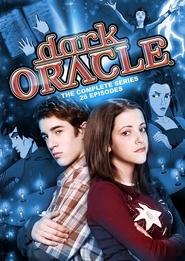
2004
Dark Oracle
2004
star 6.5Dark Oracle is a Canadian-produced TV series that premiered in 2004 on the popular Canadian channel YTV. It was created by Jana Sinyor, and co-developed by Heather Conkie. In 2005, Dark Oracle won the International Emmy for Best Children's and youth program.Kamen Rider 555: Murder Case
2024
star 10Takumi, Mari, Masato, and many other people who work at Kikuchi Cleaning Shop are leading their daily lives as usual. One day, a customer visiting the store is suddenly killed by someone, they need to try to find out who the murderer is...Iron King
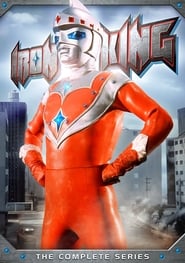
1972
Iron King
1972
star 9.5Iron King is a tokusatsu superhero TV series about a giant cyborg. The series was produced by Nippon Gendai and Senkosha, and aired on Tokyo Broadcasting System from October 8, 1972 to April 8, 1973, with a total of 26 episodes.Hypnosis
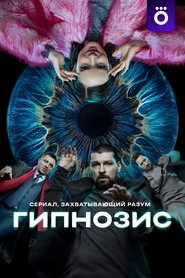
2025
Hypnosis
2025
star 7.5The story of three friends: a private detective with the ability to read minds, a lawyer with the gift of seeing the future of a person and a priest with the gift of seeing the past. All of them, thanks to their abilities, have settled into life quite well. But at some point, someone appears on the horizon who wants to take revenge on them for what they did in the distant past.Liverspots and Astronots
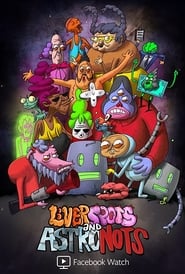
2018
star 6No one seems to know why Dusty Craters, a dilapidated nursing home, is floating through space carrying a colorful assortment of grumpy old folks under the care of an evil goat doctor. But then again nothing seems to make sense in a world where a talking two-dollar bill lives in a Cracker Jack box and a three-eyed ape just might be the center of the universe. Best friends Roosi and Big Man uncover these mysteries and more as they go on one epic adventure after another in this buddy comedy.Torchy the Battery Boy
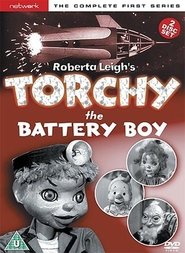
1960
star 6.2Torchy the Battery Boy was the second television series produced by AP Films and Gerry Anderson, running from 1960 to 1961. It was another collaboration with author Roberta Leigh and was directed by Anderson, with music scored by Barry Gray, art direction from Reg Hill and special effects by Derek Meddings. The second series of 26 episodes was produced by Associated British-Pathé without the involvement of Anderson and AP Films. Both series have been released on DVD. The series followed adventures of the eponymous boy doll with a battery inside him and a lamp in his head, and his master Mr Bumbledrop, voiced by Kenneth Connor, who also voiced a number of other characters.Les Argonautes
2013
Les Argonautes
2013