Popular Soap TV Series on Pantaflix - Page 43
All Services
Free Services
 Netflix
 Amazon Prime Video
 Apple iTunes
 Apple TV Plus
 Disney Plus
 Google Play Movies
 Paramount Plus
 Hulu
Hulu
 HBO Max
 YouTube
 fuboTV
 Peacock
 Peacock Premium
 Amazon Video
 The Roku Channel
 AMC+
AMC on Demand
AMC+
AMC on Demand
 Kocowa
 Hoopla
 The CW
 Vudu
Vudu
 Starz
Starz
 Showtime
 PBS
PBS
 Pantaflix
 FXNow
FXNow
 Tubi TV
 Kanopy
 Comedy Central
 Crunchyroll
 Microsoft Store
 Redbox
 Sun Nxt
 ABC
ABC
 DIRECTV
 Crackle
 Fandor
 Plex
Plex
Netflix
Amazon Prime Video
Apple iTunes
Apple TV Plus
Disney Plus
Google Play Movies
Paramount Plus
Hulu
HBO Max
YouTube
fuboTV
Peacock
Peacock Premium
Amazon Video
The Roku Channel
AMC+
AMC on Demand
Kocowa
Hoopla
The CW
Vudu
Starz
Showtime
PBS
Pantaflix
FXNow
Tubi TV
Kanopy
Comedy Central
Crunchyroll
Microsoft Store
Redbox
Sun Nxt
ABC
DIRECTV
Crackle
Fandor
Plex

Um Sonho a Mais
1985
Um Sonho a Mais
1985
star 7The story begins with the arrival of millionaire Antônio Carlos Volpone in Brazil. After living in Cairo for 18 years, he returns to his homeland for two reasons: first, to clarify the murder of his father-in-law, Dr. Telles, of which he was accused; second, to get closer to his ex-wife Estela, now married to Orlando Aranha. The millionaire also attracts media attention, and reporter Amélia Bicudo decides to investigate his life. To mislead his enemies and move freely, Volpone uses numerous disguises: the executive Anabela Freire, the doctor Nilo Peixe, the industrialist Augusto Melo Sampaio, and the driver André Silva. With the help of his loyal secretary and friend, Mosca, he confronts his main rival, Orlando Aranha, and Renata, Orlando's sister, who holds secrets about the murder of Estela's father.Acorralada
2007
Acorralada
2007
star 7Acorralada is an American telenovela produced by Venevisión. Univision aired Acorralada from January 2007 to October 2007 on weekday afternoons at 2 pm central. It was rebroadcast in late 2011 through April 2012 on Univision's sister network, Telefutura. It was filmed in Miami, Florida, and lasted about 187 episodes. It is the second long-running telenovela that Venevisión Productions has produced without its former co-producer Fonovideo.Xeque-Mate
1976
Club 57
2019
Club 57
2019
star 8.2When Eva and Rubén travel back in time to 1957, they try to go unnoticed until they find a way to return. Their plans change after Eva falls for Italian heartthrob JJ, and her actions begin to drastically alter the future.Kisi Ki Nazarr Na Lage
2008
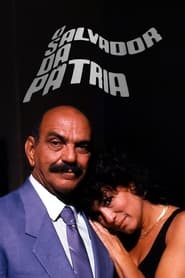
Kisi Ki Nazarr Na Lage is a Hindi language Indian drama television series that airs on DD National channel. The series is produced by Raja Mukherjee, brother of the Bollywood actress Rani Mukherjee. The story is of a joint Bengali family and spans three generations of characters. The series airs every Monday - Friday at 1pm IST.O Salvador da Pátria
1989
O Salvador da Pátria
1989
star 7.9Sassá Mutema is a farm laborer who becomes the target of the city's powerful figures' cruelty. With Clotilde's support, he discovers that it's possible to start a new life alongside a great love.Pacific Drive
1996
Pacific Drive
1996
star 4Pacific Drive is an Australian television series The series was conceived as a flamboyant, melodramatic soap opera and dealt with the lives of wealthy Australians living on the Gold Coast. Although criticised for being an Australian copy of the American soap opera Melrose Place, its outrageous storylines - including corporate scheming, various affairs, serial killers and a lesbian love triangle - saw the series gain a cult reputation.Papai Coração
1976
Bachelor Party
1992
Bachelor Party
1992
star 7.5After an unjust imprisonment, friends return to the town of Remanso, facing betrayals and lost loves, while battling a corrupt lawyer.Amor e Revolução
2011
El Renacer de Luna
2026
NKBİ – Ne ki Benden İstediğin
2026
star 7.5Designed in a vertical format suitable for new generation viewing habits, “NKBİ” focuses on the emotional world of Generation Z through relationships, friendships, first encounters, and first messages.Der Frisör
2001
Der Frisör
2001
Under the Same Sky
2015
Under the Same Sky
2015
star 8Carlos Martínez is an undocumented Mexican who lives in Los Angeles. He is an honest and hardworking man who has the constant fear of being deported and losing his two sons: Luís and Rodrigo. His great dream has been to give them a better life, but his desire is overshadowed when his eldest son, Rodrigo, disappears without a trace and joins a gang. Meanwhile, Carlos will try to protect and keep Luís away from the dangerous networks that plague the city. In his desperate attempt to take care of him he will meet Adela, a gang member who will steal his heart.Aapki Antara
2009
Aapki Antara
2009
Aapki Antra was a Zee TV soap opera which premiered on June 1, 2009 and ended on February 18, 2010. The story is about a girl, Antara, who is diagnosed with autism and who positively affects the lives of those she encounters during her life.Destinées
2007
Destinées
2007
star 0.5Destinées revolves around clinique Jouvence, a cosmetics and health clinic offering a variety of treatments ranging from massage to cosmetic surgery.O'
2012
Love Bites
2002
Love Bites
2002
star 6.4Set in the fictional city of Maramores, the plot centers on the character of Lívia, whose destiny begins to be shaped in the 12th century when the vampire Boris falls madly in love with her and decides to win her over at any cost, regardless of time or place. In medieval times, Lívia is Princess Cecília, Beto is Count Rogério, and Boris is Duke Boris. The present-day story begins with the introduction of Lívia's story, her husband Beto, and their children, Zeca, Tetê, and Juninho. The family's happiness will be destroyed, just as in Lívia and Beto's past lives (Princess Cecília and Count Rogério), by the reappearance of the vampire Boris. He wants to reclaim Zeca, who is not actually Lívia and Beto's son, but his son with a mistress. As soon as he was born, while still in the maternity ward, Boris placed Zeca in the place of Lívia's true son.High School Love
2002
High School Love
2002
Cinta SMU is an Indonesian soap opera produced by Rapi Films which premiered on 21 March 21 2002 on Indosiar. This soap opera stars Nabila Syakieb, Hessel Steven, and Zaskia Adya Mecca.