Popular Western TV Series on Pantaflix - Page 15
All Services
Free Services
 Netflix
 Amazon Prime Video
 Apple iTunes
 Apple TV Plus
 Disney Plus
 Google Play Movies
 Paramount Plus
 Hulu
Hulu
 HBO Max
 YouTube
 fuboTV
 Peacock
 Peacock Premium
 Amazon Video
 The Roku Channel
 AMC+
AMC on Demand
AMC+
AMC on Demand
 Kocowa
 Hoopla
 The CW
 Vudu
Vudu
 Starz
Starz
 Showtime
 PBS
PBS
 Pantaflix
 FXNow
FXNow
 Tubi TV
 Kanopy
 Comedy Central
 Crunchyroll
 Microsoft Store
 Redbox
 Sun Nxt
 ABC
ABC
 DIRECTV
 Crackle
 Fandor
 Plex
Plex
Netflix
Amazon Prime Video
Apple iTunes
Apple TV Plus
Disney Plus
Google Play Movies
Paramount Plus
Hulu
HBO Max
YouTube
fuboTV
Peacock
Peacock Premium
Amazon Video
The Roku Channel
AMC+
AMC on Demand
Kocowa
Hoopla
The CW
Vudu
Starz
Showtime
PBS
Pantaflix
FXNow
Tubi TV
Kanopy
Comedy Central
Crunchyroll
Microsoft Store
Redbox
Sun Nxt
ABC
DIRECTV
Crackle
Fandor
Plex

Boots and Saddles
1957
Boots and Saddles
1957
star 6.7Boots and Saddles is an American Western television series created by Robert A. Cinader which aired in syndication from 1957 to 1958.Kauda Boy (Lucky Luke)
2008
Kauda Boy is a Sinhala-dubbed animated series that brings the Wild West to life with action-packed adventures and witty humor. Following the exploits of a lone cowboy, the show delivers thrilling encounters with outlaws, clever showdowns, and lighthearted moments that have captivated audiences. Originally adapted from Lucky Luke, this Sri Lankan rendition has entertained generations with its distinctive style and engaging storytelling.The Last Cowboy
2019
The Last Cowboy
2019
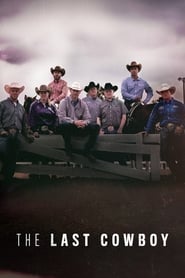
star 7.6A documentary competition show that chronicles the lives of riders competing in the high-stakes sport of horse reining. The contenders are determined to elevate and preserve the cowboy tradition as they guide horses through precise patterns of circles, spins and stops. Run for a Million serves as the culmination of the series, where the riders compete for a $1 million purse.The Last of the Mohicans
1971
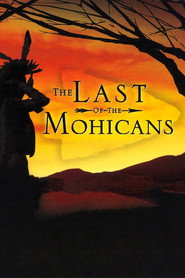
star 5.5The adventures of Natty 'Hawkeye' Bumppo and his Indian companions, caught in a war between the French and English in upstate New York in 1757.Ned Blessing
1993
Ned Blessing
1993
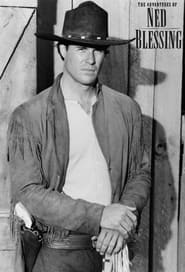
star 5.5Alone on Executioner's Row, Ned Blessing is a haggard, old cowboy and former sheriff. With nothing more than reflections on a life that's been filled with danger and excitement, he marks his time waiting and hoping that the man responsible for his imprisonment makes an appearance before the hangman does. With only a few days left to live, Blessing recounts his unbelievable life story.A Man Called Shenandoah
1965
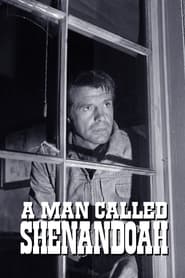
star 6.9A Man Called Shenandoah is an American Western series that aired Monday evenings on ABC-TV from September 13, 1965 to September 5, 1966. It was produced by MGM Television. Some of the location work for the 34 half-hour black and white episodes were filmed in California's High Sierras and Mojave Desert. When reruns aired on Turner Network Television in the 1990s, Only 29 of the 34 episodes were rebroadcast. The missing 5 did not survive. The series starred Robert Horton, who had costarred on Wagon Train from 1957 to 1962. He left that series, vowing to never do another television western, but agreed to star in A Man Called Shenandoah because he felt the show would be a great opportunity for him as an actor.The Lone Ranger
1966
The Lone Ranger
1966
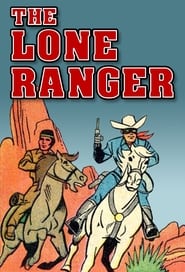
star 6.7An ex-Texas Ranger fights injustice in the Old West his with Native-American partner.Dirty Sally
1974
Corky and White Shadow
1956
star 6.5Mickey Mouse Club serial starring Mouseketeer Darlene Gillespie.Posse Impossible
1977
The Magnificent Seven
0000
In the tumultuous 1880s American frontier, seven gifted but flawed mercenaries are hired to protect a peaceful Quaker village after it is massacred by mercenaries working for a ruthless land baron trying to seize their land. As the team embeds itself and prepares to defend against overwhelming odds, they grapple with a central question: is violence acceptable to defend people whose faith is based on non-violence?Two Faces West
1960
Two Faces West
1960
star 7Two Faces West is a 39-episode half-hour syndicated television western series set in Gunnison in southwestern Colorado, which aired from October 17, 1960, to July 31, 1961. It stars Scottish native Charles Bateman in the dual roles of twin brothers, Rick January, M.D., and Marshal Ben January. Matthew Rapf produced the series. Francis De Sales appeared as Sheriff Maddox; Joyce Meadows portrayed Stacy, and Paul Comi played Deputy Johnny Evans. In the marshal's role, Bateman played a man prone to violent outbursts in his pursuit of law and order; as the physician, he demonstrated calmness and compassion. The series was filmed by Screen Gems at the Iverson's Movie Ranch in Chatsworth in Los Angeles County, California.Klondike
1960
Klondike
1960
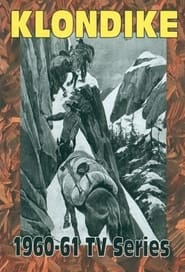
star 6.6Klondike is a 17-episode half-hour American Western television series starring Ralph Taeger and James Coburn that aired on NBC. The series premiered on October 10, 1960 and ran until February 13, 1961, facing stiff competition from The Danny Thomas Show on CBS and the second half of the first-season detective series Surfside 6 starring Troy Donahue on ABC. Klondike followed Dale Robertson's Tales of Wells Fargo on the NBC schedule.MIDST
2020
MIDST
2020
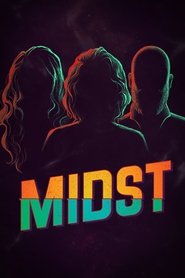
Midst follows three protagonists – a crotchety outlaw, a struggling cultist, and a diabolical bastard – as their paths intersect in unexpected ways in the town of Stationary Hill after the mysterious civilization known as the Trust becomes interested in the islet of Midst where the town is located.The Cowboys
1974
The Cowboys
1974
star 8The Cowboys was a short-lived Western television series based on the 1972 motion picture of the same name starring John Wayne. It aired on the American Broadcasting Company television network from February 6 to May 8, 1974. The television show starred Jim Davis, Diana Douglas, Moses Gunn, A Martinez, Robert Carradine, and Clay O'Brien. David Dortort, best known for Bonanza and The High Chaparral, produced the series. The television show, like the movie, followed the exploits of seven boys who worked on a ranch in 1870s New Mexico. The Cowboys began as an hour-long series, but ABC decided to reduce running time to a half hour format. The format change did not lead to increased viewers, and the show was the victim of early cancellation. Guest stars included Cal Bellini as Wa-Cha-Ka in "The Indian Givers", Kevin Hagen as Josh Redding in "Death on a Fast Horse", and Lurene Tuttle as Grandma Jesse in "Many a Good Horse Dies".Bounty Hunter
1975
Bounty Hunter
1975
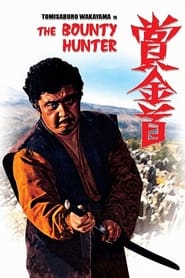
Continuing the adventures from the film series, Shikoro Ichibei is back with his cache of unique weapons and the quickest sword in all Japan. Having worked directly for the shogun in the past, he now runs a school in his secret identity as an educator. Meanwhile he takes on secret missions as ”The Bounty Hunter” (Shokin Kasegi). The touches of humor during the scenes around the school disappear once Ichibei takes on a contract. Powerful swordplay and brutal violence highlight these episodes as Japan’s greatest sword star Wakayama Tomisaburo stands tall against all odds in this dynamic television series.Viento Sur
2014
Viento Sur
2014
star 6.5Different stories that mark the life of the Patagonia region, an almost universal place, in the decades of '30 and '40. The society of that time, the interrelation of the culture of the Native American peoples with that of the Welsh, Italian, Spanish and Lebanese immigrants, will give life to facts and circumstances that speak of those times. The talk between a bartender of the time (Horacio Fontova) and a traveler (Oscar Alegre) stuck by the strong wind, begins the journey on stories of love, jealousy, families, bandits, robberies and soldiers of a region that began to be forged .Wild Times
1980
Wild Times
1980
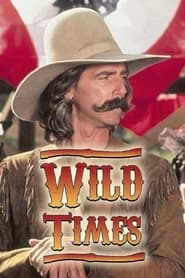
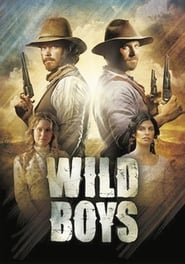
star 6.5Fictional Western adventure about dime novel hero-turned-Wild West show impresario Hugh Cardiff.Wild Boys
2011
Wild Boys
2011
star 7Wild Boys is an Australian television period drama series that began airing on the Seven Network on 4 September 2011. It is produced by Julie McGauran and Sarah Smith from Southern Star and John Holmes. The series is set in and around the fictional town of Hopetoun and principally filmed in Wilberforce on the Hawkesbury, Nelson, and Glenworth Valley on the New South Wales Central Coast.The series premiered in the UK on TCM UK on 3 March 2013. The series was not renewed after the first season of 13 episodes.