Popular Action TV Series on Plex - Page 2
All Services
Free Services
 Netflix
 Amazon Prime Video
 Apple iTunes
 Apple TV Plus
 Disney Plus
 Google Play Movies
 Paramount Plus
 Hulu
Hulu
 HBO Max
 YouTube
 fuboTV
 Peacock
 Peacock Premium
 Amazon Video
 The Roku Channel
 AMC+
AMC on Demand
AMC+
AMC on Demand
 Kocowa
 Hoopla
 The CW
 Vudu
Vudu
 Starz
Starz
 Showtime
 PBS
PBS
 Pantaflix
 FXNow
FXNow
 Tubi TV
 Kanopy
 Comedy Central
 Crunchyroll
 Microsoft Store
 Redbox
 Sun Nxt
 ABC
ABC
 DIRECTV
 Crackle
 Fandor
 Plex
Plex
Netflix
Amazon Prime Video
Apple iTunes
Apple TV Plus
Disney Plus
Google Play Movies
Paramount Plus
Hulu
HBO Max
YouTube
fuboTV
Peacock
Peacock Premium
Amazon Video
The Roku Channel
AMC+
AMC on Demand
Kocowa
Hoopla
The CW
Vudu
Starz
Showtime
PBS
Pantaflix
FXNow
Tubi TV
Kanopy
Comedy Central
Crunchyroll
Microsoft Store
Redbox
Sun Nxt
ABC
DIRECTV
Crackle
Fandor
Plex

Nikita
2010
Nikita
2010
star 7.3Nikita will stop at nothing to expose and destroy Division, the secret U.S. agency who trained her as a spy and assassin.Taken
2017
Taken
2017
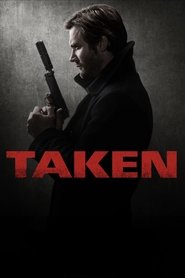
star 6.5The origin story of younger, hungrier, former Green Beret Bryan Mills as he deals with a personal tragedy that shakes his world. As he fights to overcome the incident and exact revenge, Mills is pulled into a career as a deadly CIA operative, a job that awakens his very particular, and very dangerous, set of skills.Continuum
2012
Continuum
2012
star 7.5The series centers on the conflict between a group of rebels from the year 2077 who time-travel to Vancouver, BC, in 2012, and a police officer who accidentally accompanies them. In spite of being many years early, the rebel group decides to continue its violent campaign to stop corporations of the future from replacing governments, while the police officer endeavours to stop them without revealing to anyone that she and the rebels are from the future.Relic Hunter
1999
Relic Hunter
1999
star 6.8Sydney Fox is a professor and globe-trotting "relic hunter" who looks for ancient artifacts to return to museums and/or the descendants of the original owner. She is aided by her linguistic assistant Nigel and occasionally by her somewhat air-headed secretary Claudia. She often ends up battling rival hunters seeking out artifacts for the money.Wanted: Dead or Alive
1958
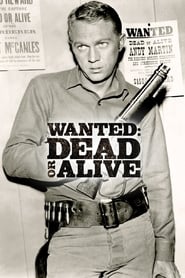
star 7Wanted: Dead or Alive is an American Western television series starring Steve McQueen as the bounty hunter Josh Randall. It aired on CBS for three seasons from 1958–61. The black-and-white program was a spin-off of a March 1958 episode of Trackdown, a 1957–59 western series starring Robert Culp. Both series were produced by Four Star Television in association with CBS Television. The series launched McQueen into becoming the first television star to cross over into comparable status on the big screen.Z Nation
2014
Z Nation
2014
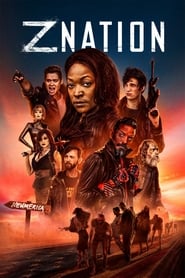
star 7.3Three years after the zombie virus has gutted the country, a team of everyday heroes must transport the only known survivor of the plague from New York to California, where the last functioning viral lab waits for his blood.Renegade
1992
Renegade
1992
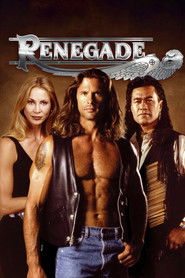
star 6.7Framed for murder, Detective Reno Raines becomes a fugitive bounty hunter who fights crime while trying to clear his name. His troubles began after he testified about police corruption, leading Lt. Donald Dixon to set him up.Abarenbo Shogun
1978
Abarenbo Shogun
1978
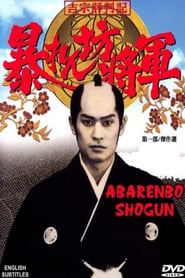
star 8Set in the 18th century, the show follows the Shogun Yoshimune, who likes to disguise himself as a low-ranking samurai and go into his capital of Edo to see the life of the common man, as well as to seek out and punish evildoers who would hurt his citizens. He is aided by Magistrate Oo'oka and a vivacious fireman, Tatsugoro, as well as a rotating cast of other recurring characters. Along with Zenigata Heiji and Mito Kōmon, it ranks among the longest-running series in the jidaigeki genre. Like so many other jidaigeki, it falls in the category of kanzen-chōaku, loosely, "rewarding good and punishing evil."Silk Stalkings
1991
Silk Stalkings
1991
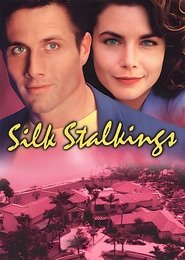
star 6.2Silk Stalkings is a crime drama television series. The series portrays the daily lives of two detectives who solve sexually-based crimes of passion among the ultra-rich of Palm Beach, Florida.The Lone Ranger
1949
The Lone Ranger
1949
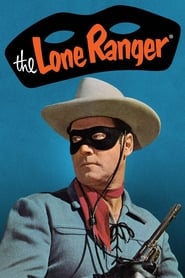
star 6.8The Lone Ranger is an American western television series that ran from 1949 to 1957, starring Clayton Moore with Jay Silverheels as Tonto. The live-action series initially featured Gerald Mohr as the episode narrator. Fred Foy served as both narrator and announcer of the radio series from 1948 to its finish and became announcer of the television version when story narration was dropped there. This was by far the highest-rated television program on the ABC network in the early 1950s and its first true "hit".G.I. Joe: A Real American Hero
1983
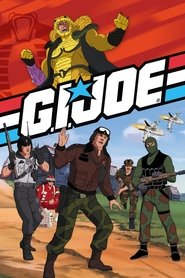
star 7.6An elite team of soldiers thwart the evil Cobra organization's desire for world domination at every turn, cleverly stopping them from controlling the weather, creating unstoppable weapons, and genetically engineering super-warriors.The Professionals
1977
The Professionals
1977
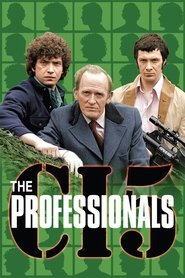
star 7.6The lives of Bodie and Doyle, top agents for Britain's CI5 (Criminal Intelligence 5), and their controller, George Cowley. The mandate of CI5 was to fight terrorism and similar high-profile crimes. Cowley, a hard ex-MI5 operative, hand-picked each of his men. Bodie is a cynical ex-SAS paratrooper and mercenary whose nature ran to controlled violence, while his partner, Doyle, comes to CI5 from the regular police force, and is more of an open minded liberal. Their relationship is often contentious, but they are the top men in their field, and the ones to whom Cowley always assigned to the toughest cases.City Hunter
1987
City Hunter
1987
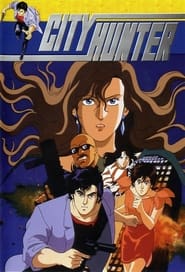
star 7.8Ryo Saeba works the streets of Tokyo as the City Hunter. He's a "sweeper" and with his sidekick Kaori Makimura, he keeps the city clean. People hire the City Hunter to solve their dangerous problems, which he does with a Colt Python. When Ryo's not working on a case, he's working on getting the ladies, and Kaori must keep him in check with her trusty 10 kg hammer.Wiseguy
1987
Wiseguy
1987
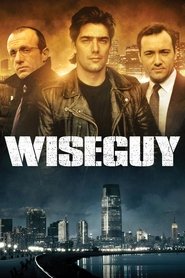
star 6.6Vinnie Terranova does time in a New Jersey penitentiary to set up his undercover role as an agent for the OCB (Organized Crime Bureau) of the United States. His roots in a traditional Italian city neighborhood form the underlying dramatic base throughout the series, bringing him into conflict with his conservative mother and other family members while acting undercover as syndicate enforcer.La Femme Nikita
1997
La Femme Nikita
1997
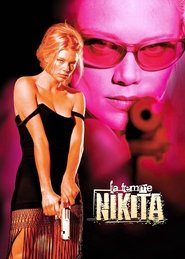
star 7.4Nikita is a drug-addicted juvenile delinquent who was accused of killing a police officer in cold blood during an attempted robbery of a pharmacy. She is later arrested and sentenced to death by lethal injection, upon which she was secretly drugged by the government, faking her death. Nikita is then "recruited" by a secret government organization and transformed into a highly skilled assassin who cannot be traced.Tougen Anki
2025
Tougen Anki
2025
star 7.5After a Momotaro assassin suddenly kills his adoptive father, Shiki vows to avenge him. But first, he must learn to control his newly awakened Oni blood.Pacific Blue
1996
Pacific Blue
1996
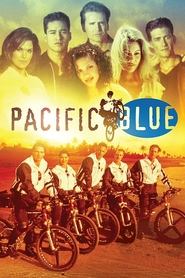
star 5.3Filmed on location at Santa Monica and Venice Beach, this series focuses on an elite bike cop unit of the LAPD.Sanctuary
2008
Sanctuary
2008
star 7.3The adventures of the beautiful, enigmatic and always surprising Dr. Helen Magnus, a brilliant scientist who holds the secrets of a clandestine population called Abnormals—a group of strange and sometimes terrifying beings that hide among humans. Magnus seeks to protect this threatened phenomena as well as unlock the mysteries behind their existence.Transformers: Robots In Disguise
2015
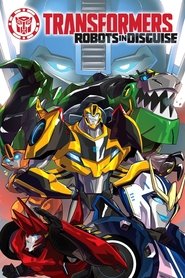
star 7Years after the events of Predacons Rising, Bumblebee is summoned back to Earth to battle several of Cybertron's most wanted Decepticons that escaped from a crashed prison ship and assembles a team of young Autobots that includes Sideswipe (a rebel "bad boy bot"), Strongarm (an Elite Guard cadet), Grimlock (a bombastic Dinobot), and Fixit (a hyperactive Mini-Con with faulty wiring).Transformers: Rescue Bots
2012
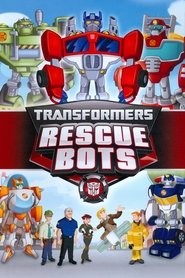
star 7.3A team of specialized Autobots not quite ready for prime-time battles against the Decepticons is given a vital mission by Optimus Prime. The goal for the Bots is to learn about mankind and how to help others to find out what it really means to be a hero.