Popular Soap TV Series on Tub Tv - Page 20
All Services
Free Services
 Netflix
 Amazon Prime Video
 Apple iTunes
 Apple TV Plus
 Disney Plus
 Google Play Movies
 Paramount Plus
 Hulu
Hulu
 HBO Max
 YouTube
 fuboTV
 Peacock
 Peacock Premium
 Amazon Video
 The Roku Channel
 AMC+
AMC on Demand
AMC+
AMC on Demand
 Kocowa
 Hoopla
 The CW
 Vudu
Vudu
 Starz
Starz
 Showtime
 PBS
PBS
 Pantaflix
 FXNow
FXNow
 Tubi TV
 Kanopy
 Comedy Central
 Crunchyroll
 Microsoft Store
 Redbox
 Sun Nxt
 ABC
ABC
 DIRECTV
 Crackle
 Fandor
 Plex
Plex
Netflix
Amazon Prime Video
Apple iTunes
Apple TV Plus
Disney Plus
Google Play Movies
Paramount Plus
Hulu
HBO Max
YouTube
fuboTV
Peacock
Peacock Premium
Amazon Video
The Roku Channel
AMC+
AMC on Demand
Kocowa
Hoopla
The CW
Vudu
Starz
Showtime
PBS
Pantaflix
FXNow
Tubi TV
Kanopy
Comedy Central
Crunchyroll
Microsoft Store
Redbox
Sun Nxt
ABC
DIRECTV
Crackle
Fandor
Plex

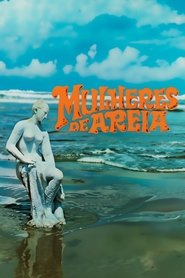
Secrets of Sand
1973
Secrets of Sand
1973
star 8Twin sisters with contrasting personalities, Ruth and Raquel, rival in the fictional Pontal D'Areia, on the coast of Rio de Janeiro.Miss XV
2012
Miss XV
2012
star 8Miss XV follows the story of two teenage best friends, Valentina and Natalia, (who were born on the same day at the same hour), who dream of the perfect quinceañera birthday party, and long to become the girlfriends of their respective crushes, Niko and Eddy.Marienhof
1992
Marienhof
1992
star 7Marienhof is a German soap opera, first shown on October 1, 1992 on German TV channel, Das Erste. It started as a weekly series, before becoming a daily program on January 2, 1995. The show was canceled in February 2011 and aired its last episode on June 15, 2011. In the 90s, the Marienhof became a huge success in Finland and remained a fan favorite until it was canceled to license problems. Over the years, the show became known for tackling several social issues, such as homosexuality, homelessness, private bankruptcy, rape, drug abuse, AIDS, child abuse, suicide, cancer, adultery and murder. The show focuses on the everyday life of the residents of the Marienhof, a fictional suburb in Cologne.Mi Secreto
2022
Mi Secreto
2022
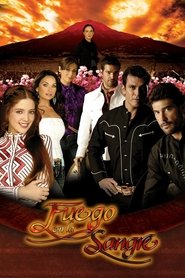
star 7.6Mi Secreto is a Mexican telenovela produced by Carlos Moreno Laguillo for TelevisaUnivision and originally broadcast on Las Estrellas from September 12, 2022, to February 24, 2023. Based on the 1974 telenovela Ha llegado una intrusa, created by Marissa Garrido, it was adapted by Martha Carrillo and Cristina García and directed by Luis Eduardo Reyes and Nelinho Acosta. The telenovela stars Macarena García, Diego Klein, Isidora Vives, Andrés Baida, Karyme Lozano, Arturo Peniche, Claudia Ramírez, and Fernando Ciangherotti. The story follows Valeria, who assumes the identity of her friend Natalia after a tragic accident leaves her believing Natalia is dead. Hoping to escape a false accusation, Valeria starts a new life at the Moncada estate, where she falls in love with Mateo. As hidden secrets are revealed and Natalia unexpectedly returns, both women must face betrayal, family conflicts, and the consequences of deception.Burning for Revenge
2008
Burning for Revenge
2008
star 7.5Fuego en la sangre is a telenovela that began transmissions on January 21, 2008, through Mexico's Canal de las Estrellas network. Starring Adela Noriega, Eduardo Yáñez, Diana Bracho, and Guillermo García Cantú. It is the Mexican remake of the Colombian soap operas Las Aguas Mansas and Pasion de Gavilanes. The theme song called "Para Siempre" is sung by Vicente Fernández. The telenovela received TVyNovelas Award for Best Telenovela, in 2009.O Campeão
1996
Partido Alto
1984
Vira Lata
1996
Vira Lata
1996
star 6Helena hides the fact that she is the daughter of a con man when she marries prosecutor Bráulio. While Stella searches for the children she abandoned, Lenin returns home and tries to rebuild his life.The Meaning of Friendship
2010
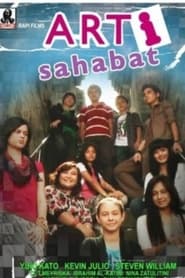
Ajeng is a very smart girl but she never knows who her father is. She is one of the students who received a scholarship to enter an elite school. Because she was not a girl from a rich family, Yudha always teased her. However, Ajeng is a very strong girl, every time someone puts her down, she always survives. Yudha and his gang always mock and harass the students who receive scholarships. Fathir, who is also a scholarship recipient, can only be irritated and starts making secret plans to repay what Yudha and his gang have done to him.Young Doctor Malone
1958
Young Doctor Malone
1958
star 5.3Young Doctor Malone is an American soap opera, created by Irna Phillips, which had a long run on radio and television from 1939 to 1963. The producer was Betty Corday, who also produced Pepper Young's Family and later was a co-creator with husband Ted Corday of NBC Daytime's Days of our Lives. Sponsored by General Foods and Post Cereals, the radio serial began on the Blue Network on November 20, 1939. The 15-minute program aired daily at 11:15am, continuing until April 26, 1940. Without a break, it moved to CBS on April 29, 1940, where it was heard for two decades, first airing at 2:00pm weekdays and then 1:30pm. In 1945, Procter & Gamble assumed sponsorship of the program.Uma Rosa com Amor
1972
Uma Rosa com Amor
1972
star 6.7Serafina is a romantic young woman who dreams of experiencing great love. Claude is a wealthy businessman who is in the country illegally. The two make a deal that will transform their lives.Ouro Verde
2017
Ouro Verde
2017
star 5.5Zé Maria Magalhães is an innocent young man who, suddenly, sees his dreams and family destroyed by a man's greed: Miguel Ferreira da Fonseca, a powerful banker. For 15 years, Zé Maria is forced to remain hidden, in a life of lies, in another country, imprisoned by the memories of the past, having to assume a new identity. Today, he is a great farmer, owner of the Ouro Verde empire, known as Jorge Monforte, and has become one of the richest men in Brazil. The course of time only fueled his desire for revenge, making him lose the sense of right and wrong and the ability to love. Fifteen years later, he returns to Portugal, ready to avenge the past and destroy Miguel Ferreira da Fonseca.Chepe Fortuna
2010
Chepe Fortuna
2010
star 6.2Chepe Fortuna and Niña Cabrales are from different social classes. Chepe is a poor fisherman and Niña is from a wealthy family. He wants to become mayor to stop her wealthy family from building a port to industrialize the town. Niña is an ecologist and dissident from her family. She wants to help the community. Their love is brought together by dreams and the past, though they do not know it.Tangled Hearts
2013
Tangled Hearts
2013
star 7.1Follows the story of six young individuals who work hard to achieve their dreams and also dream of loving someone special and being loved as well. Amora, Bento and Fabio were raised at an orphanage at Capo Verde by Gilson and his wife, Selma. They each took their own path in life when Amora was adopted by actress Barbara Ellen, Fabio with a broke family in the countryside and Bento grew up to become a florist in a cooperative with Gilson, Selma and Giane, a childhood friend Who secretly has a crush on him. Amora becomes a famous model and media personality and socialite Who is brattish and vain, and Malú, her adoptive sister is a responsible, simple and down to earth University student who is unloved by Barbara Ellen who considers her a mistake.Sa Dulo Ng Walang Hanggan
2001
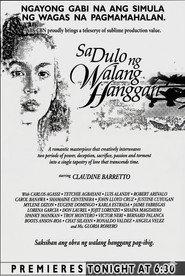
star 8Sa Dulo ng Walang Hanggan is a Philippine primetime drama teleserye aired from 26 March 2001 to 28 February 2003 by ABS-CBN.Meteor Garden
2001
Meteor Garden
2001
star 7.1Shan Cai, whose parents are far from wealthy, attends Ying De University, the private school established exclusively for rich students. Besides being looked down by rich classmates, she has angered the leader of F4, Dao Ming Si.Nieuwe Tijden
2016
Final Feliz
1982
Final Feliz
1982
star 8César, a sugar mill owner in Pernambuco, lives in Rio de Janeiro with his wife Maria Luiza and daughters, Débora and Suzy. One day, tired of his life, he decides to fake his own death and assume another identity. César does this with the help of França, the financial director of the sugar mill – which also belongs to Alaor. César and França stage a car accident, plunging off Avenida Niemeyer in Rio and disappearing into the sea. César leaves Alaor on the verge of bankruptcy and Maria Luiza and the two girls in poverty, completely transforming their lives.Mientras haya vida
2007
Mientras haya vida
2007