Popular Western TV Series on Tub Tv - Page 11
All Services
Free Services
 Netflix
 Amazon Prime Video
 Apple iTunes
 Apple TV Plus
 Disney Plus
 Google Play Movies
 Paramount Plus
 Hulu
Hulu
 HBO Max
 YouTube
 fuboTV
 Peacock
 Peacock Premium
 Amazon Video
 The Roku Channel
 AMC+
AMC on Demand
AMC+
AMC on Demand
 Kocowa
 Hoopla
 The CW
 Vudu
Vudu
 Starz
Starz
 Showtime
 PBS
PBS
 Pantaflix
 FXNow
FXNow
 Tubi TV
 Kanopy
 Comedy Central
 Crunchyroll
 Microsoft Store
 Redbox
 Sun Nxt
 ABC
ABC
 DIRECTV
 Crackle
 Fandor
 Plex
Plex
Netflix
Amazon Prime Video
Apple iTunes
Apple TV Plus
Disney Plus
Google Play Movies
Paramount Plus
Hulu
HBO Max
YouTube
fuboTV
Peacock
Peacock Premium
Amazon Video
The Roku Channel
AMC+
AMC on Demand
Kocowa
Hoopla
The CW
Vudu
Starz
Showtime
PBS
Pantaflix
FXNow
Tubi TV
Kanopy
Comedy Central
Crunchyroll
Microsoft Store
Redbox
Sun Nxt
ABC
DIRECTV
Crackle
Fandor
Plex

That Dirty Black Bag
2022
That Dirty Black Bag
2022
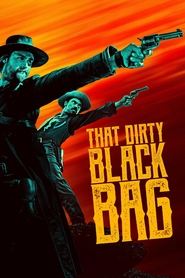
star 7The 8-day clash between Arthur McCoy — an incorruptible sheriff with a troubled past — and Red Bill, an infamous, solitary bounty hunter known for decapitating his victims and stuffing their heads into a dirty black bag.Verão Vermelho
1969
Paradise
1988
Paradise
1988
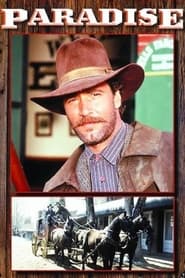
star 6The adventures of fictitious gunfighter Ethan Allen Cord, whose sister left her four children in his custody when she died.Lonesome Dove: The Series
1994
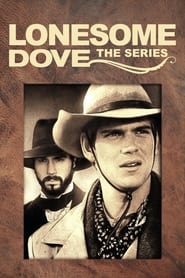
star 6.5Set in the small western town of Curtis Wells, Lonesome Dove: The Series follows first the romance and later the marriage of Newt Call and Hannah Peale, and the obsession that Clay Mosby, who owns most of the town, has with young Hannah, who looks remarkably like his late wife, Mary. In addition to the talented regular Canadian cast of Scott Bairstow, Christianne Hirt, and Eric McCormack, the show also featured the recurring players of Dennis Weaver as legend Buffalo Bill Cody, Diahann Carroll as innkeeper and widow Ida Grayson, Paul Johansson as newspaperman and family member Austin Peale, and Paul Le Mat as Hannah's father and the editor of the local paper.Father Murphy
1981
Father Murphy
1981
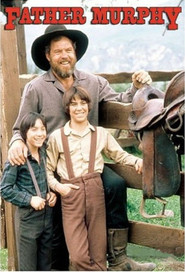
star 8.1A good-hearted frontiersman poses as a priest to start an orphanage for a group of kids whose homes have been destroyed by an evil mining manager.Comanche Moon
2008
Comanche Moon
2008
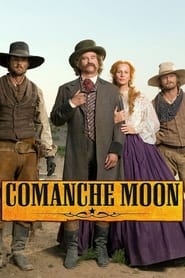
star 7.1Set in the rugged American frontier, Texas Rangers Woodrow Call and Gus McCrae confront Comanche warriors, ruthless outlaws, and the brutal realities of a lawless land, forging fierce friendships and enduring tragic romances as survival comes at a heavy personal cost.Lonesome Dove: The Outlaw Years
1995
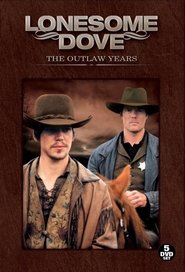
star 6.1"Lonesome Dove: The Outlaw Years" begins two years after the end of "Lonesome Dove". After two years spent bounty hunting, womanizing, and drinking away the painful memories of his late wife, Hannah, Newt Call returns to town to find many things have changed. His brother-in-law, Austin, is now an alcoholic sheriff, who has never fully recovered from his beloved sister's death, and blames Call for it. His father-in-law, Josiah, is the town mayor, but hasn't been right in the head since Hannah died. The town is run under the iron fist of Clayton Mosby, who also cannot forget Hannah, who looked amazingly like his late wife, Mary. "The Lonesome Dove", the hotel opened in the mini-series by Ida Grayson, now belongs to Amanda Carpenter, a woman with a mysterious past and a determination on par with Clay Mosby's. Curtis Wells also gets a new gunsmith, a mysterious and feisty woman named Mattie Shaw.Pony Express
1960
Pony Express
1960
star 7.7Pony Express is an American western television series about the adventures of an agent in the 1860s of the Central Overland Express Company, better known as the Pony Express. The half-hour program starring Grant Sullivan was created by California National Productions. Pony Express ran for thirty-five episodes in syndication from the fall of 1959 until the May 1960.Return to Lonesome Dove
1993
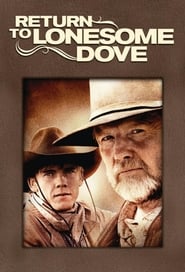
star 7After returning the body of Gus McCrae to Lonesome Dove, Woodrow Call takes on the challenge of driving a herd of wild mustangs 2500 miles north to the Hat Creek Ranch in Montana. But tragedy, triumph, despair and deceit will greet him before he ever gets there.Jefferson Drum
1958
Jefferson Drum
1958
star 5.3Jefferson Drum, also known as The Pen and the Quill, is an American Western television series starring Jeff Richards that aired on the NBC network from April 25 to December 11, 1958.Mantracker
2006
Mantracker
2006
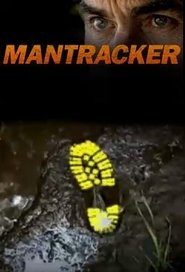
star 5.3Mantracker is a Canadian reality television series created by Ihor Macijiwsky and produced by Bonterra Productions. It premiered in Canada in April 2006 on the Outdoor Life Network. In the United States, the show currently airs on the Science Channel and in the UK on Extreme Sports Channel. The episodes of the first six seasons feature Terry Grant, an expert tracker called the "Mantracker", who pursues two individuals in the remote Canadian or American wilderness. The pursued, referred to as "Prey", must elude capture while attempting to reach a finish line within thirty-six hours. In season 7, Chad Savage Lenz replaces Terry Grant as the Mantracker.The Hateful Eight
2019
The Hateful Eight
2019
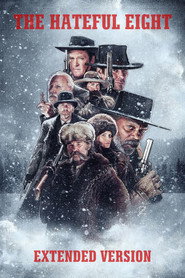
star 7The re-edited, extended, serialized cut of Quentin Tarantino's 2015 Western. Some years after the Civil War, bounty hunter John Ruth (Kurt Russell) escorts fugitive Daisy Domergue (Jennifer Jason Leigh) to face justice in the town of Red Rock. As a blizzard closes in, they seek refuge at Minnie's Haberdashery, a stagecoach stopover on a mountain pass, but on arrival they are greeted not by the proprietor but by unfamiliar faces. And as the storm overtakes the mountainside stopover, the travelers realize they may not make it to Red Rock after all…Hawkeye (The First Frontier)
1994
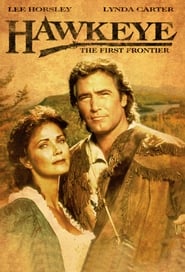
star 6.8Hawkeye is a television series, airing in syndication for one season during 1994-1995, and produced by Stephen J. Cannell. The series was filmed in North Vancouver and Vancouver, British Columbia, Canada. Based on characters from the Leatherstocking Tales, a set of novels written by James Fenimore Cooper, the series takes place in 1755 Hudson Valley, New York during the French and Indian War. It follows the main character, Natty Bumppo, his Native American companion Chingachgook, trading post owner Elizabeth Shields and other people stationed at or living in the vicinity of Fort Bennington.Dominion Creek
2015
Dominion Creek
2015
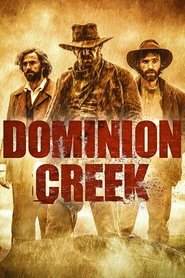
star 4.2The story of the Connolly Brothers; three Irish emigrants who travel from Montana to the Yukon during the Klondike gold rush of the 1890’s in the hope of striking it rich where they become embroiled in a deadly feud with the man who runs the town.Frontier Circus
1961
Frontier Circus
1961
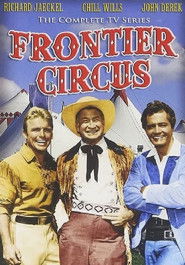
star 5.3Frontier Circus is an American Western television series about a traveling circus roaming the American West in the 1880s. Filmed by Revue Productions, the program aired on the CBS from October 5, 1961, until September 6, 1962.The Chisholms
1979
The Chisholms
1979
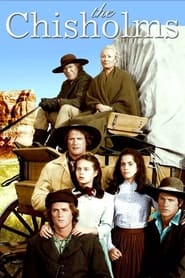
star 7.5The Chisholms is a CBS western miniseries starring Robert Preston, which aired from March 29, 1979, to April 19, 1979; and continued as a television series from January 19, 1980, to March 15, 1980. The 1979 miniseries showed the family moving from Virginia to Wyoming. When the TV series commenced in 1980, the pioneers were shown en route along the California Trail from Wyoming to Sacramento, California.Stories of the Century
1954
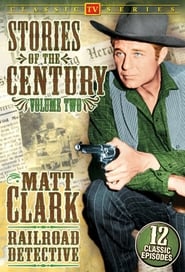
star 7.2Stories of the Century is a 39-episode Western television series starring Jim Davis that ran in syndication through Republic Pictures between January 23, 1954, and March 11, 1955.Black Gold
2025
Black Gold
2025
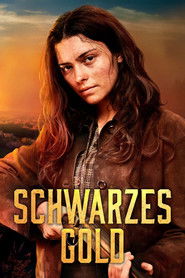
star 5.8Greed for power, betrayal and the dream of quick wealth: An oil boom breaks out in the Lüneburg Heath around 1900, transforming an entire region into a German „Wild West“. This series tells of this time, of the destructive power of boundless selfishness, but also of the courage to rebel against injustice. Lüneburg Heath around 1900: The young farmer's daughter Johanna works as a maid to support her family. No one suspects that there is a treasure lurking beneath her family's fields – petroleum. Only Richard, the son of the neighboring farmer Pape, knows about it and dreams of a future together with Johanna. Their forbidden love is put to the test when the unscrupulous oil trader Mr. Robertson appears and a fierce battle for power and wealth begins.Grande Sertão: Veredas
1985
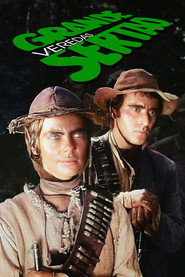
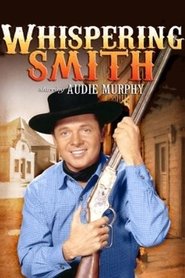
star 7.8A cowboy narrates his 'jagunço' life of disputes, revenges, loves and deaths, through the years that he traveled central-east Brazil, in the first decades of the 20th century, while federal troops were in conflict with provincial forces.Whispering Smith
1961
Whispering Smith
1961
star 5.8Whispering Smith is an American Western series that aired on NBC. Based on a 1948 movie, the series stars Audie Murphy as Tom "Whispering" Smith, a police detective in Denver, Colorado. Filming of the series began in 1959, but the program did not air until May 8, 1961, because of unexpected production problems. Whispering Smith combines elements of CBS's Have Gun – Will Travel starring Richard Boone, NBC's Tales of Wells Fargo starring Dale Robertson, the syndicated Shotgun Slade with Scott Brady, and ABC's The Man From Blackhawk, a Stirling Silliphant production starring Robert Rockwell. While the setting of the series is unique, it is otherwise a standard detective program.