Top Rated War Politics TV Series - Page 58
All Services
Free Services
 Netflix
 Amazon Prime Video
 Apple iTunes
 Apple TV Plus
 Disney Plus
 Google Play Movies
 Paramount Plus
 Hulu
Hulu
 HBO Max
 YouTube
 fuboTV
 Peacock
 Peacock Premium
 Amazon Video
 The Roku Channel
 AMC+
AMC on Demand
AMC+
AMC on Demand
 Kocowa
 Hoopla
 The CW
 Vudu
Vudu
 Starz
Starz
 Showtime
 PBS
PBS
 Pantaflix
 FXNow
FXNow
 Tubi TV
 Kanopy
 Comedy Central
 Crunchyroll
 Microsoft Store
 Redbox
 Sun Nxt
 ABC
ABC
 DIRECTV
 Crackle
 Fandor
 Plex
Plex
Netflix
Amazon Prime Video
Apple iTunes
Apple TV Plus
Disney Plus
Google Play Movies
Paramount Plus
Hulu
HBO Max
YouTube
fuboTV
Peacock
Peacock Premium
Amazon Video
The Roku Channel
AMC+
AMC on Demand
Kocowa
Hoopla
The CW
Vudu
Starz
Showtime
PBS
Pantaflix
FXNow
Tubi TV
Kanopy
Comedy Central
Crunchyroll
Microsoft Store
Redbox
Sun Nxt
ABC
DIRECTV
Crackle
Fandor
Plex

Tutur Tinular
1997
Tutur Tinular
1997
star 9Tutur Tinular is an Indonesian historical-drama TV series, produced by Genta Buana Pitaloka (now Genta Buana Paramita. It was first aired on ANTV in October 25,1997 (Season 1) and Indosiar in 1999 (Season 2).Singgasana Brama Kumbara
1995
star 10Singgasana Brama Kumbara is an Indonesian historical-drama TV series, produced by PT. Menara Gading Citra Perkasa (now Genta Buana Paramita). It was aired on ANTV in April 2,1995.Misteri Gunung Merapi
1998
star 9Misteri Gunung Merapi (Mystery of Mount Merapi) is an Indonesian historical-drama TV series, produced by Genta Buana Pitaloka (now Genta Buana Paramita). It was first aired on Indosiar in February 7, 1999.Takeda Shingen
1988
Takeda Shingen
1988
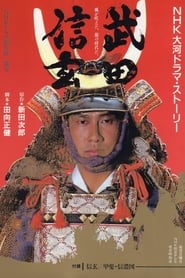
star 7.5There was a very turbulent time in the warring period in the history, and Takeda Shingen is consider one of the great warlord among many other.Juger Pétain
2015
Der Jahrhundertkrieg
2002
Chuzhie krylya
2011
Saraya Abdeen
2014
Saraya Abdeen
2014
star 6.5A period drama about the time of Khedive Isma'il Pasha's reign, focusing on the inside world of Abdeen palace, where competitive conflict develops between the Harem in order to win the Khedive's heart, against a backdrop of political tension and unrest.Tony Robinson's World War 1
2015
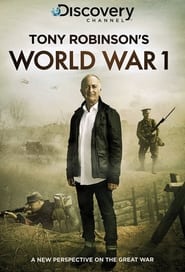
star 6.5Sir Tony Robinson, the history presenter and former Black Adder star, tells the story of the Great War. How it started, how it changed the world and how it finished with a 100 day flourish of military brilliance, which finally put an end to four years of incompetence and slaughter. With the aid of hundreds of amazing archived 3D images of the Great War which chronicle WWI from start to finish and breathe new life into the story, Tony Robinson's World War I allows modern audiences to see the war in a completely new way. Robinson will also show how the Great War changed British people for generations to come – liberating large portions of the working class, powering the rise of the Labour party and breaking the old ties of service to the aristocracy.WWII Air Crash Detectives
2014
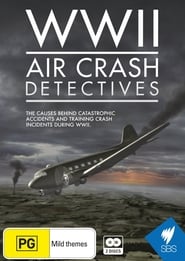
star 6.3Garth Barnard has a lifelong passion and unshakeable resolve to investigate how thousands of young Airmen from the Second World War died in catastrophic air accidents and training crashes.WWII's Greatest Raids
2014
star 7.5WWII’s Greatest Raids is a series that takes you into the heart of an elite band of soldiers in the heat of a key action in their history, and follows them on the mission to show just how these men put their unique combination of skills, training and equipment to the test of combat. We’ll explore just how celebrated outfits such as the U.S. Army Rangers, the British Special Air Service and the Black Devil Brigade have changed the course of a battle, or perhaps even a war, through their courage, daring and commitment.Jews and Muslims: Intimate Strangers
2013
star 6.5This journey through time retraces fourteen centuries of a rich shared history between Jews and Muslims. A story of great historical rigor, without concessions or bias, driven by fluid and inspired realization.Löwengrube
1989
Löwengrube
1989
star 8"Löwengrube – Die Grandauers und ihre Zeit" is a German television series first aired between 1989 and 1992, created by Willy Purucker and directed by Rainer Wolffhardt. It is set in Munich and follows the lives of Ludwig Grandauer and his son Karl, both policemen, covering the years from 1897 to 1954. The TV show is based on Purucker's radio play series Die Grandauers und ihre Zeit (‘The Grandauers and their time’). The series’ main title "Löwengrube", meaning ‘Lions’ Den’, refers to the address of the Munich Police Headquarters inaugurated in 1913.Emma: Queen of the South Seas
1988
star 3.8Based on the life of Emma Eliza Coe, known as the "Queen of the South Seas", whose strength and cunning staved off the colonial struggle involving the United States, Great Britain, and Germany while she built her own empire. Emma’s father, the first consul in Samoa, taught his daughter at an early age the bitter truth about the fickleness of men.Rockpolitik
2005
Winston Churchill: The Valiant Years
1960
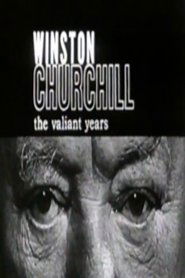
star 8.5The Valiant Years was a documentary produced by ABC based on the memoirs of Winston Churchill, directed by Anthony Bushell and John Schlesinger, narrated by Gary Merrill and with extracts from the memoirs voiced by Richard Burton. It ran in the United States from 1960 to 1961, in 27 30-minute episodes and was broadcast in the UK by the BBC from February to August 1961. Its incidental music was written by Richard Rodgers, who won an Emmy for it in 1962. Scriptwriters included Victor Wolfson a dramatist and writer, Quentin Reynolds, William L. Shirer an American journalist, war correspondent and historian, and Richard Tregaskis. One of the program's London-based producers was actor Patrick Macnee, just prior to his being cast as secret agent John Steed in the long-running cult TV series The Avengers.,Trygdekontoret talkshow
2009
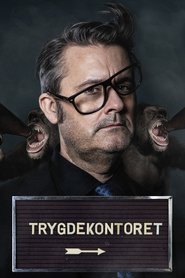
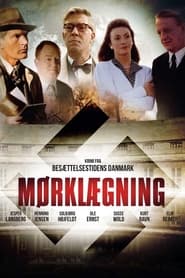
star 8Trygdekontoret is a Norwegian themed talk show and debate program with Thomas Seltzer that aired on NRK 2009 - 2019.Blackout
1992
Blackout
1992
star 9During the occupation in 1944, filmmaker Otto Baumann is murdered. Detective Helge Nielsen stubbornly investigates the case — even as he's hunted by the Germans.Seven Cities Story: Arctic Front
1994
star 4.5In 2099, Earth has shifted off its axis and begins to rotate at an angle of 90% to the 20th-century equator. Three years of natural disasters follows, and when things settle down, Earth's ten billion population has died and only two million moon colonists remain. Some return to begin the repopulation of the world in seven new cities and the remaining colonists of the moon fear that their former neighbors might pose a threat and construct a ring of defensive satellites to trap them on the newly repopulated homeworld.