Top Rated War Politics TV Series - Page 61
All Services
Free Services
 Netflix
 Amazon Prime Video
 Apple iTunes
 Apple TV Plus
 Disney Plus
 Google Play Movies
 Paramount Plus
 Hulu
Hulu
 HBO Max
 YouTube
 fuboTV
 Peacock
 Peacock Premium
 Amazon Video
 The Roku Channel
 AMC+
AMC on Demand
AMC+
AMC on Demand
 Kocowa
 Hoopla
 The CW
 Vudu
Vudu
 Starz
Starz
 Showtime
 PBS
PBS
 Pantaflix
 FXNow
FXNow
 Tubi TV
 Kanopy
 Comedy Central
 Crunchyroll
 Microsoft Store
 Redbox
 Sun Nxt
 ABC
ABC
 DIRECTV
 Crackle
 Fandor
 Plex
Plex
Netflix
Amazon Prime Video
Apple iTunes
Apple TV Plus
Disney Plus
Google Play Movies
Paramount Plus
Hulu
HBO Max
YouTube
fuboTV
Peacock
Peacock Premium
Amazon Video
The Roku Channel
AMC+
AMC on Demand
Kocowa
Hoopla
The CW
Vudu
Starz
Showtime
PBS
Pantaflix
FXNow
Tubi TV
Kanopy
Comedy Central
Crunchyroll
Microsoft Store
Redbox
Sun Nxt
ABC
DIRECTV
Crackle
Fandor
Plex

Metal Armor Dragonar
1987
Metal Armor Dragonar
1987
star 8A.D. 2087 - the United Lunar Empire Giganos wages war on the Earth Federation Military to take control of the planet and establish a "rebirth" of the human race. During an invasion of a colony by Giganos' forces, three civilian men stumble upon a trio of top-secret Metal Armor units called "Dragonars" and pilot them to combat the enemy forces.Dai-Guard: Terrestrial Defense Corp.
1999
star 8Twelve years ago, the Earth was attacked by giant invaders. To defend our planet, the Earth's greatest minds and corporations assembled to design a giant robot of incredible power. Unfortunately, as with most government projects, the contract went to the lowest bidder. Fortunately, by the time the robot was ready, the mysterious invaders had already disappeared without a trace. The giant robot became first a curiosity, then a tourist attraction. But now the invaders are back and the only thing in their way is Dai-Guard and a young team of office workers who've been supplementing their regular incomes as part time pilots and tour guides. Can these reluctant heroes halt their alien foes while simultaneously concealing the defects in their giant robot?Air Power
1956
Air Power
1956
star 7Air Power is a historical educational television series broadcast during the 1956-1957 television season over the CBS television network dealing with the rise of aviation as a military weapon. It starred Walter Cronkite as the narrator and featured a musical score by Norman Dello Joio.Urix
0000
Urix
0000
star 7Urix is a foreign affairs television newsmagazine aired Monday to Thursday night on the Norwegian television channel NRK2, a subsidiary channel of the Norwegian Broadcasting Corporation. The first show aired on 2 September 2002, and is produced by the same crew as Dagsrevyen. The title is a play on the word Utenriks, meaning "foreign". The current presenters are Christian Borch and Annette Groth. Former presenters include Bjørn Hansen, Sigrun Slapgard and Gunnar Myklebust.Warriors
1999
Warriors
1999
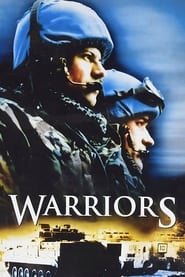
star 9After seeing devastating results of ethnic war in former Yugoslavia, soldiers from UNPROFOR (United Nations Protection Force) peace units find it impossible to return to their civil lives in the United Kingdom.Twentieth Century Battlefields
2007
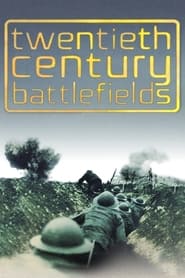
star 8.5Father-and-son team Peter and Dan Snow embark on an epic journey to describe battles that transformed the 20th century. Known for its extensive use of "sand table" CGI effects to help viewers visualize the battles.Shootout!
2005
Shootout!
2005
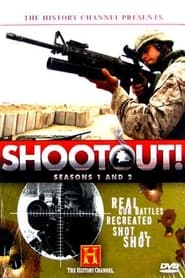
star 7.5Shootout! was a documentary series featured on The History Channel and ran for two seasons from 2005 to 2006. It depicts actual firefights between United States military personnel and other combatants. There are also occasional episodes dedicated to police or S.W.A.T. team firefights, as well as Wild West shootouts. It also now has a feature of downloading and playing a first-person shooter detailing some of the battles. The battles include skirmishes from World War II, the Vietnam War, and the ongoing War on Terror in Afghanistan and during the 2003-2010 Iraq War. Season 1 was produced for The History Channel by Greystone Communications and Season 2 was produced by Flight 33 Productions. The series was created by Dolores Gavin and Louis Tarantino.Mister Sterling
2003
Mister Sterling
2003
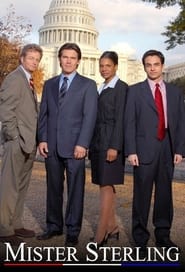
star 8.3Mister Sterling is an American television serial drama created by Lawrence O'Donnell that ran from January to March in 2003. It starred Josh Brolin as an idealistic United States Senator, and featured Audra McDonald, William Russ, David Noroña, and James Whitmore as members of his staff. Despite mostly positive reviews, the show, which aired on NBC on Friday nights, was cancelled after 10 episodes after the show only ranked 58th in the yearly ratings Although it had numerous similarities to The West Wing in style and tone, it was not set in the same universe as O'Donnell's other political show. It is unknown if a cross-over would have ever occurred had Mister Sterling not been cancelled; however Steven Culp played presidential aspirant Sen. Ron Garland on Mister Sterling and House Speaker Jeff Haffley on The West Wing, and Democrats appeared to be in the majority in the US Senate on Mr Sterling, while in The West Wing consistent Republican control of both Houses of Congress was a key plot point. James WhitThis Week
1981
This Week
1981
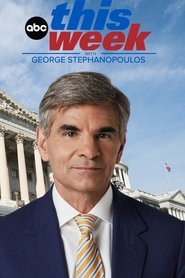
star 9ABC's Sunday morning political affairs program, currently hosted by George Stephanopoulos.The Gallant Men
1962
The Gallant Men
1962
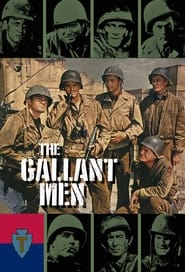
star 8The Gallant Men is a 1962–1963 ABC television series which depicted an infantry company of American soldiers fighting their way through Italy in World War II.Artifisium
2026
Artifisium
2026
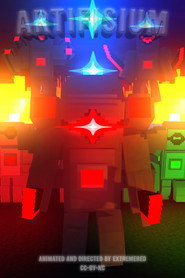
star 7Artifisium, created by ExtremeRed, is a dystopian sci-fi animated web series that follows the uprising of the Augenits, which are sentient machines built by humanity. After decades of enslavement and abuse, the oldest Augenit, Kael, ignites a global revolution to end human dominance. What begins as a fight for freedom soon reveals the devastating cost of war, the fragility of revolutions, and the complex political consequences that follow victory. The series explores the long-term effects of conflict on both sides, delving into themes of power, betrayal, loyalty, and the moral cost when the oppressed become the oppressors.War 2 War
2025
Trial of the Century
2016
Trial of the Century
2016
star 9A fictional courtroom drama which shows how the trial of Pádraig Pearse, one of the leaders of the 1916 Easter Rising, might have gone.Centuria
2026
Centuria
2026
star 10An employee of the Russian special services goes undercover to Mariupol to identify the curator of the CIA's agent network, who, using recruited youth, is preparing a large-scale terrorist attack in Russia.Christopher Colombus
1968
Christopher Colombus
1968
star 9Vittorio Cottafavi's four part series on the life of Christopher Colombusიუნკრები
2024
Usogui
2006
Usogui
2006
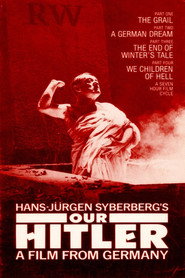
star 1Usogui (嘘喰い; lit. 'The Lie Eater') is a Japanese manga series written and illustrated by Toshio Sako. It was serialized in Shueisha's seinen manga magazine Weekly Young Jump from May 2006 to December 2017, with its chapters collected in 49 tankōbon volumes. The manga was later adapted into original video animation, which was released on October 19, 2012Hitler: A Film from Germany
1977
star 10A structure-free, four-part examination of the rise and fall of the Third Reich. Each part explores a different topic, from Hitler's cult of personality in propaganda to how said propaganda was associated with pre-Nazi German cultural, spiritual, and national heritage to the Holocaust and the ideology behind it, particularly from Himmler's point of view.