Western TV Series - Page 5

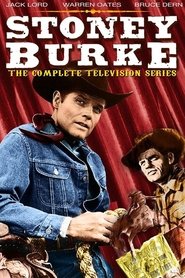
Stoney Burke
1962
Stoney Burke
1962
star 6.8Stoney Burke is an American western television series broadcast on ABC from October 1, 1962 until May 20, 1963. Six years before the premiere of his CBS crime drama, Hawaii Five-0, Jack Lord starred in the title role.The Alaskans
1959
The Alaskans
1959
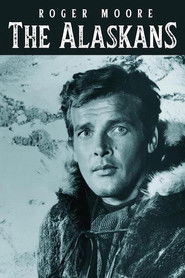
star 6.7The Alaskans is a 1959-1960 ABC/Warner Brothers western television series set during the late 1890s in the port of Skagway, Alaska. The show features Roger Moore as "Silky Harris" and Jeff York as "Reno McKee", a pair of adventurers intent on swindling travelers bound for the Yukon Territories during the height of the Klondike Gold Rush. Their plans are inevitably complicated by the presence of singer "Rocky Shaw", "an entertainer with a taste for the finer things in life". The show was the first regular work on American television for the British actor Roger Moore.Ransom Canyon
2025
Ransom Canyon
2025
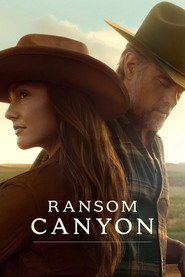
star 7.3Passions run deep in a small Texas town, as three ranching dynasties fight for their land, their legacies and the people they love.Mandacaru
1997
Godless
2017
Godless
2017
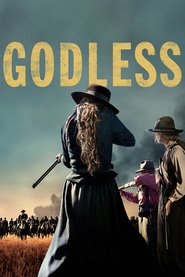
star 7.7A ruthless outlaw terrorizes the West in search of a former member of his gang, who’s found a new life in a quiet town populated only by women.Law of the Plainsman
1959
Law of the Plainsman
1959
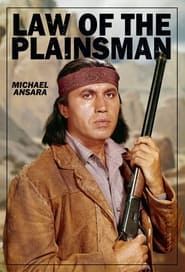
star 7.3Law of the Plainsman is a Western television series starring Michael Ansara that aired on the NBC television network from October 1, 1959, until May 5, 1960. The character of Native American U.S. Marshal Sam Buckhart was introduced in two episodes of the popular ABC Western television series The Rifleman starring Chuck Connors as Lucas McCain. Law of the Plainsman is distinctive and unique in that it was one of the few television programs that featured a Native American as the lead character, a bold move for U.S.network television at that time. Ansara had earlier appeared in the series Broken Arrow, having portrayed the Apache chief, Cochise. Ansara, however, was not Native American but of Syrian descent. Ansara played Sam Buckhart, an Apache Indian who saved the life of a U.S. Cavalry officer after an Indian ambush. When the officer died, he left Sam money that was used for an education at private schools and Harvard University. After school, he returned to New Mexico where he became a Deputy Marshal working forGun x Sword
2005
Gun x Sword
2005
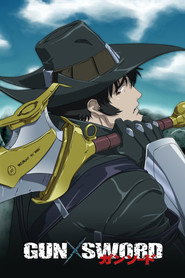
star 6There’s a claw-fisted, genocidal maniac terrorizing the planet of endless illusion, and only Van, a tight-lipped loner in a jet black tuxedo, can bring the scoundrel to justice. Armed with his shape-shifting sword and a mechanized suit of armor, Van hunts the villain who murdered his one true love. With any luck, he’ll find the man he seeks before the sun sets on civilization.The Restless Gun
1957
The Restless Gun
1957
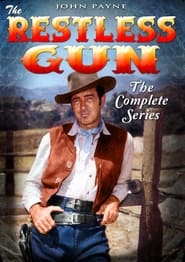
star 4.4The Restless Gun is an American western television series that appeared on NBC between 1957 and 1959, with John Payne in the role of Vint Bonner, a wandering cowboy in the era after the American Civil War. A skilled gunfighter, Bonner is an idealistic person who prefers peaceful resolutions of conflict wherever possible. He is gregarious, intelligent, and public-spirited. The half-hour black-and-white program aired seventy-eight episodes. Jeanne Bates appeared in varying roles with Payne in five episodes of The Restless Gun. The Restless Gun theme song begins: "I ride with the wind, my eyes on the sun, and my hand on my restless gun..." The song composer is probably Paul Dunlap, credited as the primary series composer, but could have been contributed to by either of the two other series composers, Dave Kahn and Stanley Wilson, also. Two versions are currently posted on YouTube, but neither posting lists any composer or performance credits.Broken Arrow
1956
Broken Arrow
1956
star 6.5Broken Arrow is a Western series which ran on ABC-TV in prime time from 1956 through 1958 on Tuesdays at 9 p.m. Eastern time. Repeat episodes were shown by ABC on Sunday afternoons during the 1959–60 season. Selected repeats were then shown once again in prime time during the summer of 1960.Os Inocentes
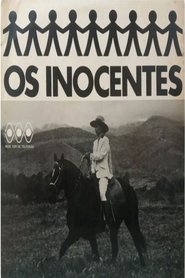
1974
The Dakotas
1963
The Dakotas
1963
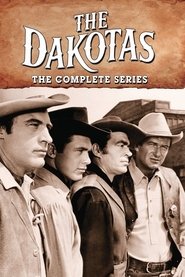
star 6.5The Dakotas is an ABC/Warner Brothers western television series starring Larry Ward and featuring Jack Elam broadcast during 1963. The short-lived program is considered a spin-off of Clint Walker's Cheyenne. The Dakotas is perhaps most notable for the fact that it was cancelled one week after heavy viewer protest over an objectionable scene.Verão Vermelho
1969
Vegas
2012
Vegas
2012
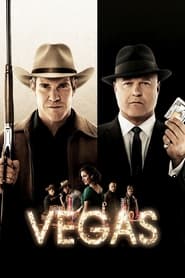
star 6.9Ralph Lamb wants to be left in peace to run his ranch, but Las Vegas is now swelling with outsiders and corruption which are intruding on his simple life. Recalling Lamb's command as a military police officer during World War II, the Mayor appeals to his sense of duty to look into a murder of a casino worker – and so begins Lamb’s clash with Vincent Savino, a ruthless Chicago gangster who plans to make Vegas his own.The Loner
1965
The Loner
1965
star 6.2The Loner is an American western series that ran for less than one season on CBS from 1965 to 1966, under the alternate sponsorship of Philip Morris and Procter & Gamble.Stagecoach West
1960
Stagecoach West
1960
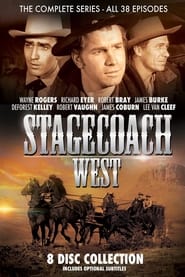
star 6.7Stagecoach West is an American Western drama television series which ran for thirty-eight episodes on the ABC network from October 4, 1960, until June 27, 1961. Characters Luke Perry and Simon Kane operate the Timberland Stage Line from fictitious Outpost, Missouri to San Francisco, California. Simon's 15-year-old son, David "Davey" Kane, joins the two as they face stagecoach robbers, murderers, inclement weather, and human interest stories. Perry and Kane, who are both deputy U.S. marshals, had been on opposite sides of the American Civil War; Kane, a captain in the Union Army, while Perry had fought for the Confederate States of America. The one-hour black-and-white program was offered at 9 p.m. Eastern on Tuesdays opposite NBC's Thriller, hosted by Boris Karloff, and CBS's The Red Skelton Show. Rogers became well-known a dozen years later on M*A*S*H, and Bray later portrayed the forest ranger Corey Stuart on Lassie from 1964–1969, both on CBS. Child actor Richard Eyer had starred in a number of films in tHawkeye and the Last of the Mohicans
1957
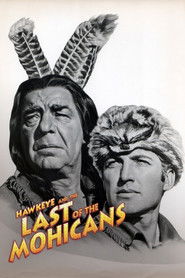
star 5.8Hawkeye and the Last of the Mohicans was set in New York's Hudson Valley during the French and Indian war in the 1750's and depicted the adventures of Hawkeye and his Indian blood brother Chingachgook, the last member of the Mohican tribe. The series based on stories by James Fenimore Cooper.Nichols
1971
Nichols
1971
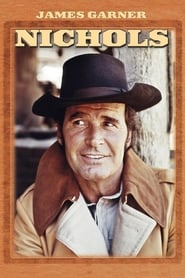
star 6.3Nichols is an American Western television series starring James Garner broadcast in the United States on NBC during the 1971-72 season. Set the fictional town of Nichols, Arizona, in 1914, Nichols differed from traditional Western series of the era. The main character, a sheriff, rode on a motorcycle and in an automobile rather than on the traditional horse. The hero did not carry a firearm and was generally opposed to the use of violence to solve problems, preferring other means. Margot Kidder portrayed Ruth, the love interest/barmaid of Nichols.Legacy
1998
Legacy
1998
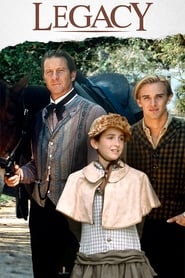
star 8.4In post-Civil War Kentucky, wealthy widower Ned Logan raises a family all on his own on his horse farm. His streetwise adopted son clashes with the youngest son, Clay, as well as the southern society. Meanwhile, Sean reconsiders his impending engagement to debutante Vivian Winters.Fury
1955
Fury
1955
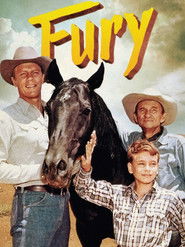
star 6.5Fury is an American western television series that aired on NBC from 1955 to1960. It stars Peter Graves as Jim Newton, who operates the Broken Wheel Ranch in California; Bobby Diamond as Jim's adopted son, Joey Clark Newton, and William Fawcett as ranch hand Pete Wilkey. Roger Mobley co-starred in the two final seasons as Homer "Packy" Lambert, a friend of Joey's. The frequent introduction to the show depicts the beloved stallion running inside the corral and approaching the camera as the announcer reads: "FURY!..The story of a horse..and a boy who loves him." Fury is the first American series produced originally by Television Programs of America and later by the British-based company ITC Entertainment.The Legend of Jesse James
1965
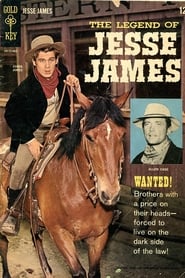
star 5.8The Legend of Jesse James is an American western series starring Christopher Jones in the tile role of notorious outlaw Jesse James. The series aired on ABC from September 13, 1965, to May 9, 1966. Allen Case joined Jones as Jesse's brother, Frank James.