Popular War Politics TV Series on Amazon Prime Video - Page 4
All Services
Free Services
 Netflix
 Amazon Prime Video
 Apple iTunes
 Apple TV Plus
 Disney Plus
 Google Play Movies
 Paramount Plus
 Hulu
Hulu
 HBO Max
 YouTube
 fuboTV
 Peacock
 Peacock Premium
 Amazon Video
 The Roku Channel
 AMC+
AMC on Demand
AMC+
AMC on Demand
 Kocowa
 Hoopla
 The CW
 Vudu
Vudu
 Starz
Starz
 Showtime
 PBS
PBS
 Pantaflix
 FXNow
FXNow
 Tubi TV
 Kanopy
 Comedy Central
 Crunchyroll
 Microsoft Store
 Redbox
 Sun Nxt
 ABC
ABC
 DIRECTV
 Crackle
 Fandor
 Plex
Plex
Netflix
Amazon Prime Video
Apple iTunes
Apple TV Plus
Disney Plus
Google Play Movies
Paramount Plus
Hulu
HBO Max
YouTube
fuboTV
Peacock
Peacock Premium
Amazon Video
The Roku Channel
AMC+
AMC on Demand
Kocowa
Hoopla
The CW
Vudu
Starz
Showtime
PBS
Pantaflix
FXNow
Tubi TV
Kanopy
Comedy Central
Crunchyroll
Microsoft Store
Redbox
Sun Nxt
ABC
DIRECTV
Crackle
Fandor
Plex

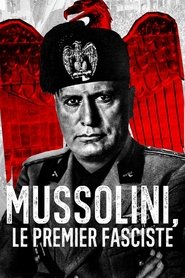
Mussolini: The First Fascist
2022
star 8.2Mussolini seized power in Italy in 1922, after his March on Rome. He would hold it in his grasp until his death in 1945, establishing a dictatorship that lasted more than 20 years. Long considered a buffoon and a second-rate dictator, Il Duce invented fascism that was imitated by Hitler, who viewed the Italian as his political master. He wanted to transform his country into a warrior nation and promised Italians a return to the grandeur of the Roman Empire. He governed by violence and trickery and was one of the first populist leaders of modern times, leading his country into the catastrophe of the World War II. But who was Mussolini, this former teacher who came from the extreme left to become a newspaper editor and creator of the Fascist Party? Why did he ally himself with Hitler? Were the Italians really behind him? With archives and interviews with the last-surviving witnesses of the era, this portrait takes a look back at one of the most notorious dictators of the 20th century.Island at War
2004
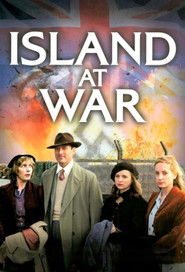
Island at War
2004
star 7.9Island at War is a British television series that tells the story of the German Occupation of the Channel Islands. It primarily focuses on three local families: the upper class Dorrs, the middle class Mahys and the working class Jonases, and four German officers. The fictional island of St. Gregory serves as a stand-in for the real-life islands Jersey and Guernsey, and the story is compiled from the events on both islands. Produced by Granada Television in Manchester, Island at War had an estimated budget of £9,000,000 and was filmed on location in the Isle of Man from August 2003 to October 2003. When the series was shown in the UK, it appeared in six 70-minute episodes.Inspector De Luca
2008
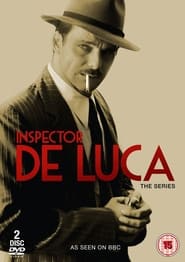
Inspector De Luca
2008
star 6.5Between 1938 and 1948, from the height of Italy s Fascist regime to the end of the tumultuous post-war period, Chief Detective De Luca investigates and solves crimes in the City of Bologna and along the Adriatic coast. With little or no regard for those in power, whoever they happen to be, his solitary, uncompromising character often lands him in trouble, but his respect is reserved for the truth and justice alone. In the four TV movies of the series Unauthorized Investigation , Carte Blanche , The Damned Season and Via Della Oche each taken from a novel by best-selling mystery Carlo Lucarelli Chief Detective De Luca always ultimately gets to the bottom of his cases, though what he finds leaves a bitter aftertaste.Legendary Cities
2014
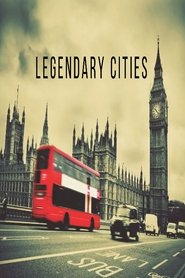
Legendary Cities
2014
star 8Embark in a journey through some of the most beautiful cities in the world in this documentary series. Each episode features a new city and explores the many things that make it the legendary place it is today.The Last Journey Of The Vikings
2020
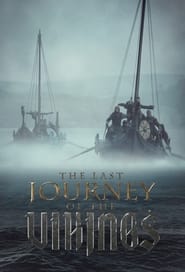
star 7.8Nearly 1,000 years ago, the Vikings left Scandinavia and settled across Europe - giving their name to Normandy along the way - before their Norman descendants seized the English throne at the Battle of Hastings in 1066. But what do we really know about them? By combining expert analysis with compelling drama, 'The Last Journey of the Vikings' (Swedish title: 'Vikingarnas sista resa') tells a new and often surprising story about this complex people.We'll Meet Again
1982
We'll Meet Again
1982
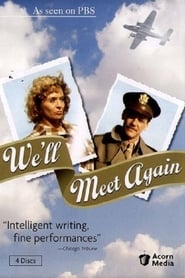
star 7It's 1943 and the American Air Force has come to Market Weatherby, a small East Anglian town. The war-weary British and the brash American GIs sometimes clash, but friendships are also forged.The Romanovs
2013
The Romanovs
2013
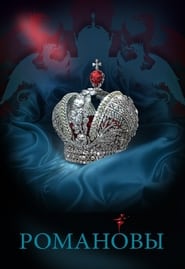
star 6.7An elegantly produced documentary divided into eight parts and running nearly seven hours in length, The Romanovs beautifully encapsulates the epic story of the Russian Dynasty over the course of over three hundred years.World War II: When Lions Roared
1994
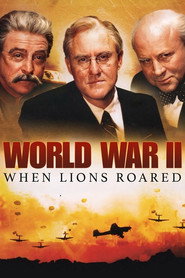
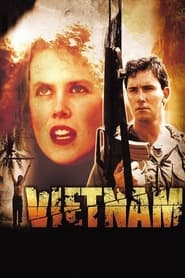
star 6.8A 1994 war television miniseries which portrays Roosevelt, Churchill, and Stalin as they maneuver their countries through several of the major events of World War II - such events include the Blitz, Operation Barbarossa, the bombing of Pearl Harbor, the North African Campaign, the Allied invasion of Italy, and concluding with the Tehran Conference.Vietnam
1987
Vietnam
1987
star 7The Goddard family is about to be torn apart by the arrival of Australian conscription during the Vietnam War.Inside Hitler's Killing Machine
2016
star 5.6May 1945: With the end of the war and the surrender of the Third Reich, the world discovered the full horror of a genocidal system on a scale never before seen in the history of humanity. The elimination of millions of individuals had been meticulously planned by a regime whose organization and methods were just beginning to be understood.History Uncovered
2019
History Uncovered
2019
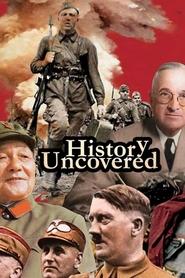
star 7.1Myths die hard, and the history of the 20th century is no exception to this rule. Even today, we hold popular beliefs that we take for Evangelical truths. Thus, we believe that Hiroshima caused Japan to surrender, that the Marshall Plan saved Europe, that Adolf Hitler was a military genius, or that Mao Zedong was a necessary evil for China’s modernization. Of course, these judgements contain some truth; but, too broad-stroked to be accurate, they contradict the historical reality by denying its complexity. What if the truth was slightly different? Through an exploration of great national or international myths, this full archive documentary collection revisits the key moments of the 20th century with a new perspective in order to provide a new, smarter and more subtle interpretation, bringing elements to light that have been forgotten or sometimes overshadowed.David Jason's Secret Service
2017
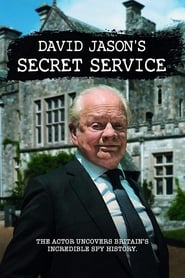
star 1Actor and British national treasure Sir David Jason travels around the UK and beyond to reveal the secret places and people who act as guardians and gatekeepers of the incredible but true story of Britain’s spy history.1916 Seachtar na Cásca
2010
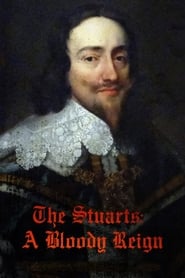
star 3.7Documentary on the 7 signatories of the 1916 Easter Proclamation.The Stuarts: A Bloody Reign
2018
star 7Four kings from the House of Stuart sat on the English throne from 1603 to 1688. It was a time of great religious struggle and political instability. The Gunpowder Plot nearly wiped out King James I. The Thirty Years War broke out on the continent. A civil war erupted which led to the public beheading of King Charles I and the birth of a commonwealth headed by Oliver Cromwell. London was ravaged by the plague and the Great Fire of London. Throughout this series we look at the reign of the Stuarts through the powerful Wynn family at Gwydir Castle in North Wales, one of the best time capsules from that era. The story of the Wynn family reflects the turbulent history of this Stuart era. They had close connections with this new royal house and their status would rise and fall with the successes and failures of Stuart rule.Alexander Garden
2006
Mafias and Banks
2023
Mafias and Banks
2023
star 6.5How, from the 1920s to the present day, financial power has gradually strengthened a hidden alliance with criminal organizations around the world.The Challenge: ETA
2020
The Challenge: ETA
2020
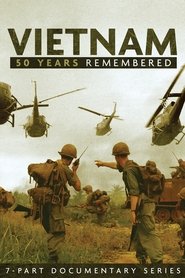
star 6.1The story of how the Guardia Civil, a militarized police force, fought for nearly half a century against ETA, a ruthless terrorist gang dedicated to murder, kidnapping, extortion and arms and drug smuggling while cynically demanding independence for the Basque Country in northern Spain.Vietnam: 50 Years Remembered
2015
star 7.3The history of U.S. involvement is told in this 7 part documentary series featuring personal stories from veterans and detailing the battles, strategy, and politics of a war that consumed multiple U.S. Presidents. A chronicle of the tragedy that tested the strength of our country and forever changed the social and political landscape of the world.Frederick Forsyth's Icon
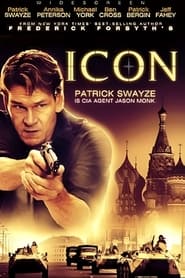
2005
During the 1999 Russian Presidential elections, the two leading candidates are Igor Komarov, a former Colonel of the KGB, and Nikolai Nikolayev, a retired General of the Russian Army. When a car bomb explodes outside one of Komarov's pharmaceutical companies, and a virus is stolen from inside, an investigation by the FSB ensues headed by FSB agents Sonia Astrova and Andrei Kasanov. Their investigation is obstructed by the Director of the FSB, Anatoly Grishin.