Popular Comedy TV Series on Pantaflix - Page 256
All Services
Free Services
 Netflix
 Amazon Prime Video
 Apple iTunes
 Apple TV Plus
 Disney Plus
 Google Play Movies
 Paramount Plus
 Hulu
Hulu
 HBO Max
 YouTube
 fuboTV
 Peacock
 Peacock Premium
 Amazon Video
 The Roku Channel
 AMC+
AMC on Demand
AMC+
AMC on Demand
 Kocowa
 Hoopla
 The CW
 Vudu
Vudu
 Starz
Starz
 Showtime
 PBS
PBS
 Pantaflix
 FXNow
FXNow
 Tubi TV
 Kanopy
 Comedy Central
 Crunchyroll
 Microsoft Store
 Redbox
 Sun Nxt
 ABC
ABC
 DIRECTV
 Crackle
 Fandor
 Plex
Plex
Netflix
Amazon Prime Video
Apple iTunes
Apple TV Plus
Disney Plus
Google Play Movies
Paramount Plus
Hulu
HBO Max
YouTube
fuboTV
Peacock
Peacock Premium
Amazon Video
The Roku Channel
AMC+
AMC on Demand
Kocowa
Hoopla
The CW
Vudu
Starz
Showtime
PBS
Pantaflix
FXNow
Tubi TV
Kanopy
Comedy Central
Crunchyroll
Microsoft Store
Redbox
Sun Nxt
ABC
DIRECTV
Crackle
Fandor
Plex

Farewell, My Dear Cramer
2021
star 4.6With no soccer accomplishments to speak of during the entirety of Suou Sumire's junior high school years, the young wing gets an odd offer. Suou's main rival, Soshizaki Midori, invites her to join up on the same team in high school, with a promise that she'll never let Suou "play alone." It's an earnest offer, but the question is whether Suou will take her up on it. Thus the curtain opens on a story that collects an enormous cast of individual soccer-playing personalities!The Chairman's Ear
2017
The Chairman's Ear
2017
star 7.5The series follows the chairman of the ruling political party in Poland (Mr Chairman). The narrative takes place primarily in his office where, joined by his assistant Mariusz, he hosts numerous visitors, including government officials and other public office holders.Snowsnaps
2018
Snowsnaps
2018
Four very different little kids are out in the snowy outdoors. In each episode they are confronted with a challenge.That Kiss
2011
That Kiss
2011
star 4.2Frustrated in their relationships, Claudia and Vicente meet on a trip to Colombia. Chance sparks a great friendship between them, but a kiss puts their future in jeopardy.The Weekly with Charlie Pickering
2015
star 4.7News comedy show, tonight show and chat show all in one, allowing Charlie to return to his comedy roots while being a general nuisance to newsmakers, politicians and other charlatans.The Life & Times of Tim
2008
star 7.3This show is about a hapless man in his mid-20's named Tim who lives in New York City with his girlfriend Amy. Throughout the series, Tim constantly finds himself in increasingly awkward situations in both his work and personal life.Police in a Pod
2021
Police in a Pod
2021
star 8.120-year-old rookie police officer Kawai Mai works hard at a police box and feels both physically and mentally drained. She has never felt appreciated even though she supposedly works for the sake of the area’s residents. In addition, she does not find working at a police box rewarding. Mai is about to hand in her resignation when she meets 30-year-old Fuji Seiko, the former ace detective of the Criminal Investigations Division. Seiko is said to have been forced to transfer to the police box for harassing a subordinate at work but … … This encounter between Mai and Seiko will significantly change their lives as they are suddenly paired up. This odd pair struggle to help and support each other in cases, routine duties and romance?! And Seiko’s true reason for coming to the police box is revealed.Zinba
2013
Tokyo Pig
1997
Tokyo Pig
1997
star 7Tokyo Pig is about a young boy and the adventures he has with his magic diary where anything he draws will come to life. In the first episode, "When Pigs Fly," he draws hundreds of flying pigs. As he experiences his first drawing coming to life, he tries to erase them all before his parents catch him. In his haste however, he misses one pig which becomes his pet, Sunny Pig.Save the Tigers
2023
Save the Tigers
2023
star 7Revolves around three frustrated husbands who meet by chance and how their rants over their marital problems set off a series of crazy events.1670
2023
1670
2023
star 7.4A zany nobleman contends with family feuds and clashes with peasants in his quest to become the most famous person in Poland.Sweet Combat
2018
Sweet Combat
2018
star 7.4As the eldest daughter of the Fang Conglomerate, Fang Yu was raised to become the sole successor of the company, yet she goes against her family's objections to pursue boxing and won the championship title at the young age of 18. On the other hand, Ming Tian comes from a poor family. He once stopped schooling for three years in order to work and he decided to apply for a sports scholarship despite not having any background whatsoever. Fang Yu was one of the first to see his talents and their relationship grows over time.Return
1987
Return
1987
Sergey Mikhailovich Sorokin comes to his native village to sell his house. After meeting with his fellow villagers, he learns a lot about their lives. Sergey Mikhailovich decides to stay and work at his native state farm in order to return to his homeland forever...Headhunted to Another World: From Salaryman to Big Four!
2025
star 5.9In an alternate fantasy world, the Demon King reigns with a formidable army led by his Four Heavenly Kings. One happens to be Uchimura Denosuke, a normal salaryman unexpectedly plucked from his mundane life by the Demon King himself. But even in this new realm, Uchimura is bestowed no particular powers. Can he survive treacherous missions with only the knowledge of an office worker?VeggieTales
1993
VeggieTales
1993
star 7.4American series of children's computer-animated episodes featuring anthropomorphic vegetables in stories conveying moral themes based on Christianity. They frequently retell Biblical stories, sometimes anachronistically reframed, and include humorous references to pop culture in many different eras by putting Veggie spins on them.María Belén
2001
María Belén
2001
star 6.5María Belén is the story of a six-year-old girl who has recently lost her adoptive parents in a tragic accident. He has stayed with his uncle Rogelio, an ambitious and evil man, who planned said accident to take over the inheritance of his half-brother Alfonso García Marín... but did not take into account the possibility that María Belén would emerge unscathed from the catastrophe and, much less, that she would be the universal heir to Alfonso's assets. That is why now Rogelio has to hide the girl to achieve his goal.Mr. Terrific
1967
Mr. Terrific
1967
star 7.7Mister Terrific is an American TV sitcom that aired on CBS Television from January 9, to May 8, 1967. It starred Stephen Strimpell in the title role, and lasted 17 episodes. The show was similar to NBC's Captain Nice, which followed Mister Terrific on Monday nights during its run. Riding the tide of the camp superhero craze of the 1960s, the show's premise involved gas station attendant Stanley Beamish, a mild-mannered scrawny youth who secretly worked to fight crime for a government organization, The Bureau of Secret Projects, in Washington. All he needed to do was take a "power pill" which gave him the strength of a thousand men and enabled him to fly, much like Superman, albeit by furious flapping while wearing the top half of a wingsuit. Unfortunately, he was the only person on whom the pills worked. It was established that, although the pill would give him great strength, he was still vulnerable to bullets. Furthermore, each power pill had a time limit of one hour, although he generally had two 10-minute boosLabs Ko Si Babe
1999
Labs Ko Si Babe
1999
Labs Ko Si Babe is a Filipino drama-comedy aired by ABS-CBN in 1999 starring Marvin Agustin and Jolina Magdangal. It was a Comedy-Television sitcom that aired weeknights on its prime time slot after Saan Ka Man Naroroon. The show was memorable because of Jolina Magdangal and Marvin Agustin' triumphant love team and as the lead stars of the series. The series ended in November 2000 and was replaced by the prime time television series Pangako sa ’Yo. The show also made Jolina Magdangal the box office queen of the decade.King Shakir
2016
King Shakir
2016
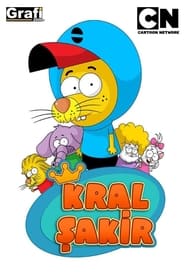
Fun and filled with adventures, this cartoon series is telling the story about King Shakir's family of lions who are living a modern city life. Shakir's dad Remzi and close friend elephant Necati are constantly getting into trouble, mom Kadriye is always trying to keep things together and Canan, the youngest but very rational member of the family who is the main problem solver, are main characters of this fun and entertaining cartoon.Ensemble Stars!
2019
Ensemble Stars!
2019
star 7.8Yumenosaki Private Academy, a school located on a hill facing the ocean. Specializing in boys' idol training, the school has a long history of producing generations of idols for the entertainment world out of the young men overbrimming with talents, like the shining stars in the sky. Due to "special circumstances," you are a transfer student at the school, as well as the only female student there. In fact, you are chosen to be the very first student of the "producer course," and your task is to produce these idols… We hope you will enjoy your journey with the idols you meet at the academy, as well as the vigorous ensemble that together you will make.