Popular News TV Series on Pantaflix - Page 4
All Services
Free Services
 Netflix
 Amazon Prime Video
 Apple iTunes
 Apple TV Plus
 Disney Plus
 Google Play Movies
 Paramount Plus
 Hulu
Hulu
 HBO Max
 YouTube
 fuboTV
 Peacock
 Peacock Premium
 Amazon Video
 The Roku Channel
 AMC+
AMC on Demand
AMC+
AMC on Demand
 Kocowa
 Hoopla
 The CW
 Vudu
Vudu
 Starz
Starz
 Showtime
 PBS
PBS
 Pantaflix
 FXNow
FXNow
 Tubi TV
 Kanopy
 Comedy Central
 Crunchyroll
 Microsoft Store
 Redbox
 Sun Nxt
 ABC
ABC
 DIRECTV
 Crackle
 Fandor
 Plex
Plex
Netflix
Amazon Prime Video
Apple iTunes
Apple TV Plus
Disney Plus
Google Play Movies
Paramount Plus
Hulu
HBO Max
YouTube
fuboTV
Peacock
Peacock Premium
Amazon Video
The Roku Channel
AMC+
AMC on Demand
Kocowa
Hoopla
The CW
Vudu
Starz
Showtime
PBS
Pantaflix
FXNow
Tubi TV
Kanopy
Comedy Central
Crunchyroll
Microsoft Store
Redbox
Sun Nxt
ABC
DIRECTV
Crackle
Fandor
Plex

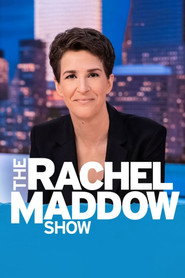
The Rachel Maddow Show
2008
star 6.1The Rachel Maddow Show is a daily news and opinion television program that airs on MSNBC, running in the 9:00 pm ET timeslot. It is hosted by Rachel Maddow, who gained popularity with her frequent appearances as a liberal pundit on various MSNBC programs. It is based on her former radio show of the same name. The show debuted on September 8, 2008.Découverte
1988
Découverte
1988
star 6.3Charles Tisseyre explores the world of science and technology through real-world stories. Each episode features reports delving into technological breakthroughs and developments in scientific research, environmental issues, space exploration, as well as health and medicine.Grimme Award
1964
Today
1952
Today
1952
star 5.7Today is a daily American morning television show that airs on NBC. The program debuted on January 14, 1952. It was the first of its genre on American television and in the world, and is the fifth-longest running American television series. Originally a two-hour program on weekdays, it expanded to Sundays in 1987 and Saturdays in 1992. The weekday broadcast expanded to three hours in 2000, and to four hours in 2007. Today's dominance was virtually unchallenged by the other networks until the late 1980s, when it was overtaken by ABC's Good Morning America. Today retook the Nielsen ratings lead the week of December 11, 1995, and held onto that position for 852 consecutive weeks until the week of April 9, 2012, when it was beaten by Good Morning America yet again. In 2002, Today was ranked #17 on TV Guide's 50 Greatest Television Shows of All Time.Face The Nation
1954
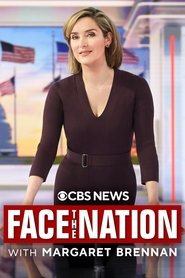
Face The Nation
1954
star 8.5Face The Nation with Margaret Brennan is an American Sunday morning political interview show, which premiered on the CBS television network. It is one of the longest-running news programs in television history, having debuted in 1954.Groland
1992
Groland
1992
star 7.7Parodic news programme focusing on the fictional country Groland (full name: Presipality of Groland), airing on French television channel Canal+.On Air with Ryan Seacrest
2004
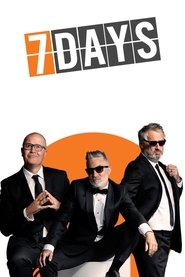
star 9.5On Air with Ryan Seacrest is an American syndicated television talk show, which ran from January 12, 2004 through September 17, 2004. It was distributed in the United States and Canada by Twentieth Television.7 Days
2009
7 Days
2009
star 77 Days is a New Zealand comedy gameshow similar in some ways to the British program Mock the Week, hosted by Jeremy Corbett and created by The Down Low Concept. Paul Ego and Dai Henwood usually appear on each episode, along with other comedians, who form teams and answer questions about news stories from the last week.Brisant
1994
Democracy Now!
2001
Democracy Now!
2001
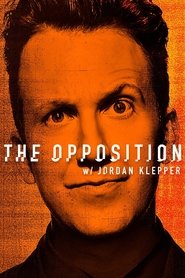
star 6.9A United States daily progressive, nonprofit, independently syndicated program of news, analysis, and opinion.The Opposition with Jordan Klepper
2017
star 5.5A satire of the hyperbolic, conspiracy-laden noise machine that is the alternative-media landscape on both the right and left.传奇故事
2005
Kulturplatz
2004
MDR aktuell
2021
MDR aktuell
2021
Contigo en la mañana
2019
The Culture Show
2004
The Culture Show
2004
star 6.6A weekly BBC Two magazine programme focusing on the best of the week's arts and culture news, covering books, art, film, architecture and more.The Young Turks
0000
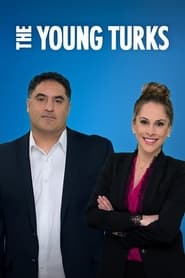
The Young Turks
0000
star 6.1Online American liberal/progressive political and social commentary program hosted by Cenk Uygur and Ana KasparianGood News Week
1996
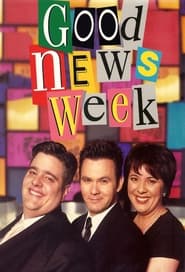
Good News Week
1996
star 8.8Good News Week was an Australian satirical panel game show hosted by Paul McDermott that aired from 19 April 1996 to 27 May 2000, and 11 February 2008 to 28 April 2012. The show's initial run aired on ABC until being bought by Network Ten in 1999. The show was revived for its second run when the 2007–2008 Writers Guild of America strike caused many of Network Ten's imported US programmes to cease production. Good News Week drew its comedy and satire from recent news stories, political figures, media organisations, and often, aspects of the show itself. The show opened with a monologue by McDermott relating to recent headlines, after which two teams of three panellists competed in recurring segments to gain points. The show has spawned three short-lived spin-off series, the ABC's Good News Weekend, Ten's GNW Night Lite and Ten's skit-based Good News World.The Damage Report with John Iadarola
2018
star 7.5Welcome to The Damage Report with John Iadarola, your daily breakdown of the true threats and challenges facing our country and our world. John Iadarola hosts an unflinching, no-holds-barred look at the damage the Trump administration is causing.Télématin
1985
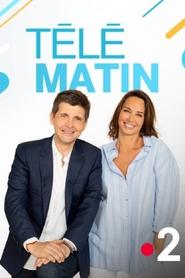
Télématin
1985
star 5.8Télématin is a French breakfast television news show, broadcast on France 2 since January 7, 1985. It is broadcast in Metropolitan France weekdays from 6:30 to 9:00 am CET. TV5 broadcast the show in Canada in its entirety until September 2011: it now shows a 90 minute version between 6:30 and 8:00 am Eastern Time, when the French original version is now 2h30 long. Télématin is hosted by William Leymergie. The show is daily seen by around 40% of the French morning audience, a very high percentage for French TV. In Metropolitan France, the newscasts are presented at 7:00, 7:30 and 8:00, with newsflashes at 6:30 and 8:50, and two press reviews at 7:20 and 8:30. The 6:30, 7:30 and 8:50 newscasts are usually presented by a female reader and the hourly newscasts by a male. The usual readers are Nathanaël de Rinquesen, Sophie Le Saint, Julien Benedetto, Sophie Gastrain, Patrice Romedenne and Frédéric Vion.