Popular Comedy TV Series on Tubi TV - Page 3
All Services
Free Services
 Netflix
 Amazon Prime Video
 Apple iTunes
 Apple TV Plus
 Disney Plus
 Google Play Movies
 Paramount Plus
 Hulu
Hulu
 HBO Max
 YouTube
 fuboTV
 Peacock
 Peacock Premium
 Amazon Video
 The Roku Channel
 AMC+
AMC on Demand
AMC+
AMC on Demand
 Kocowa
 Hoopla
 The CW
 Vudu
Vudu
 Starz
Starz
 Showtime
 PBS
PBS
 Pantaflix
 FXNow
FXNow
 Tubi TV
 Kanopy
 Comedy Central
 Crunchyroll
 Microsoft Store
 Redbox
 Sun Nxt
 ABC
ABC
 DIRECTV
 Crackle
 Fandor
 Plex
Plex
Netflix
Amazon Prime Video
Apple iTunes
Apple TV Plus
Disney Plus
Google Play Movies
Paramount Plus
Hulu
HBO Max
YouTube
fuboTV
Peacock
Peacock Premium
Amazon Video
The Roku Channel
AMC+
AMC on Demand
Kocowa
Hoopla
The CW
Vudu
Starz
Showtime
PBS
Pantaflix
FXNow
Tubi TV
Kanopy
Comedy Central
Crunchyroll
Microsoft Store
Redbox
Sun Nxt
ABC
DIRECTV
Crackle
Fandor
Plex

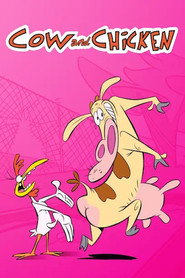
Cow and Chicken
1997
Cow and Chicken
1997
star 7.1Follows the surreal adventures of a cow, named Cow, and her chicken brother, named Chicken. They are often antagonized by "The Red Guy", who poses as various characters to scam them.One Day at a Time
1975
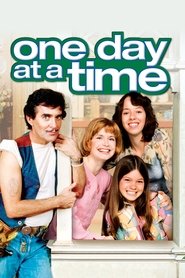
One Day at a Time
1975
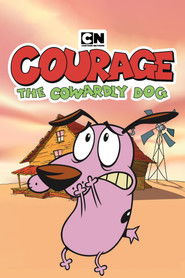
star 6.8The misadventures of a divorced mother, two teenage daughters, and new building superintendent in Indianapolis.Courage the Cowardly Dog
1999
star 8.2The bizarre misadventures of a cowardly dog named Courage and his elderly owners in a farmhouse in Nowhere, Kansas.Yu-Gi-Oh! GX
2004
Yu-Gi-Oh! GX
2004
star 7.9Ten years after the Ceremonial Battle, a teenage boy named Judai Yuuki (Jaden Yuki) heads off in order to join the Duel Academia (Duel Academy) located on a remote island off the coast of Japan. There he meets his fellow students and gains a few friends, along with a few enemies. Judai is put into the lowest rank of Osiris Red (Slifer Red), but he continues to test his skills against the students and faculty to prove his worth as a Duelist and earn the respect of everyone around him.Designing Women
1986
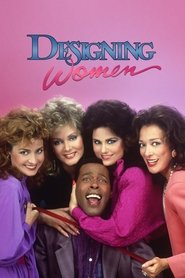
Designing Women
1986
star 6.8Julia Sugarbaker, Mary Jo Shively, Charlene Frazier-Stillfield and Suzanne Sugarbaker are associates at their design firm, Sugarbaker and Associates. Julia is the owner and is very outspoken and strong-willed. Mary Jo is a divorced single-parent whom is just as strong-willed as Julia, but isn't as self-confident. Charlene is the naive and trusting farm girl from Poplar Bluff, Missouri. Suzanne is the self-centered ex-beauty queen whom has a number of wealthy ex-husbands.Four Star Playhouse
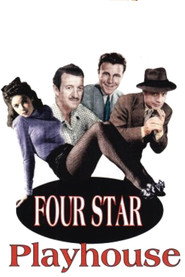
1952
Four Star Playhouse
1952
star 6.8Four Star Playhouse is an American television anthology series that ran from 1952 to 1956, sponsored in its first bi-weekly season by The Singer Company; Bristol-Myers became an alternate sponsor when it became a weekly series in the fall of 1953. The original premise was that Charles Boyer, Ida Lupino, David Niven, and Dick Powell would take turns starring in episodes. However, several other performers took the lead from time to time, including Ronald Colman and Joan Fontaine. Blake Edwards was among the writers and directors who contributed to the series. Edwards created the recurring character of illegal gambling house operator Willie Dante for Dick Powell to play on this series. The character was later revamped and spun off in his own series starring Howard Duff, then-husband of Lupino. The pilot for Meet McGraw, starring Frank Lovejoy, aired here, as did another episode in which Lovejoy recreated his role of Chicago newspaper reporter Randy Stone, from the radio drama Nightbeat.The Carol Burnett Show
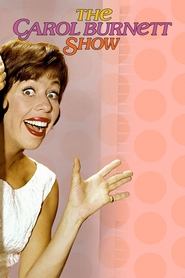
1967
star 7.7The Carol Burnett Show is an American variety/sketch comedy television show starring Carol Burnett, Harvey Korman, Vicki Lawrence, Lyle Waggoner, and Tim Conway. It originally ran on CBS from September 11, 1967, to March 29, 1978, for 278 episodes and originated from CBS Television City's Studio 33. The series won 25 prime time Emmy Awards, was ranked No. 16 on TV Guide's 50 Greatest TV Shows of All Time in 2002 and in 2007 was listed as one of Time magazine's "100 Best TV Shows of All Time."Girlfriends
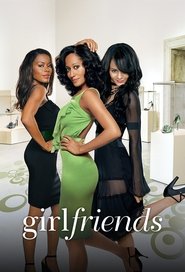
2000
Girlfriends
2000
star 7.3A friend group of black women face life's tests and triumphs together. From dating to divorce, and friends to family to relationships, Joan, Maya, Lynn and Toni support each other despite their differing backgrounds.ALF
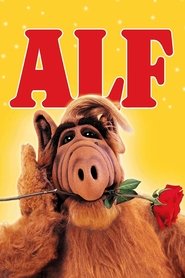
1986
ALF
1986
star 7.7A furry alien wiseguy comes to live with a terran family after crashing into their garage.Beyblade
2001
Beyblade
2001
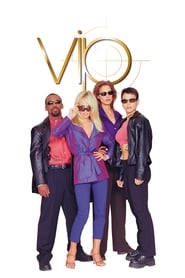
star 7.7Thirteen-year-old Takao Kinomiya (Tyson Granger), along with his fellow teammates, Kai Hiwatari, Max Mizuhura (Max Tate), and Rei Kon (Ray Kon), strive to become the greatest Beybladers in the world. With the technical help of the team's resident genius, Kyoujyu (Kenny), and with the powerful strength of their BitBeasts, the Bladebreakers armed with their Beys attempt to reach their goal.V.I.P.
1998
V.I.P.
1998
star 5.3While attending a Hollywood premiere with a famous action star, a crazed fan pulls a gun—but her movie hunk turns into a coward, and it's Vallery who becomes the hero. Suddenly, she's thrown into a world of action and danger as owner of a Hollywood protection agency, Vallery Irons Protection (V.I.P.), taking risks to protect others at a price few are willing to pay.Oggy and the Cockroaches
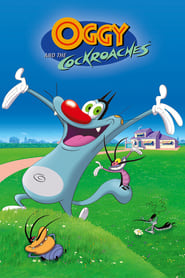
1999
star 7.5Oggy, an anthropomorphic cat, would prefer to spend his days watching television and eating, but is continuously pestered by three roaches: Joey, Marky and Dee Dee. The cockroaches' slapstick mischief ranges from plundering Oggy's refrigerator to hijacking the train he just boarded. In many situations Oggy is also helped by Jack, who is more violent and short-tempered than him and is also annoyed by the cockroaches. Bob, a short-tempered bulldog, also appears in the show, and is Oggy's neighbor.The Colgate Comedy Hour
1950
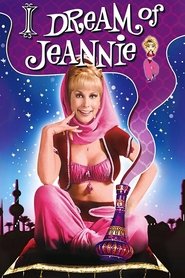
star 6.9The Colgate Comedy Hour is an American comedy-musical variety series that aired live on the NBC network from 1950 to 1955. The show starred many notable comedians and entertainers of the era, including Eddie Cantor, Dean Martin and Jerry Lewis, Fred Allen, Donald O'Connor, Bud Abbott and Lou Costello, Bob Hope, Jimmy Durante, Ray Bolger, Gordon MacRae, Ben Blue, Robert Paige, Tony Curtis, Burt Lancaster, Broadway dancer Wayne Lamb and Spike Jones and His City Slickers.I Dream of Jeannie
1965
I Dream of Jeannie
1965
star 7.8While on a mission, American astronaut Captain Tony Nelson is forced to make an emergency landing that will forever change his life. On a deserted South Pacific island, Captain Nelson happens upon a bottle containing a beautiful two-thousand-year-old female genie named Jeannie. Rescuing her from the bottle nets Tony the requisite three wishes, and then some, when Jeannie pledges total devotion to her new "master".NARUTO Spin-Off: Rock Lee & His Ninja Pals
2012
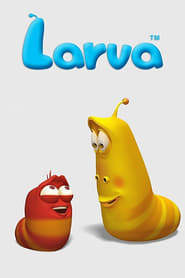
star 6.3Welcome to the Hidden Leaf Village. The village where Uzumaki Naruto, star of the TV show "Naruto" makes his home. Every day, countless powerful ninjas carry out missions and train to hone their skills. Our main character is one of these powerful ninjas... but it's not Naruto! It's the ninja who can't use ninjutsu, Rock Lee!Larva
2011
Larva
2011
star 7Two curious worms spend their days investigating the otherworldly objects that fall through the grate into their subterranean world.Mr. Bean
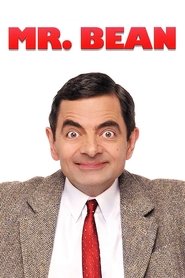
1990
Mr. Bean
1990
star 8Mr Bean turns simple everyday tasks into chaotic situations and will leave you in stitches as he creates havoc wherever he goes.The Lucy Show
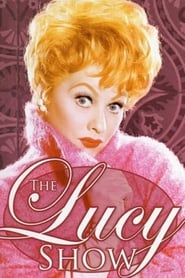
1962
The Lucy Show
1962
star 7The Lucy Show is an American sitcom that aired on CBS from 1962–68. It was Lucille Ball's follow-up to I Love Lucy. A significant change in cast and premise for the 1965–66 season divides the program into two distinct eras; aside from Ball, only Gale Gordon, who joined the program for its second season, remained. For the first three seasons, Vivian Vance was the co-star. The earliest scripts were entitled The Lucille Ball Show, but when this title was declined, producers thought of calling the show This Is Lucy or The New Adventures of Lucy, before deciding on the title The Lucy Show. Ball won consecutive Emmy Awards as Outstanding Lead Actress in a Comedy Series for the series' final two seasons, 1966–67 and 1967–68.Green Acres
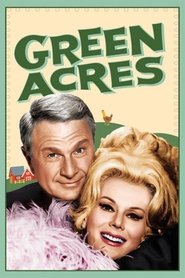
1965
Green Acres
1965
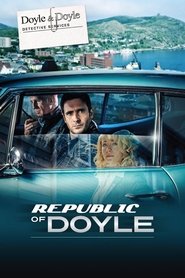
star 7.2Green Acres is an American sitcom starring Eddie Albert and Eva Gabor as a couple who move from New York City to a rural country farm. Produced by Filmways as a sister show to Petticoat Junction, the series was first broadcast on CBS, from September 15, 1965 to April 27, 1971. Receiving solid ratings during its six-year run, Green Acres was cancelled in 1971 as part of the "rural purge" by CBS. The sitcom has been in syndication and is available in DVD and VHS releases. In 1997, the two-part episode "A Star Named Arnold is Born" was ranked #59 on TV Guide's 100 Greatest Episodes of All Time.Republic of Doyle
2010
Republic of Doyle
2010
star 7Jake Doyle and his ex-cop father, Malachy, run a Newfoundland detective agency. Their rugged seaside town never lacks for intriguing cases, and the Doyles don't always land on the right side of the law.